Since 2021, NBC6 and our sister station Telemundo 51 have teamed up to hear directly from South Florida teachers about the issues affecting their schools, their students — and their own lives.
This year, more than 1,200 educators in Miami-Dade and Broward participated in our annual teacher survey, weighing in on everything from the cost of living and declining enrollment to the impact of immigration enforcement, school safety, cellphone policies and artificial intelligence.
The survey is non-scientific and was distributed with the help of the teachers’ unions in Miami-Dade and Broward. The unions had no editorial input in the questions.
A majority of those who responded are veteran educators: more than 60% said they have been teaching for more than 20 years.
Over half of participants identified as elementary school teachers.
These are the results.
SOUTH FLORIDA’S COST OF LIVING IS A TOP CONCERN
One issue was nearly universal: the cost of living in South Florida.
Nearly every teacher who responded said they are concerned about keeping up with the cost of living.
80% said they have considered moving out of South Florida because of it, while roughly 94% said they have colleagues who have already left the region because of the cost of living.
The survey also asked teachers about their own finances.
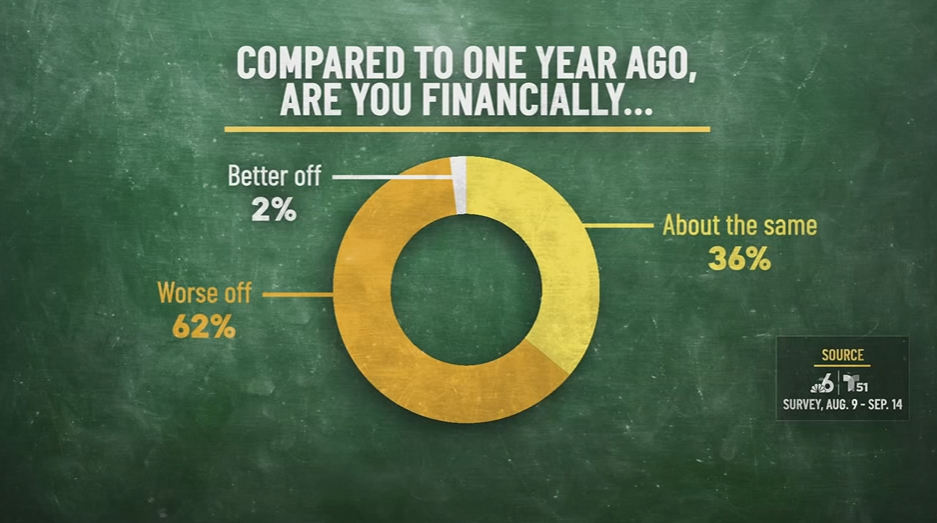
Nearly two-thirds (62.4%) said they are financially worse off than they were a year ago, while only a small percentage (2.1%) said they are better off.
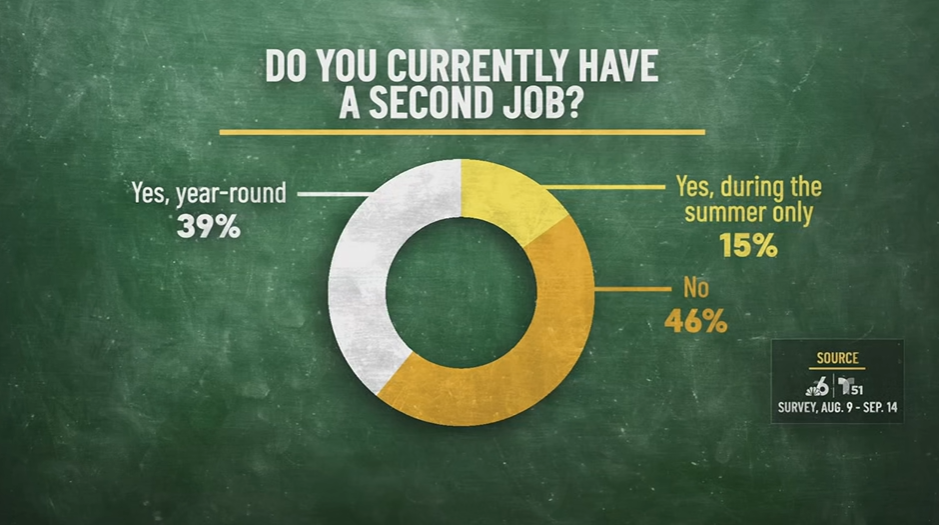
More than half said they currently work a second job — either year-round (39.2%) or during the summer (15.3%).
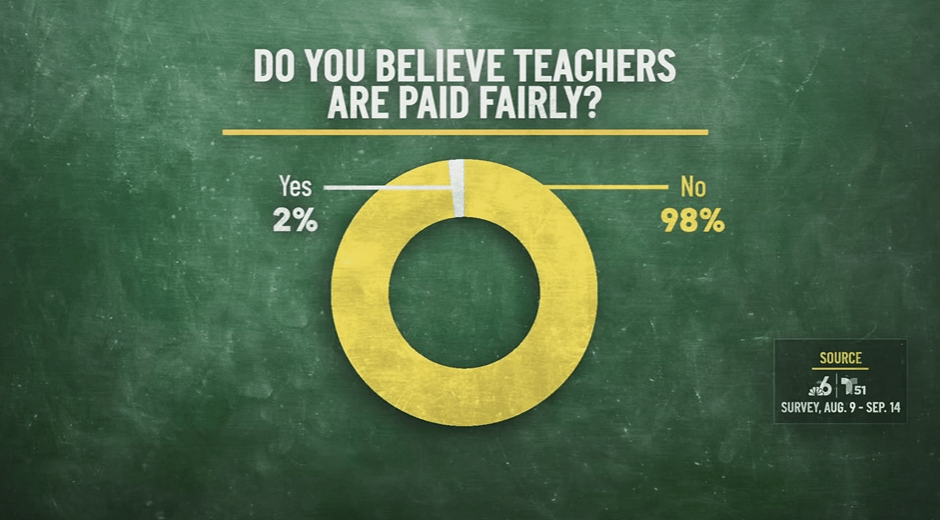
And nearly all respondents said they do not believe teachers are paid fairly.
The pressure may be affecting whether some educators see a future in the profession.
About 80% said they have considered leaving teaching.
When asked why, many of them pointed to teacher pay and the rising cost of living.
“Can’t afford to live on my own,” one teacher wrote.
Another said, “The cost of living does not match the pay we get. Especially that I have been in the system for 24 years and have a master’s degree.”
“I struggle paying bills,” another teacher added.
DECLINING ENROLLMENT IS BEING FELT IN SCHOOLS
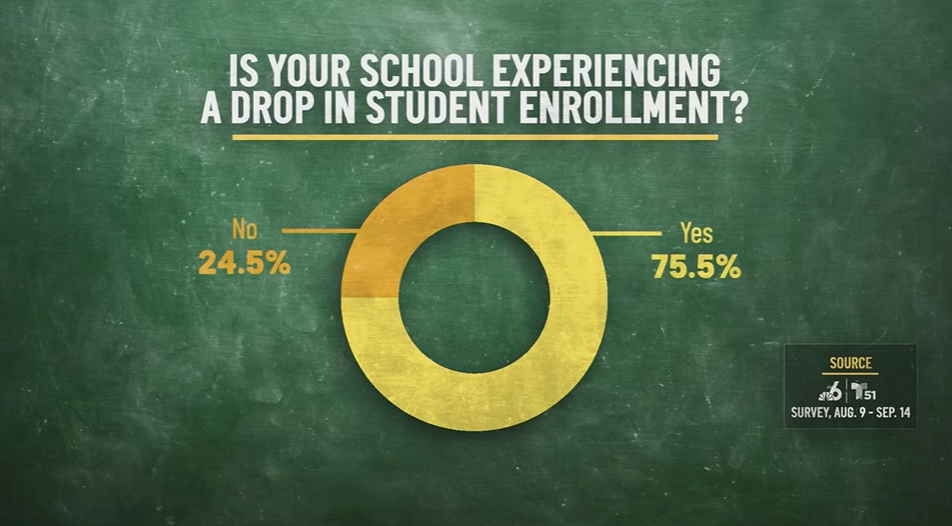
Another major issue this year: fewer students.
More than 70% of the teachers surveyed said their school is experiencing a drop in enrollment.
That comes as both Miami-Dade and Broward school districts have been grappling with declining enrollment and what to do with schools that have empty seats.
When asked about consolidating schools, teachers were divided.
About 27% supported consolidation, roughly 38% opposed it and about 36% were unsure.
But there was far less division when teachers were asked about sharing school buildings with charter schools under the Schools of Hope program.
Over 80% opposed the idea.
STAFFING SHORTAGES REMAIN A CONCERN
Even as schools lose students, many teachers told us their campuses are still struggling with staffing.
Nearly two-thirds (65.8%) of respondents said their school is experiencing staff shortages this school year.
Among those who answered a follow-up question about the shortage, about eight in 10 said their school district is not providing enough support to address it.
Florida has expanded alternative pathways for people to obtain teacher certification as the state works to address teacher shortages.
But teachers responding to our survey were divided on that approach, with more opposing the alternative pathways (58.1%) than supporting them (41.9%).
IMMIGRATION ENFORCEMENT IS AFFECTING STUDENTS
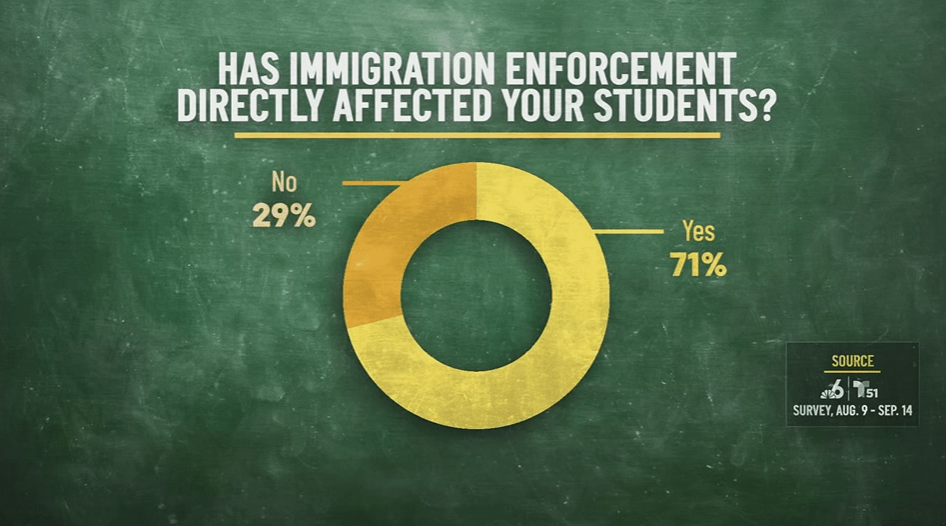
For the second year, we also asked educators about immigration — and this year, we focused on what they are seeing inside their classrooms.
About seven in 10 respondents (71%) said immigration enforcement has directly affected their students.
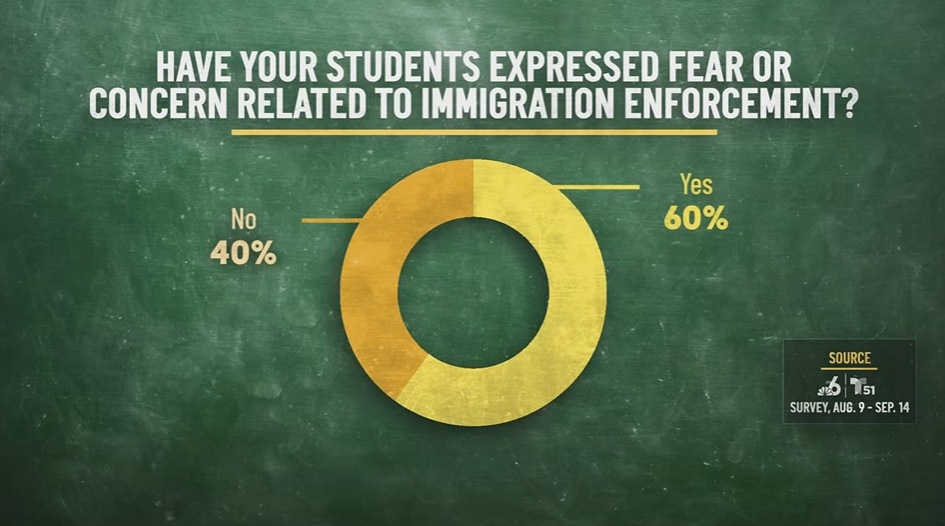
More than half (60%) said students have expressed fear or concern related to immigration enforcement.
But when teachers were asked whether their schools have provided clear guidance on handling immigration-related concerns, more than 70% said no.
The issue is personal for some educators, too. More than one-third said they are concerned that changes in immigration policies or enforcement could affect their ability to continue working.
TEACHERS CONCERNED ABOUT SOCIAL MEDIA AND CELLPHONES
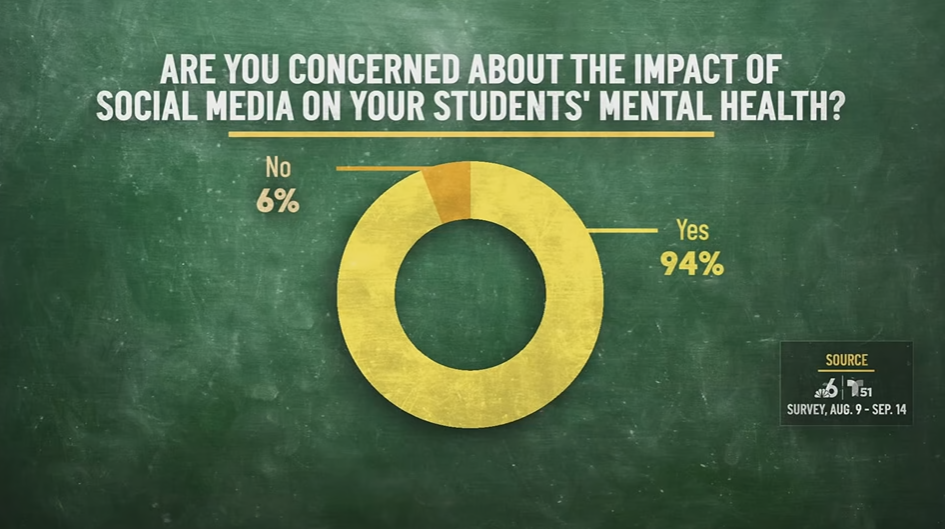
Teachers also expressed widespread concern about technology and its impact on students.
94% said they are concerned about the impact of social media on their students’ mental health.
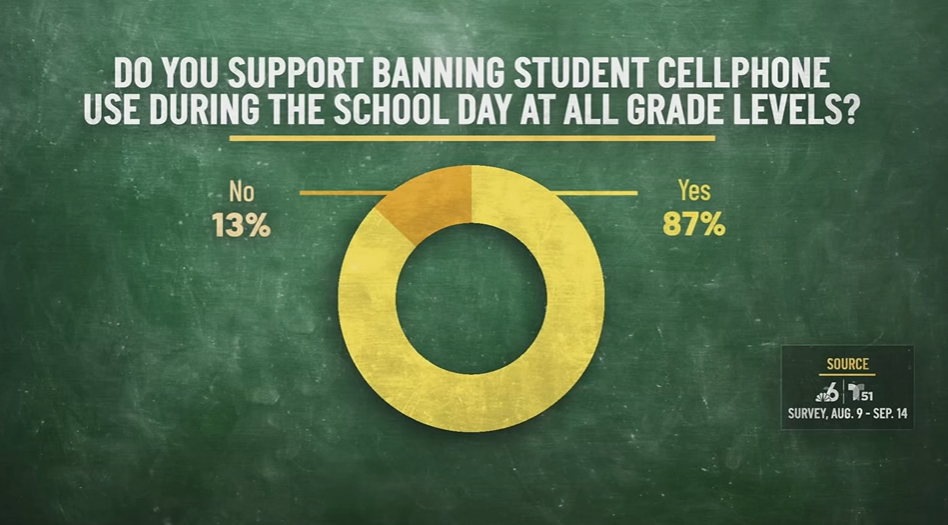
87% said they support banning student cellphone use during the school day at all grade levels.
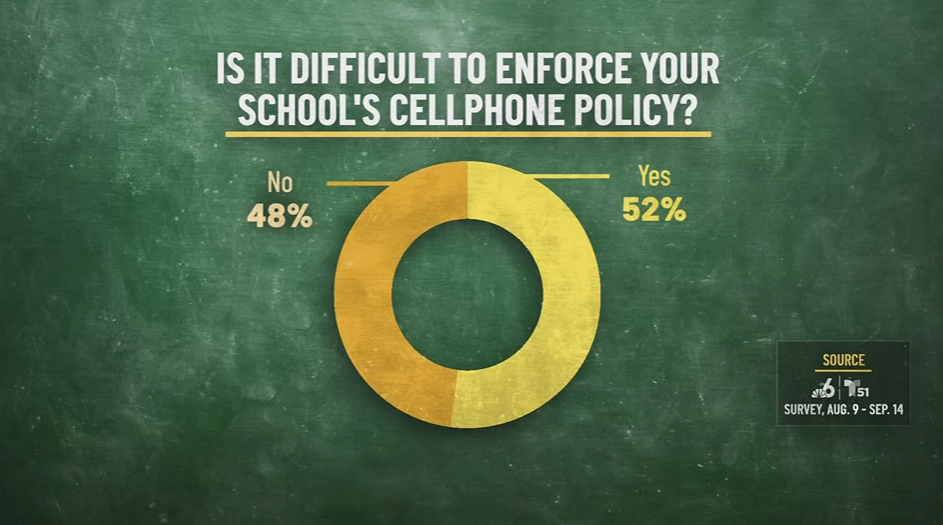
But enforcing cell phone rules appears to be more complicated.
Teachers were almost evenly split when asked whether their school’s cell phone policy is difficult to enforce, with 52% saying yes, while 48% said no.
AI IS RAISING NEW QUESTIONS IN THE CLASSROOM
Artificial intelligence has quickly become another issue educators are navigating.
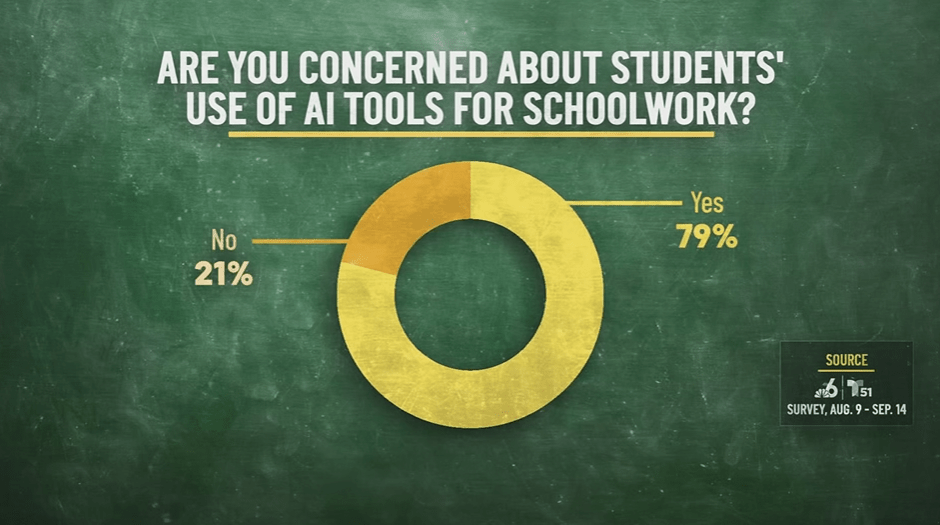
Nearly 80% of respondents said they are concerned about students using AI tools for schoolwork.
At the same time, 64% said their schools are not providing adequate guidance on students’ use of AI.
WHAT TEACHERS TOLD US ABOUT SCHOOL SAFETY
When it comes to safety, most teachers who responded said they feel safe at school.
More than 80% said they feel safe on campus, and 74.2% said their school district is doing enough to keep students and staff safe.
But teachers had a different view of the state’s response: 40.2% feel state leaders are doing enough to keep students and staff safe while 59.8% answered no.
And more than one-third (36.7%) said their school experienced a lockdown or other major security incident during the past year.
HOW DO TEACHERS FEEL ABOUT BEING TEACHERS?
After asking about the challenges facing educators, we ended with a broader question: How do you feel about being a teacher?
The answers were mixed.
About 45% described themselves as happy or very happy. Nearly one-third said they weren’t sure, while roughly 23% said they were unhappy.
TEACHERS’ COMMENTS
In the survey, we asked teachers to list their main concerns. These are some of their comments:
“My biggest concern is the lack adequate salary, support and respect for educators and paraprofessionals. As an educator with 3 degrees, I have to have 3 jobs to make ends meet…They keep raising the expectations and not the salaries.”
“Our school is on the list of possible closures, it’s difficult to continue our daily routines with this matter hanging over our heads.”
“Being let go due to budget cuts or low enrollment.”
“Not having enough planning time to provide what my students deserve, I always have to work extra hours, and even that isn’t enough.”
“The rising costs of living in South Florida and the lack of raises to keep up with them.”
“My biggest concern this school year is whether continuing in a profession that I truly love is sustainable long-term. I am passionate about teaching and about creating meaningful experiences for my students, but the workload and expectations placed on teachers continue to grow… Despite the amount of education, time, responsibility, and additional hours the profession requires, the pay makes it difficult to support myself on my teaching salary alone. Having to work a second job during the school year and find additional work during the summer just to maintain financial stability is exhausting, especially when teaching itself already extends far beyond a traditional workday.”
“Students learning effectively in the age of AI.”
“My biggest concern is that the referendum won’t pass and that my school will close. These will force me to sell my home and move out of state.”
“My biggest concern is always safety on campus. I hope our school resource officer will be there if needed.”
“In my 27th year of teaching, I fear I won’t be able to retire because of the cost of living and inadequate pay increases.”
“Excessive electronic devices on /and with student.”
“Every year, teachers are asked to do more with less. We have larger classrooms, more students with different academic and behavioral needs, more paperwork, more data, more meetings, and more expectations—yet the support and resources we need continue to decrease.”
REACTION TO THE SURVEY
NBC6 and Telemundo 51 shared the survey results with Broward County Public Schools, Miami-Dade County Public Schools and the Florida Department of Education, giving each an opportunity to respond.
Miami-Dade County Public Schools was the only one to provide a statement:
“Miami-Dade County Public Schools deeply values the dedication of our educators, who are the backbone of our schools. As our region faces unprecedented cost-of-living pressures and national demographic shifts, we hear our teachers loud and clear and are taking direct, decisive action to support them, including asking the voters to consider renewing the Secure Our Future Referendum to pay and retain exceptional instructional personnel.”