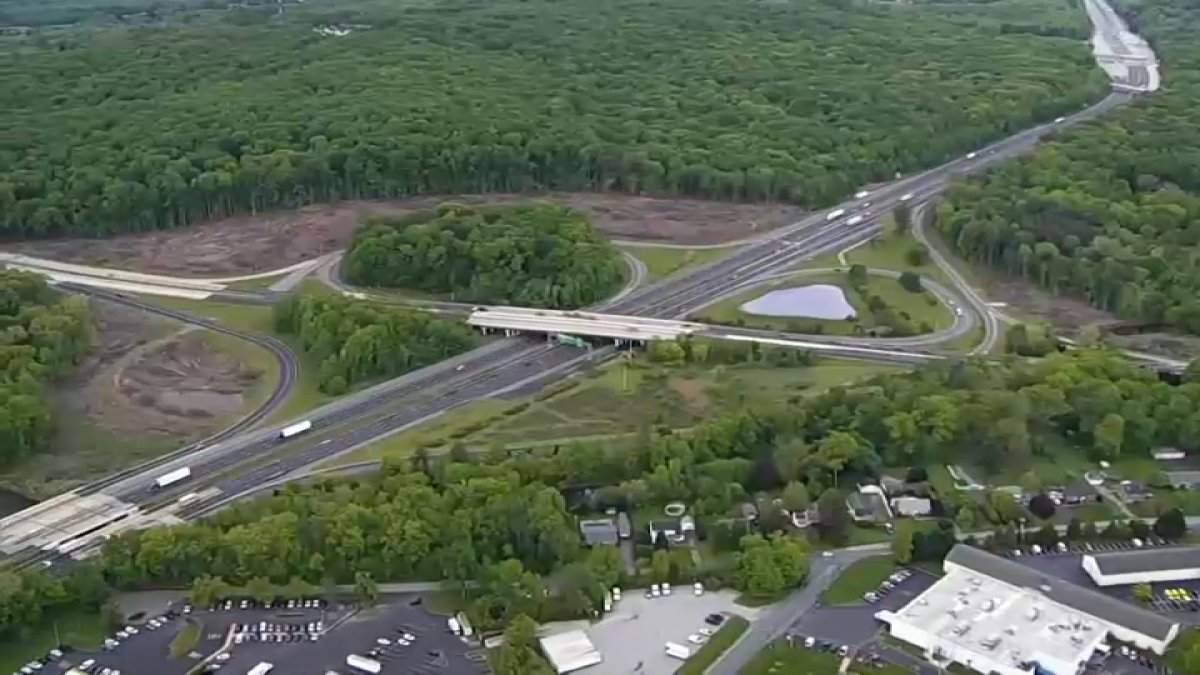
Delaware’s biggest and most expensive traffic project is nearly finished after years of work to overhaul a busy I-95 interchange near the University of Delaware.
The roughly $300 million project revamped the I-95 interchange with Route 896 in Newark, Del., adding multiple flyovers designed to separate traffic and eliminate the need for drivers heading in different directions to share single lanes.
The interchange opened in the 1960s when I-95 first opened. As traffic, speeds and the area’s population increased, its single-lane ramps struggled to handle the volume.
In the four years before the project began, there were more than 700 crashes throughout the interchange, according to DelDOT.
Now that the project is essentially complete, drivers who regularly use the interchange say they have noticed a difference.
“Before it was like you were rushed into one lane but now it’s got a better flow. Two lanes coming off,” Wilmington resident Reba Tome said.
Tow truck operator Lewis Kimble agreed.
“It’s really convenient, it’s nice keeps the flow of traffic,” Kimble said.
The project also included a dedicated, fenced-off lane allowing pedestrians and cyclists to cross over I-95.
One part of the redesigned interchange has drawn concerns from some drivers. Motorists traveling from Maryland on I-95 northbound who want to head toward downtown Newark use Exit 1 and travel along an off-ramp before reaching a stop sign. They must wait for a safe opportunity to cross traffic to get onto Route 896 north.
That setup could lead to backups on busy days, including University of Delaware football game days.
The area around the interchange is also seeing new businesses. A Wawa and a Dash In are being built now that access to and from the highway has improved.
Workers at a nearby pizza shop said construction has been a headache, but drivers who regularly travel through the interchange said the project was worth the time and money.
DelDOT marked just how long the work has taken as the project approached its end.
“We did the official groundbreaking 1,240 days ago,” C.R. McLeod of DelDOT said.
This story was originally reported for broadcast by NBC Philadelphia. AI tools helped convert the story to a digital article, and an NBC Philadelphia journalist edited the article for publication.