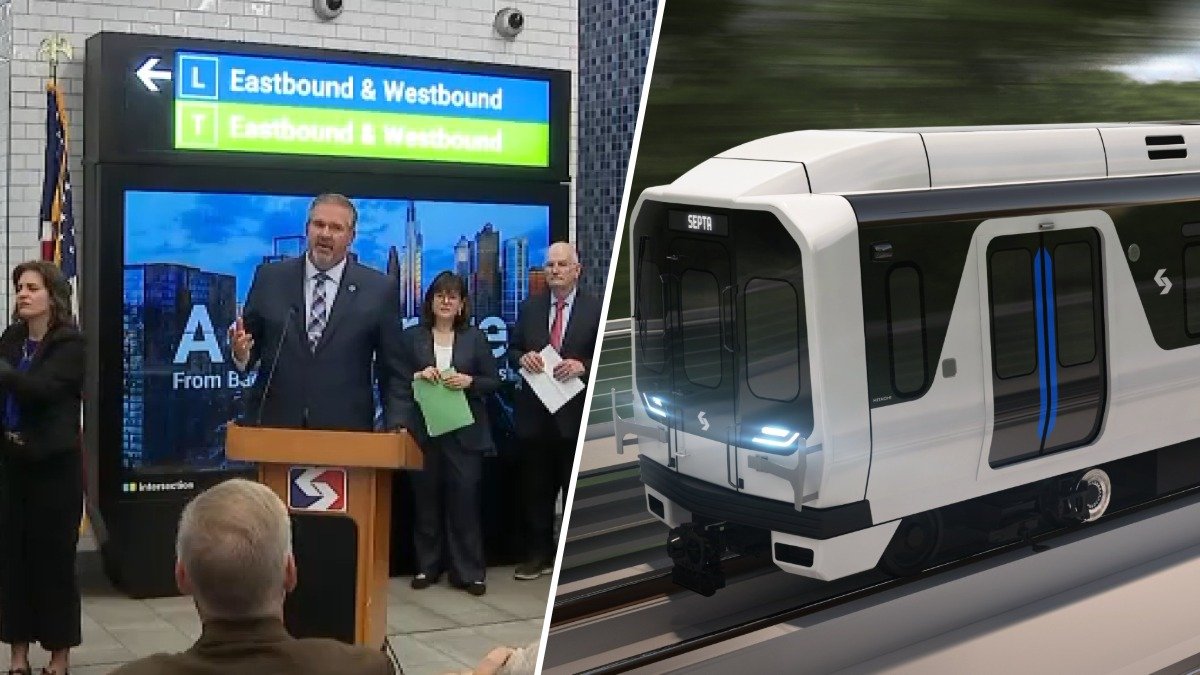
SEPTA has a plan for the future.
It’s called “Accelerate.”
And, as unveiled Tuesday, it’s — as described by SEPTA General Manager Scott Sauer — an “ambitious plan” that calls for updated stations, new trains and and all sorts of improvements across the system.
But, what could this new effort cost?
“I don’t want to put a number on it,” Sauer said Tuesday.
During the day, Sauer joined other officials from throughout the region to unveil the Accelerate project, which SEPTA called a “Best-in-Class Vision for a Greater Philadelphia.”
And, through this plan, he said, SEPTA is looking to show how, with adequate investment, the mass transit provider could grow with modern stations, state-of-the-art vehicles and other improvements to serve the, about, 800,000 riders who use the service everyday.
But, Sauer was quick to note that he didn’t have any specifics for when the totality of the Accelerate program could be completed or what it might cost in total.
“It depends. The reason why it’s Accelerate is, we are already moving on this plan,” he said.
Already, he said, SEPTA is in the middle of a $6 billion trolley modernization effort, as well as a $1 billion program to improve the Market-Frankford El line and it will soon undertake a $2 billion effort to update its aging Silverliner IV trains.
Sauer said SEPTA also hopes to undertake a program to replace trains along the Broad Street Line and the M — formerly known as the Norristown High Speed Line.
Also, he said, Regional Rail stations will need to be addressed because, currently, only about 30% of Regional Rail stations are fully ADA-accessible.
“We have a lot,” Sauer said. “It’s an ambitious plan.”
He also said there was no timetable on the overall Accelerate effort, as that would be determined once investments could be secured.
Yet, he said, while it may take a nebulous about of time and money to complete every element of Accelerate, the goals of the improvement plan would provide significant benefits to the community.
“The relationship between SEPTA and economic growth is clear,” said Sauer.
Sauer said SEPTA’s service area has a $4 billion annual impact on the economy and it serves a region that is responsible for 40% of Pennsylvania’s economic output.
And, as the city and region grow, SEPTA will need to take steps to modernize and serve the community.
“People want more service, not less and we intend to deliver it,” Sauer said.
But, he said, the Accelerate plan is SEPTA’s attempt to lay out what SEPTA could be and what it could provide with the right investment.
“This is what it takes to move to a best in class transit system where it’s useful for everyone,” said Sauer.
Overall, he said, SEPTA is looking for stability moving forward.
“Dedicated funding, something we can count on, something we can budget for year over year to execute the totality of the plan,” said Sauer.
Still, he noted, SEPTA needs $192 million to close a current budget gap.
It will be up to elected officials to determine just what comes of this Accelerate plan, Sauer said, as they work to determine future funding SEPTA could secure from the state’s budget.
“As with any good journey it’s all about time and distance. We have to go a long way and how much time is it going to take to get there? We know that there is going to be very difficult decisions to make in Harrisburg,” Sauer said.
This story uses functionality that may not work in our app. Click here to open the story in your web browser.