Hold the sigh-inducing otter puns.
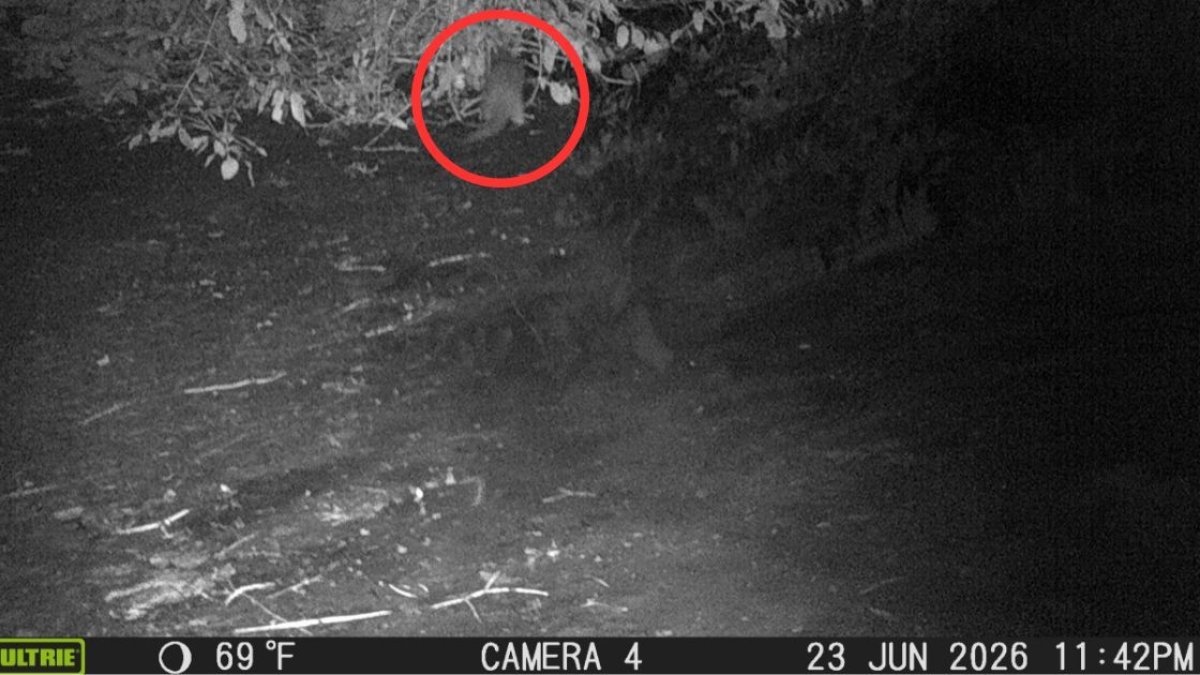
The first North American river otter in a century was documented in the Bronx section of the Bronx River, suggesting, the Wildlife Conservation Society says, that restorative efforts to the polluted span are paying off.
A motion-activated camera deployed by local scientist RJ Hawkins and overseen by the Wildlife Conservation Society’s Education Department based at the Bronx Zoo snapped the image late at night on June 23.
Zoo officials don’t believe there’s been such a sighting in that part of the river since the early 1900s.
“When I first reviewed the images, I could hardly believe what I was seeing,” said Hawkins, a graduate of the Miami University of Ohio Advanced Inquiry Program (AIP) hosted at the Bronx Zoo. “Knowing this may be the first documented river otter in the Bronx in generations was an incredible moment.”
Hawkins captured the image while conducting long-term camera-trap monitoring of wildlife along the river overseen by the WCS’s Bronx-based Education Department.
Craig Piper, director of the Bronx Zoo and an interim vice president with WCS’s Zoos & Aquarium, called it a “win for both wildlife and people.”
“There are moments in conservation that remind us why this work matters, and this is one of them,” Piper said in a statement. “Thanks to a broad coalition of public and private partners, we can celebrate the return of an otter as a result of decades of restoration work to provide cleaner water and healthier habitat.”
River otters once ranged throughout New York’s waterways but disappeared from many areas because of pollution, habitat degradation, and unregulated trapping, wildlife officials say. Today, otters are considered indicators of healthy freshwater ecosystems because they need clean water, abundant fish, and intact habitats.
Once heavily polluted and long regarded as one of the nation’s most neglected urban rivers, the Bronx River has undergone decades of restoration led by public agencies, nonprofits, volunteers, and conservation partners.
In 2007, beavers returned to the river for the first time in more than 200 years, according to wildlife officials.
While researchers caution that a single observation of an otter does not necessarily indicate a resident population, the discovery shows the Bronx River is increasingly capable of supporting native wildlife that has been absent for generations.
“This isn’t simply the story of one animal. It’s the story of an urban river coming back to life,” Piper said. “Every improvement in water quality, every acre of restored habitat, every community volunteer who has cared for this river has helped make a moment like this possible. We hope it’s the first of many.”
According to New York’s Department of Environmental Conservation, the North American river can be identified by a stout body, short legs, tapered tail, and dense, short, glossy fur. Their eyes, ears, and nose are located atop their heads so they can see, hear, and smell while most of their body remains in the water.
Fur color can range from light brown to black, with a lighter, grayish colored chin and throat. Males are generally larger than females, 44 inches and 38 inches, respectively. Body weight ranges from 10 to 30 pounds.