Abigail Lee, a Boston University junior studying data science and comparative literature, remembers sitting alone in her bedroom, ring light glaring back at her, as the countdown timer on her screen ticked down.
She had already applied to more than 100 technology internships for the upcoming summer, and this preliminary interview felt no different, much to her dismay.

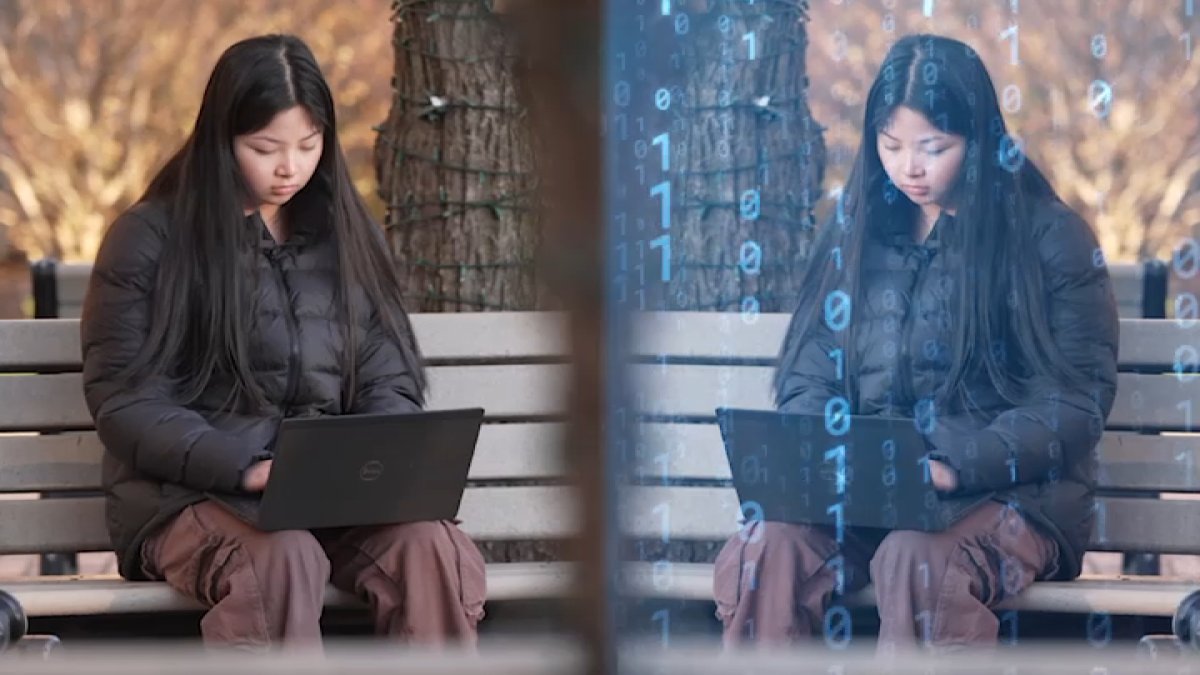
That’s because Lee was sitting down for a virtual interview platform that is becoming commonplace for many current job applicants. Instead of talking to another person, she would be conversing with her own reflection on the computer screen.
When the recording started, Lee found herself questioning how to “beat the system” and differentiate herself from other candidates. She worried about where her hands were placed, whether she blinked too much, or how many attempts she should take before submitting an answer.
“It makes it more difficult to feel comfortable during the hiring process,” Lee said. “It’s very impersonal. You’re just staring at yourself as you respond.”
For those who’ve been in the workforce for many years, conducting interviews with no human interaction may seem completely foreign. Lee’s experience, though, is becoming second nature for college students and entry-level workers just entering the job market.
The rapid rise of artificial intelligence hasn’t hit its peak, but early signs show major shifts for American workers. And the implications go far beyond the hiring process, experts studying implications of AI say.
According to the McKinsey Global Institute, activities that account for up to 30% of hours currently worked across the US economy could be automated by 2030.
NBC10 collaborated with Boston University students taking an in-depth reporting class taught by investigative reporter Ryan Kath. We took a deep dive into how AI is not only changing the labor market, but also changing the skills required by workers to thrive in it.
In September, OpenAI released a new evaluation system that measured how well AI models can perform real work. According to the report, top AI models like Claude Opus 4.1 already perform at or above human-expert quality in about 45% of the real-world tasks sampled across 44 occupations, from lawyers and financial analysts to registered nurses and real estate agents.
The shifting labor market means recent graduates and entry-level applicants may feel the impact first. The challenge is understanding how those changes show up in real life, experts we interviewed said.
Mohammad Soltanieh-ha, a clinical assistant professor at Boston University’s Questrom School of Business, is part of a collaborative study looking into the impacts of AI on labor demand. He and his colleagues found that the hiring rate is gradually becoming more imbalanced toward experienced workers.
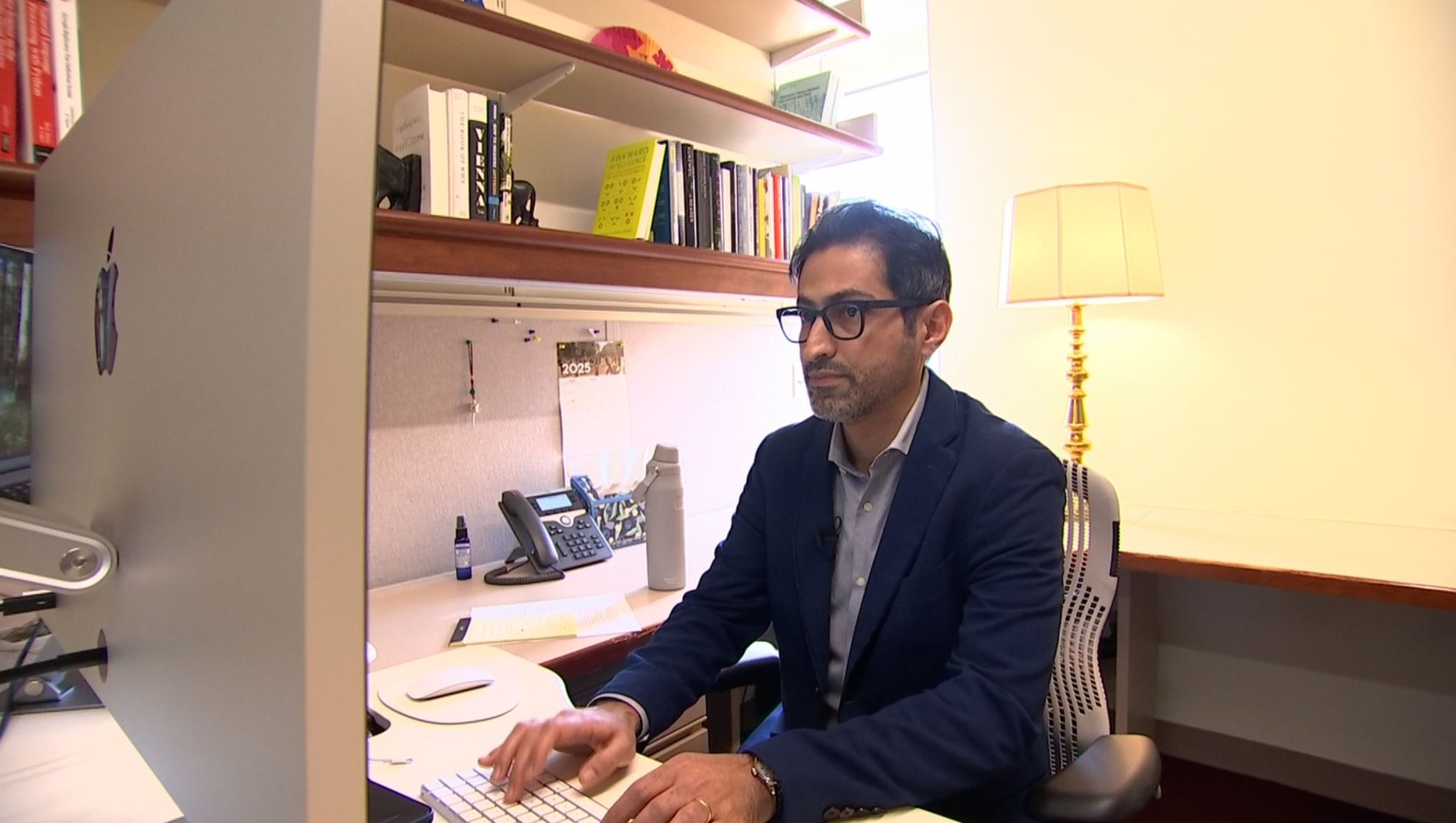
“The rate of increase is much faster in senior levels,” Soltanieh-ha said. “If you think about the downstream effect of that, you don’t have this pipeline of new talent coming in and getting trained by more senior people, then where do we stand in a few years?”
Boston College professor Mei Xue’s research, which studies how AI adoption reshapes labor structures, shows that as companies integrate AI into their operations, the value of degree-based skills declines.
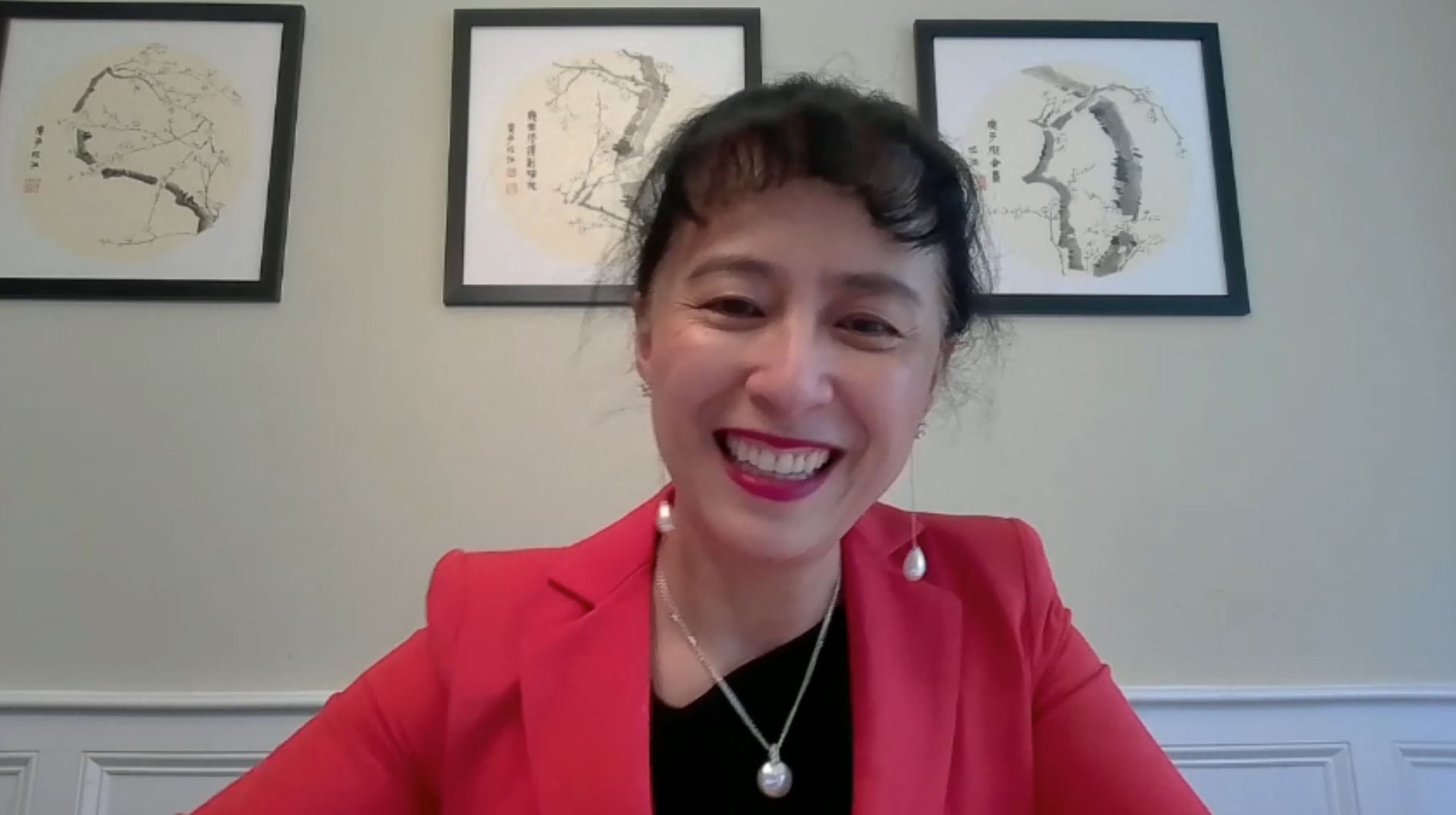
According to Xue, AI is actually reducing the hiring of college graduates, but increasing the hiring of people without a college education due to “the technology deskilling effect of AI.” These associations are most significant in the service sector where entry-level skills cannot be automated.
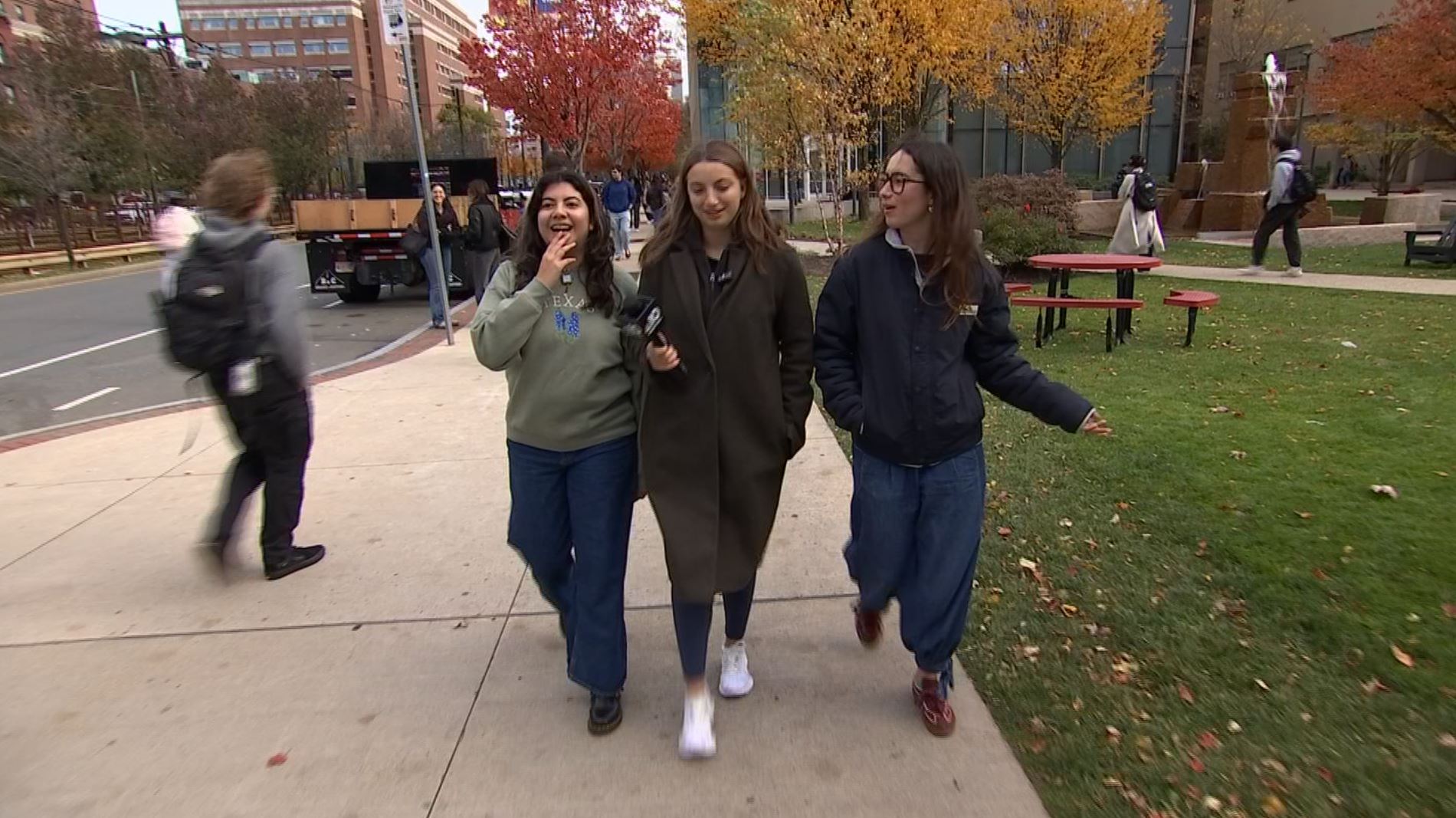
Recently, we went to Commonwealth Avenue to hear BU students’ sentiments about AI. Josh Kaplow, an international relations student, expressed his concerns for the future.
“I think it will start taking over a lot of jobs, which is scary just being in college,” Kaplow said. “But I think if we can learn how to use it and keep it under control, it will be a very helpful tool.”
Lukas Freund, an economics assistant professor at Boston College, researches how AI adoption transforms the workplace. His specific focus is not on how AI is replacing entire jobs, but instead altering the tasks that comprise them, like processing and summarizing documents or performing calculations.

“It’s certainly the case that AI will change what tasks work is performed within a job,” Freund said.
More on artificial intelligence
What the experts we spoke with emphasized most is this: while AI can serve as a tool to replace skills like data analysis and processing documents, it can’t replace the interpersonal skills still required to succeed in the workforce and grow a career.
Soltanieh-ha and Freund emphasized the importance of entry-level skills to recognize those intangible skills. They say these include the ability to understand human emotion and connect, think critically, and be flexible in learning environments. These traits will all be necessary in a job market that embraces AI, Soltanieh-ha said.
Professor Xue believes educational institutions must adapt in order to keep up with the age of AI and stay ahead of the curve.
Meantime, students like Lee are feeling pressure to stand out amid the endless sea of virtual AI interviews. Beyond her technical background and experience, she knows she’ll need to do a little more to secure a job.
“Something I’m going to be thinking about going forward is how can I make myself most useful from a people standpoint?” Lee said. “Not only for just the sake of being a good person, but for the sake of my future. It’s kind of futile to fight the implementation of AI. It’s a part of life now.”
The story was written by Hernandez Ramirez, Portman, and Leyba Macedo and edited by Kath.