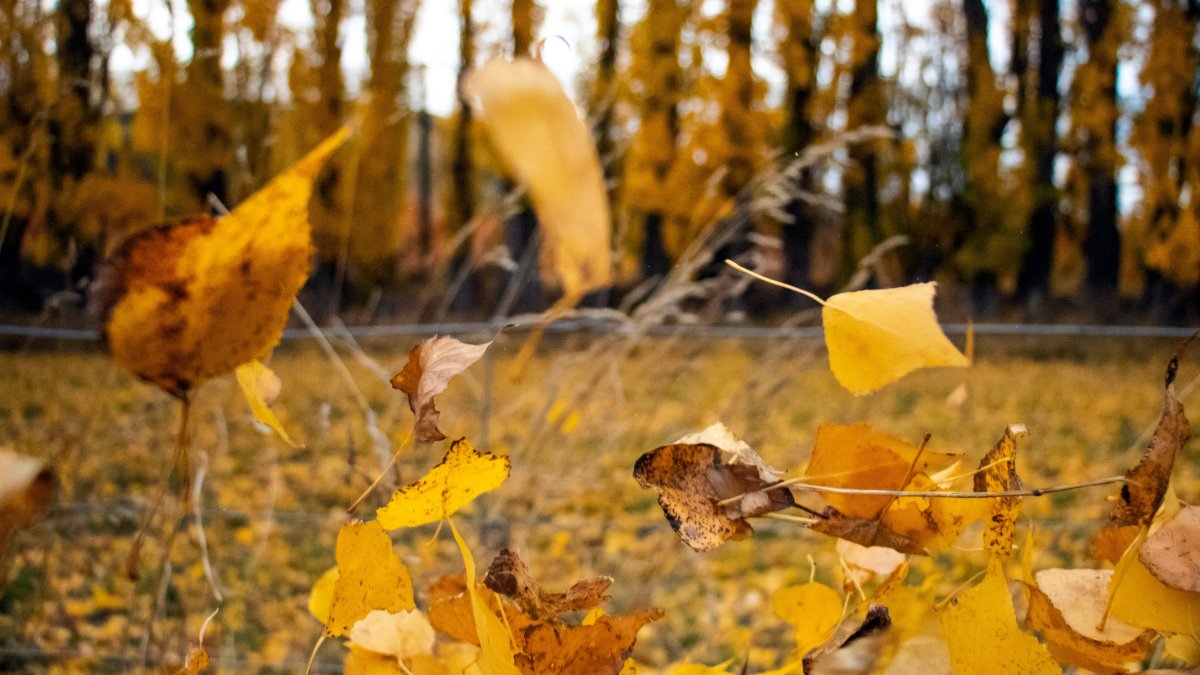
Fall has arrived, bringing some of the year’s most anticipated sights as beautiful shades of green, orange, red and more create brilliant displays of foliage.
For those looking to take in breathtaking fall colors, this year’s display could be a little different, however.
Experts at the Lisle-based Morton Arboretum say the warming influence of El Niño may delay fall color and compress the fall color season, causing leaves to change all at once in the late fall.
Christy Rollinson, Ph.D., senior scientist in forest ecology at the Arboretum, said a strengthening El Niño is expected to bring warmer-than-average temperatures to October, November and December, as indicated by the National Weather Service.
“If this holds, we expect El Niño to delay autumn color in general,” Rollinson said in a news release. “But once we see several nights of freezing temperatures that leaves can’t survive for long, their colors will begin to change quickly.”
But El Niño won’t be the only factor influencing fall leaf color.
Rollinson said drought conditions like those seen earlier this summer would typically lead to earlier fall color, but significantly above-average rainfall over the past 90 days may have helped offset some of those effects.
And if you’re already started noticing some colorful leaves, you’re not alone.
Some trees have already started showing fall color, especially those in sunny, high-stress locations like parking lots, Rollinson said.
According to the National Phenology Network, research has shown that warm summer temperatures tend to delay the start of fall foliage in the eastern U.S. The situation is different out west, where rainfall has more influence than summer temperatures. Heavy rainfall between January and March can cause leaves to change color and fall later than normal, the network revealed.
Even with these trends, researchers say predicting exactly when leaves will peak isn’t easy.
While evidence shows warmer autumns are often associated with later fall color in the Chicago area, scientists say the timing of fall color depends on a balance between temperature and daylight, and that makes future seasonal shifts difficult to predict, according to the Arboretum.
“Although our autumn temperatures may become more like southern Illinois in future years, the timing of the temperature relative to day length won’t be equivalent, and we don’t know yet exactly what that will mean for the start of the season,” Rollinson said.