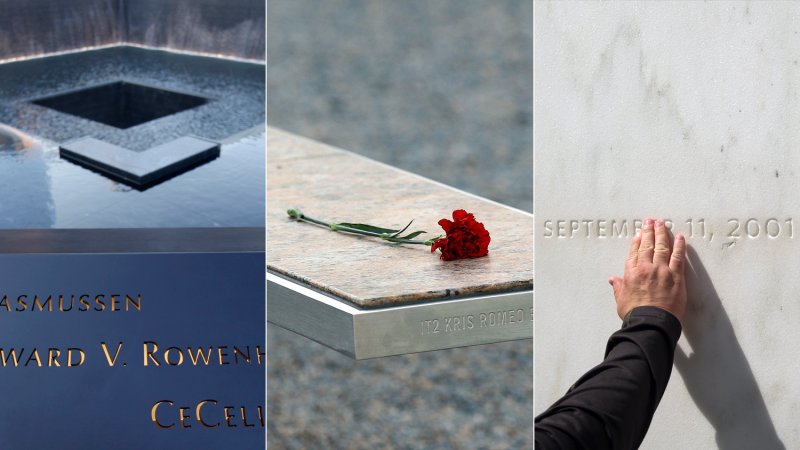
Twenty-five years after two hijacked planes brought down the World Trade Center in clouds of dust, Lower Manhattan is thriving. The Financial District is now FiDi, with twice as many residents, and new bars and restaurants in a neighborhood that once closed up when Wall Street’s trading day ended. The observatory at the rebuilt One World Trade Center looks out over New York City from the country’s tallest building, its height a symbolic 1,776 feet. The 9/11 Memorial & Museum draws about 9,000 people a day.
At the Pentagon, more than one million people visit its outdoor memorial each year: 184 benches over pools of water, placed in the path of the third hijacked plane.
Near the field where the fourth plane crashed outside Shanksville, Pennsylvania, the passengers are honored with a white marble wall of names. The motto is: “A common field one day, a field of honor forever.”
The country will come together on Friday over a shared national tragedy, but other changes remain controversial.
The U.S. went to war in Afghanistan and Iraq, and both conflicts defied quick military victories. Protests follow the Department of Homeland Security and its agency, ICE, created after Sept. 11, over the tactics used toward migrants and refugees. Then-President George W. Bush claimed expanded powers for the presidency, including military tribunals and harsh interrogation methods that critics call torture and that have thwarted prosecutors.
Osama bin Laden, the al-Qaida founder angry over U.S. foreign policy, was killed in a raid on Pakistan, but the man accused of being the mastermind, Khalid Sheikh Mohammed, remains imprisoned at the U.S. Navy base in Guantanamo Bay, Cuba. A military judge has ruled that his confessions to F.B.I. agents could not used against him because they were not made voluntarily. Mohammed was waterboarded in 183 rounds while he was held earlier in secret C.I.A. prisons. His trial date is now set for June 5, 2028.
How the 9/11 attacks unfolded
On the morning of Sept. 11, 2001, 19 men hijacked four commercial planes bound for California from Boston, Newark, New Jersey, and Washington, D.C. Two of the planes, American Airlines Flight 11 and United Flight 175, departed from Boston, headed to Los Angeles. Each plane had five hijackers aboard. At Washington Dulles International Airport, another five hijackers boarded American Airlines 77, also bound for Los Angeles. The last flight, San Francisco-bound United Airlines Flight 93, left from Newark International Airport with four hijackers on board.
Two of the planes flew into the World Trade Center’s Twin Towers, the third caused a portion of one of the Pentagon’s rings to collapse and the fourth crashed into a field outside Shanksville after passengers stormed the cockpit.
Fifteen of the al-Qaida hijackers were from Saudi Arabia. The others were from Egypt, Lebanon and the United Arab Emirates.
Source: 9/11 Memorial and Museum
How to honor 9/11 victims
Nearly 3,000 people died in the Sept. 11 attacks, most at the World Trade Center. The youngest was 2 1/2 , one of eight children killed.
The remains of more than 1,600 victims in New York City have been identified, leaving 40 percent of those who died unidentified. In August, a woman was identified using a new method, a combination of DNA analysis and research involving public genealogy databases.
People continue to die from Sept. 11-related diseases, from cancers, respiratory illnesses and others. More than 152,000 people have enrolled in the federal World Trade Center Health Program.
9/11 before and after photos
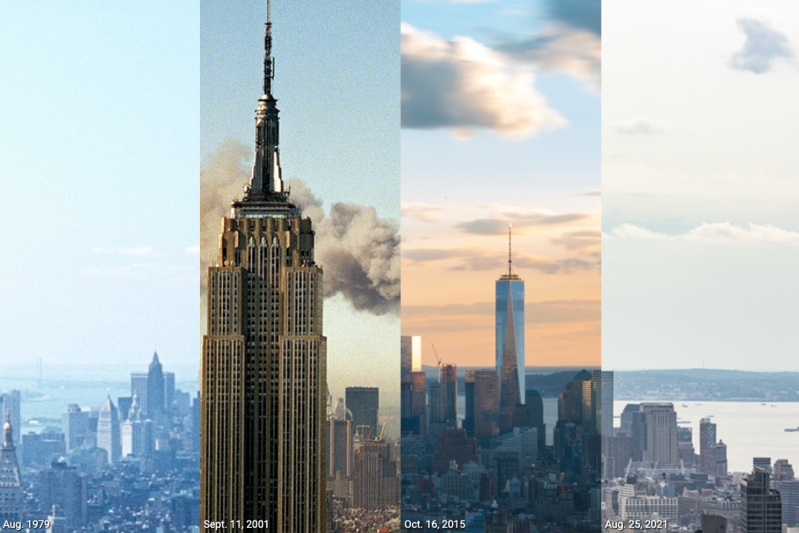
Twenty-five years later, the World Trade Center has mostly been rebuilt, four skyscrapers and 2 World Trade Center under construction. The Pentagon was repaired in less than a year. Take a look at the aftermath of the attacks and how the sites look today.
Following the fallout 25 years later
NBC Local stations across the U.S. have been reporting on how the Sept. 11 attacks transformed the country in the quarter century since.
Families reflect on how their lives were changed. First responders and others are struggling with Sept. 11-related illness. New documents are calling into question reassurances that New Yorkers received about the safety of the air after the World Trade Center fell.
Here are some of those stories.
‘Go up’: FDNY chief who sent brother into World Trade Center’s North Tower reflects on 9/11
A morning call for a possible gas leak was the last normal thing FDNY Chief Joseph Pfeifer experienced on Sept. 11, 2001.
“It was a beautiful summer day with the brightest of blue skies,” said Pfeifer. “All of a sudden, we heard a loud noise of a plane coming overhead, and we saw this plane racing down the Hudson River, so low I could read the American Airlines on the side.”
After that, the day went from routine to tragic.
Read the story from NBC New York’s Michael Gargiulo.
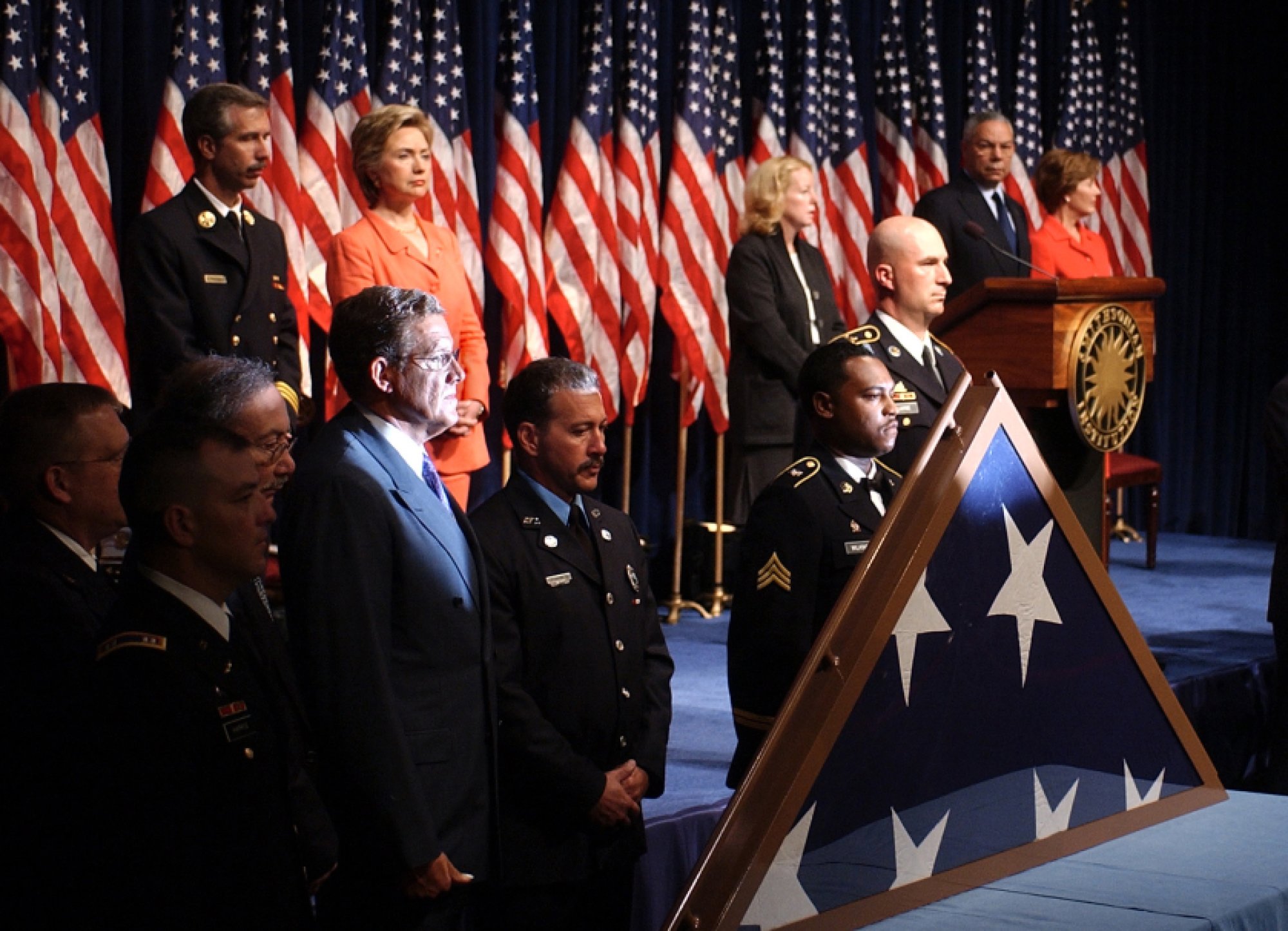
‘Never forget’, 25 years later: Betty Ong, the flight attendant who made the first 9/11 call
On the morning of Sept. 11, 2001, American Airlines flight attendant Betty Ann Ong was the first person to sound the alarm about the tragedy that was about to unfold.
The San Francisco native was based at Logan International Airport in Massachusetts and was aboard Flight 11 bound for Los Angeles with 92 people on board when hijackers took over the plane.
“My name is Betty Ong, I’m number three on Flight 11,” Ong said in a call to the American Airlines reservation center in Raleigh, North Carolina. “The cockpit’s not answering. Somebody’s stabbed in business class and — I think there’s mace — we can’t breathe. I don’t know, I think we’re getting hijacked.”
Read the story from NBC Bay Area’s Jessica Aguirre, Christine Ni and Jeremy Carroll.
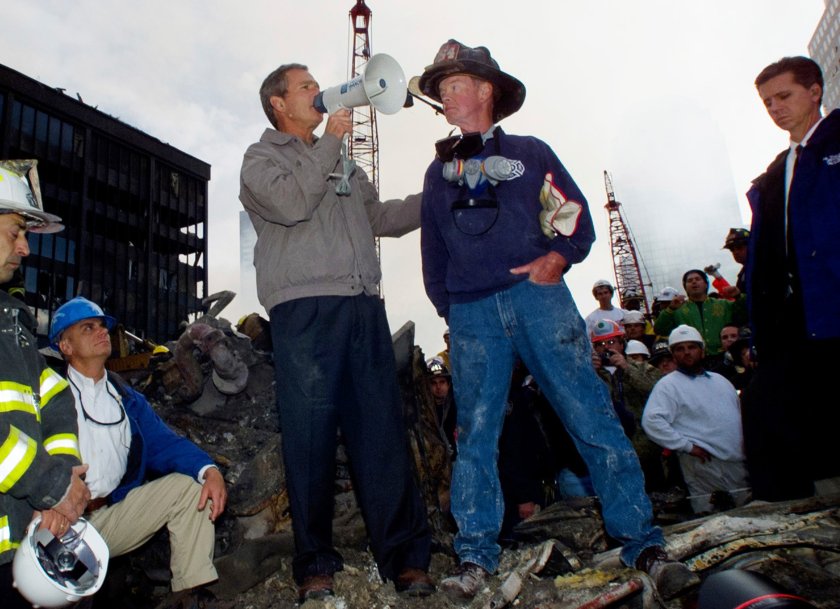
How 9/11 fireman Bob Beckwith ended up beside President Bush during Ground Zero speech
It was three days after September 11, 2001, when the motorcade for President George W. Bush made its way towards Ground Zero. There, he would survey the unimaginable wreckage, thank the tireless rescue workers and attempt to inspire the grief-stricken nation.
Bob Beckwith, at the time, was a 69-year-old former New York firefighter for Ladder Company 164 in Queens whose retirement was interrupted by his overwhelming desire to assist at Ground Zero.
Hoping to get a view of the president as he made his speech, Beckwith climbed atop a fire truck that he and other workers helped remove from the rubble earlier in the day. He assumed Bush would speak across the street at a command post where a tent and microphones had been set up.
That’s not what happened.
Read the story from NBC’s Mike Gavin.
Twin beams of light to rise from Mt. Washington on 25th anniversary of 9/11
A New Hampshire group has organized a tribute to those who lost their lives and the first responders who answered the call during the Sept. 11, attacks.
From Sept. 9 until Sept. 12, between 8 p.m. and midnight, two beams of light will illuminate the sky several miles above Mount Washington in New Hampshire. The Honor Summit installation, inspired by the Tribute in Light in New York City, will be visible from over 100 miles away on clear nights.
The tribute was organized by Renee Plummer of the Granite Springs Foundation, with support from the state and various partners across the region. The organization is still seeking sponsors.
“As we approach the 25th anniversary of 9/11, I find myself reflecting on how differently this day is experienced. For many of us, the memory is immediate and deeply personal. For others, it is something learned—not lived,” Plummer said in a message on the organization’s website. “The Honor Summit was created to bridge that distance.To ensure that this moment in our history is not only remembered but felt—together.”
Read the story from NBC Boston’s Marc Fortier.
President George W. Bush creates new art collection for 25th anniversary of 9/11

President George W. Bush has painted 16 all-new works of art in commemoration of the 25th anniversary of Sept. 11.
They will be displayed at the Bush Museum at the George W. Bush Presidential Center through Sept. 30.
Read the story from NBC Dallas-Fort Worth’s Alton Worley II and Sara Sanchez.
From the Lockerbie bombing to 9/11: How attacks on flights changed air travel forever
Taking a commercial flight from a U.S. airport generally requires a boarding pass to get anywhere near a gate, security screening controlled by the federal government and careful attention to the contents of carry-on bags.
It wasn’t always this way. Travelers once passed through security checkpoints staffed by private contractors selected by airlines. Full-sized bottles of shampoo and cans of shaving cream didn’t get tossed for exceeding liquid limits. Friends and relatives could accompany departing passengers and exchange goodbye hugs at boarding time.
The security system and screening procedures air travelers encounter today were built layer by layer, often after attacks or attempted attacks exposed new vulnerabilities — from bombs hidden in luggage to hijackers who turned airplanes into weapons.
“Attacks on aviation have an impact much greater than attacks on anything else because aviation commands the attention of the world as the thing that links the world,” said Mary Schiavo, an aviation disaster attorney.
As the 25th anniversary of 9/11 nears, here’s how those attacks, the earlier bombing of Pan Am Flight 103 and subsequent plots shaped airline and airport security.
Read the story on NBCLosAngeles.com.
How ‘Hope’ endures decades after 9/11 attacks
NBC New York’s Andrew Siff talks to a family whose day ended with a miracle.
FDNY releases report on impact of 9/11 on first responders’ health in years since attacks
A landmark report from the Fire Department of New York follows the physical and mental health of 15,000 EMS providers and firefighters who were exposed to the air at the World Trade Center in the aftermath of the Sept. 11 attack.
While the devastating health impacts to first responders at Ground Zero have been known for years, the report builds on existing research and brings it up to date, 25 years later.
The report shows more than 12,000 have been diagnosed with at least one physical or mental health condition related to Sept. 11.
Read the story from NBC New York’s Rana Novini.
Why 9/11 and its many griefs land differently 25 years later
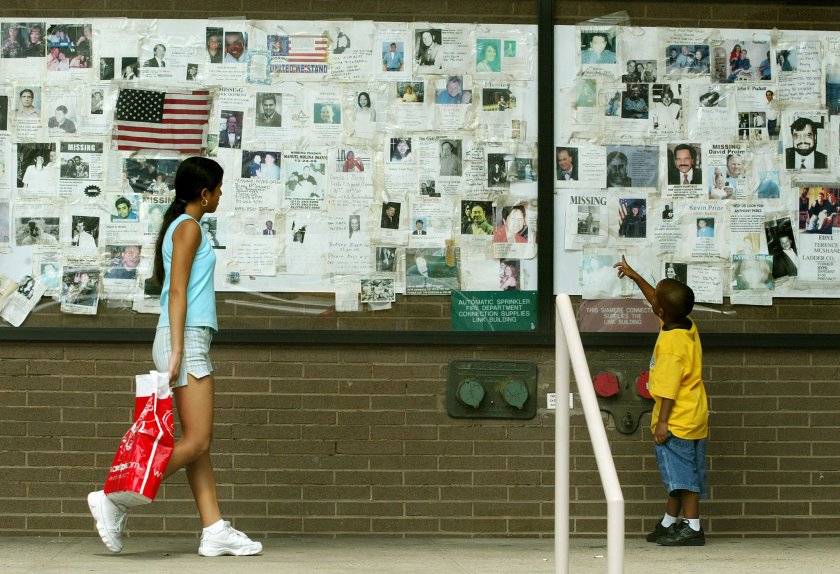
When the planes crashed and the buildings fell on that sunny September morning 25 years ago, the shock waves of dismay and grief went far past downtown New York City, rural western Pennsylvania and just outside Washington, D.C.
They radiated through every part of the United States in communities large and small, tearing at Americans’ sense of safety and their place in the world. Hearts were broken across the nation, not just of those who lost their loved ones but among strangers who mourned for them, the Sept. 11 attacks leaving no one unaffected in an unwanted moment of horrifying togetherness.
A quarter of a century later, the effects linger. We all live in a post-9/11 world, with its security strictures and surveillance. But here’s the thing: Americans don’t all live in the SAME one. What the attacks and their aftermath have come to mean isn’t a single viewpoint shared by everyone, for reasons chronological, political and personal.
It’s a tapestry of meaning and grief as varied as the nation in which 9/11 took place.
Read the story at NBCSanDiego.com.
Trove of new 9/11 docs suggest NYC officials knew of air quality health risks
In the same week that the country is marking the 25th anniversary of the attacks, New York City released about 170,000 pages of documents related to post-9/11 air quality and health risks — a trove of paperwork within which some notes suggest city officials knew of the potential environmental dangers and legal exposure in the fairly early aftermath of the terror attacks.
One undated internal document — a letter to former Mayor Rudy Giuliani’s deputy mayor, Robert Harding — listed various potential grounds for lawsuits against the city, including health advisories that caused people to return to the area too soon, causing toxic exposure, rescue workers being provided with faulty equipment, and police failing to secure businesses from looters.
Another memo early in the Michael Bloomberg administration, five months after 9/11, said the city was “leaving itself open to a barrage of lawsuits. At the least, we should discontinue telling people to clean their apartments with wet mops and rags.” The note added that the city should ask the federal government for cleanup funds.
Read the story on NBCNewYork.com.
Dispatcher recalls first reports about Pentagon on 9/11
A police officer who spotted American Airlines Flight 77 just seconds before it hit the Pentagon radioed what he saw to dispatcher Kyra Pulliam. NBC Washington’s Paul Wagner spoke with her.
How the National Cathedral played a pivotal role in honoring 9/11 victims
Three days after the Sept. 11 terrorist attacks, President George W. Bush gathered rescue workers and military members for a prayer service at Washington National Cathedral. For the first time, we’re hearing from one of the reverends who made that service possible.
The service honored the stories of sacrifice and acknowledged the grief that engulfed the nation in the wake of Sept. 11.
“Inside the World Trade Center, one man who could have saved himself stayed until the end at the side of his quadriplegic friend,” President George W. Bush said during the service.
Read the story from NBC Washington’s Aimee Cho.
‘Locking the doors and losing the aircraft’: Inside Reagan National Airport on 9/11 and its aftermath
It’s been a nearly quarter century since 9/11, but the magnitude is still fresh on the minds of those who were right there.
“I turned to my colleague and said, ‘This is a terrorist incident. We’re in this,'” recalls Chris Browne, who was the manager of Washington Reagan National Airport at the time.
Browne, now the director of the National Air and Space Museum and a former naval pilot, says he knew immediately that it was a terrorist incident. By the time the world was watching live on TV, a second plane was headed for the World Trade Center.
Read the story from NBC Washington’s Adam Tuss.
Curated and compiled by Noreen O’Donnell & Nelson Hsu.
This story uses functionality that may not work in our app. Click here to open the story in your web browser.