San Francisco’s stalled bid to break up with Pacific Gas and Electric Company (PG&E) and provide public power appears to be gaining traction amid frustration over the massive blackout in December and state regulators having recently given PG&E until October to set a justifiable price for the city to acquire its grid.
The fire and outage at PG&E’s Mission substation south of market left merchants on Irving Street in the city’s Sunset District without power for three days. The outage hit on the Saturday before Christmas, and the eve of the Chinese winter solstice celebration, confounding Rose Chen, who runs BBQ King and who stocked up for the Internet sales crush.
“We prepared a lot of food for the winter festival,” she said, only to watch it spoil when the outage stretched on for three says. “We can’t do anything.”
It was the same across the street at Tina Zheng’s Irvine Seafood Market.
“Everything is messed up, we cannot do business,” she said, so she and her husband filled their van with fish and ended up sleeping in the vehicle, using its power to keep cool water circulating in a plastic bin to keep them alive.
But in the end, the fish didn’t survive, and the market suffered losses of more than $10,000.
For public power supporters like city Supervisor Matt Dorsey, the December nightmare was only the latest in a string of blackouts and mishaps that they believe could be avoided if the city took over the grid.
“It’s s time for PG&E to be replaced,” Dorsey said in a recent interview. “It’s time for San Francisco to have a municipally owned utility.”
In February, Dorsey chaired a hearing of the public safety committee to push for answers from PG&E.
“For more than 120 years we have had the humbling privilege of serving this city and we do not take this responsibility lightly,” PG&E’s CEO Sumeet Singh told the committee, noting that the fire broke out when a single circuit breaker failed at a facility the utility had previously spent $200 million to upgrade.
“You just expect that these things are going to get better and they never do,” Dorsey said, adding that while he welcomes the utility taking responsibility, the fire in December was the third at the same substation and that month alone, there were seven outages citywide.
“There was a time that PG&E could point to their great record on reliability and safety, and I think that ship sailed a couple decades ago.”
It was in the wake of the PG&E’s bankruptcy – sparked in part by a string of disastrous wildfires – that the city first offered PG&E $2.5 billion for its power lines, poles and substation equipment. That was in 2019. The utility has twice rejected those offers, saying they were too low and were not in PG&E’s or its customers, best interest.
The city has since taken its case to the state’s Public Utilities Commission, hoping to move the process along. The CPUC has now given the city until April to come up with a final, updated offer to buy the company’s assets. A regulatory law judge has given the utility until October to respond with its own appraisal.
“If you were to take them over, you’re basically saying, ‘okay, any potential savings, I’m paying upfront to PG&E to make them go away,’’’ says Mark Ellis, a former chief utility consultant turned consultant. He says the price tag PG&E comes up with may be far more than San Francisco can pay with bonds — and still hope to lower bills.
“To me, the big issue is like the rates are just too high and they keep going up,” he says, adding that the city should be pushing for regulatory rate reform instead of an outright takeover.
“No one’s saying it’s going to be an easy path,” said San Francisco City Attorney David Chiu, who is leading the regulatory battle to force PG&E to the table. He says under the law, PG&E can’t just name any price. It must be reasonable and justified as a fair market value. Meanwhile, he says, every day the complex process goes on, is another day San Franciscans must put up with all the problems.
“This is putting the safety of our residents at risk,” Chiu says.
While the city has concerns about reliability and safety, so does PG&E, which has long argued the city lacks experience needed to run a sizable power grid, let alone run it less expensively.
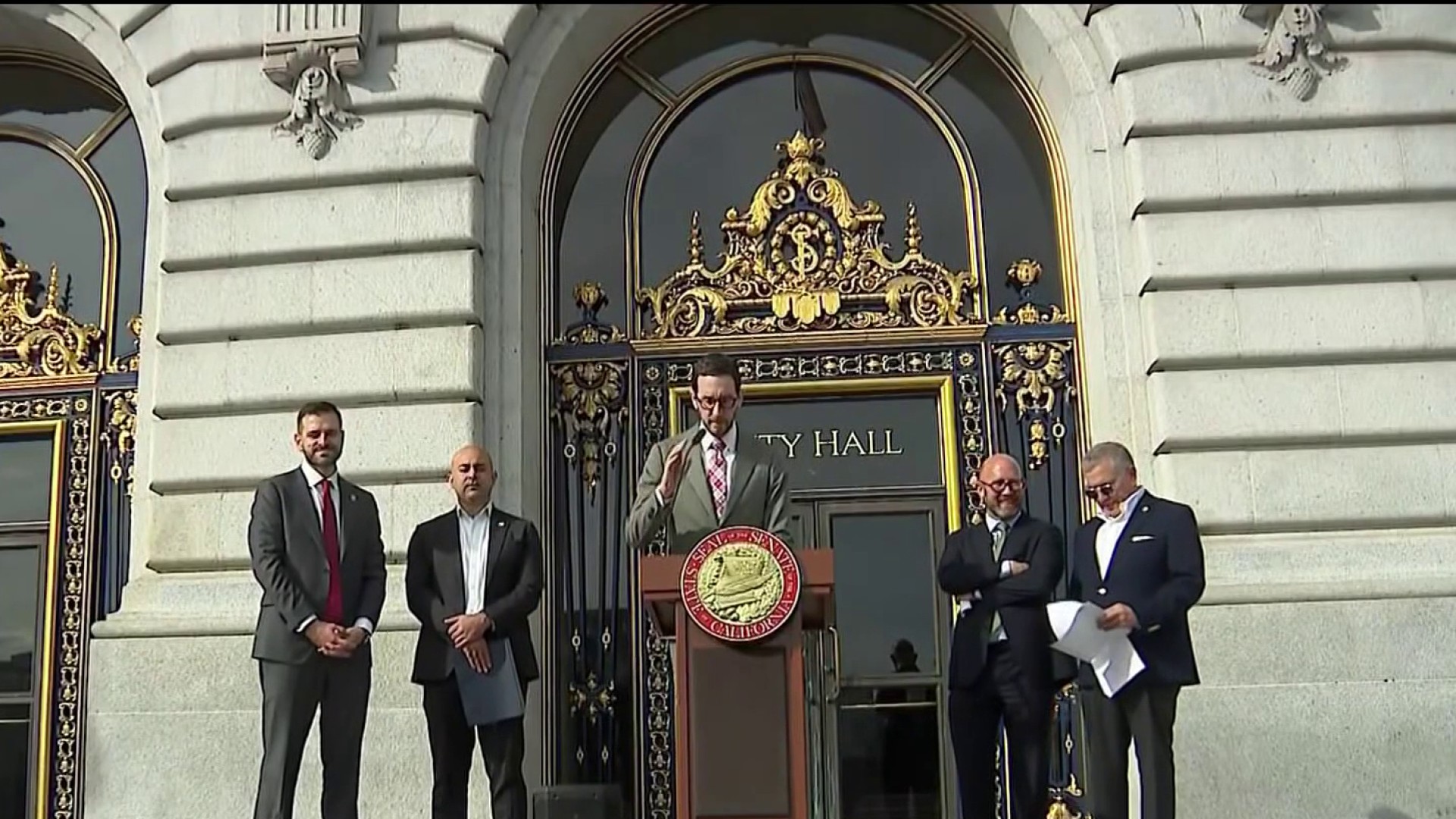

“We’re up to the task,” says Barbara Hale, assistant general manager of the San Francisco Public Utilities Commission. She says the city has plenty of experience. “2.7 million customers rely on their critical water services from this agency — we can step up and do the same for electricity.’’
The SFPUC runs Hetch Hetchy power, delivering both water and power from Yosemite to the city. It also maintains lines to deliver power to city customers generated by a solar array at the Sunset Reservoir.
As for PG&E, company official Sarah Yoell acknowledged to the Board of Supervisors in February that the breakdowns during December’s blackout were an unacceptable lapse. She pledged to quickly compensate businesses.
“We know that during the outage and in the days that followed, we did not meet our high standards of performance, she said. “We must do better.”
On Irving Street, Rose Chen says PG&E is typically reliable – and did make good on its promise recently to compensate for her losses from December.
“PG&E did a good job, but sometimes accidents happen. You never know.”