Le Journal
A new milestone in the cancer fight: 7 in 10 patients now survive five-plus years
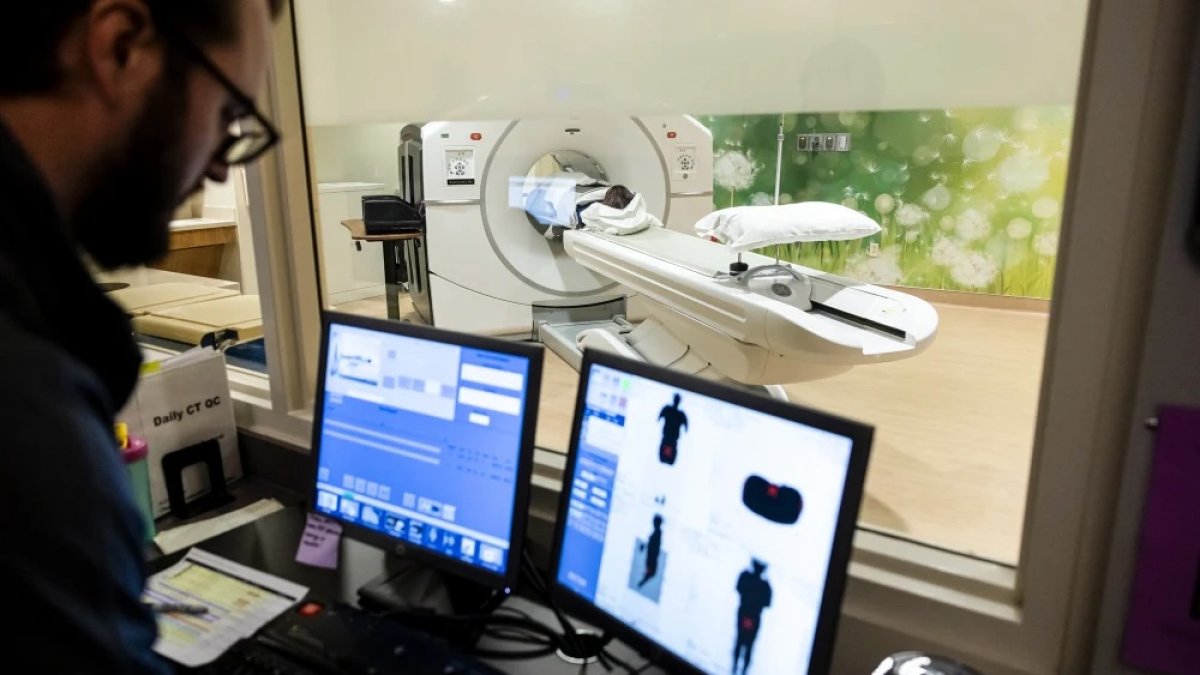
The U.S. has reached a watershed moment in the fight against cancer: Seven in 10 people now survive five years or more after diagnosis, according to the latest annual report from the American Cancer Society. That’s a big improvement since the 1970s, when only half of those diagnosed lived at least five years. In the mid-1990s, the rate was 63%. The 70% figure is based on diagnoses from 2015 to 2021. The findings were published Tuesday in the American Cancer Society’s medical journal, CA: A Cancer Journal for Clinicians. Five years is the most common benchmark for measuring cancer survival, since the risk of certain cancers’ recurring declines significantly if the cancers haven’t come back within that time. US & World Health Jan 5 Dread Pap smears? Federal guidelines now allow for a self-swab HPV test Health Dec 20, 2025 Johnson & Johnson owes $65.5 million to a woman with cancer who used talcum powder Vaccines Dec 2, 2025 The HPV vaccine is safe and cuts cervical cancer risk by 80%, large reviews find Thanks to improved treatment options over the last decade, many cancers have gone from death sentences to chronic diseases, according to the report’s lead author, Rebecca Siegel, the American Cancer Society’s senior scientific director of surveillance research. “It takes decades for research to understand and develop these more effective treatments, and now we’re seeing the fruits of those investments,” Siegel said. The report estimates that 4.8 million cancer deaths were prevented from 1991 to 2023, largely because of better treatments, earlier detection methods and reductions in smoking. Siegel said scientists have a greater understanding of how cancer develops and spreads, allowing them to engineer the immune system to stop or slow cancer growth. She highlighted immunotherapies as one of the biggest advances — the treatments help the immune system find and attack cancer cells. Immunotherapy has been “game changing” for myeloma, Siegel said. The five-year survival rate for the blood cancer, which is twice as common among Black people as in white people in the U.S., rose to 62% from 32% in the mid-1990s. Targeted therapy, which targets specific genes or proteins that help cancer cells grow, has been another major advancement, as such treatments cause less damage to healthy cells and come with fewer side effects. “Staying on treatment longer allows patients to live longer, and these less toxic treatments allow more sequences of therapy,” said Dr. Christopher Flowers, head of cancer medicine at MD Anderson Cancer Center in Houston, who wasn’t involved in the report. Flowers said targeted therapies and immunotherapies have improved survival outcomes for lung cancer, which kills more people than any other cancer in the U.S. The five-year survival rate for regional lung cancer — which is found in the lung and nearby structures or lymph nodes — is now 37%, up from 20% in the mid-1990s. However, further progress could be made by addressing major risk factors for cancer, said Dr. Clark Gamblin, a gastrointestinal surgeon at the Huntsman Cancer Institute and chief of surgical oncology at the University of Utah. “Our country has an epidemic of obesity, and cancers follow that,” said Gamblin, who wasn’t involved in the report. “So we’re not winning on every front.” Colorectal cancer rates are rising in people under age 50, and overall breast cancer rates are rising among women. Obesity can be a risk factor for both cancers. Overall, the American Cancer Society estimates there will be more than 626,000 cancer deaths and more than 2.1 million newly diagnosed cases in the U.S. this year. Siegel said she is concerned about scientists’ ability to study new methods of prevention, detection and treatment, given recent cuts to cancer research by the Trump administration. An analysis from Democrats on the Senate Health, Education, Labor, and Pensions Committee found a 31% decline in cancer research grant funding in the first three months of 2025,…

2025 was the third-hottest year ever recorded on Earth, data shows
Last year was the third-warmest in modern history, according to Copernicus, the European Union’s climate change monitoring service. The conclusion came as no surprise: The past 11 years have been the 11 warmest on record, according to Copernicus data. In 2025, the average global temperature was about 1.47 degrees Celsius (2.65 Fahrenheit) higher than from 1850 to 1900 — the period scientists use as a reference point, since it precedes the industrial era in which massive amounts of carbon pollution have been pumped into the atmosphere. “Annual surface air temperatures were above the average across 91% of the globe,” Samantha Burgess, the strategic lead on climate for the European Centre for Medium-Range Weather Forecasts, which operates Copernicus, said at a news conference. “The primary reason for these record temperatures is the accumulation of greenhouse gases in the atmosphere, dominated by the burning of fossil fuels.” World leaders pledged in the 2015 Paris Agreement to try to limit global warming to 1.5 degrees Celsius over preindustrial levels. But temperatures have neared or exceeded that mark for three consecutive years, leaving that dream all but dead. “Exceeding a three-year average of 1.5 degrees above pre-industrial levels is a milestone that none of us wished to see,” Mauro Facchini, head of Earth observation for the European Commission’s Directorate General for Defence Industry and Space, said at the news conference. “The news is not encouraging, and the urgency of climate action has never been more important.” U.S. agencies are expected to release their climate measurements for 2025 on Wednesday. NASA issues its report separately from that of the National Oceanic and Atmospheric Administration, since each uses different methods to compute global annual average temperature, typically resulting in some variation in the results. However, the trajectory of all those measurements has been clear: The world is warming rapidly, dangerously and perhaps faster than scientists once expected. The climate data from Europe is grim amid aggressive U.S. efforts to scale back regulations meant to address climate change and step away from international collaboration to curb warming. MORE CLIMATE CHANGE COVERAGE 2026 Milan Cortina Olympics 15 hours ago How will climate change reshape Winter Olympics? List of possible host sites shrinking Climate change Dec 12, 2025 Polar bears are rewiring their own genetics to survive a warming climate Climate change Sep 8, 2025 Americans are consuming more sugar as the world gets hotter, study finds The Trump administration announced last week that it would withdraw from the United Nations Framework Convention on Climate Change, which will leave the U.S. without a meaningful voice in global climate discussions. The administration also said the U.S. would no longer support the Intergovernmental Panel on Climate Change, which produces the world’s best reports on the pace of climate change and its effects. Later this month, following a yearlong waiting period, the U.S. will officially leave the Paris Agreement. President Donald Trump has called climate change a “con job,” and his administration has taken steps to scuttle or downplay key climate reports, including the National Climate Assessment. The administration is working to remove the Environmental Protection Agency’s ability to regulate the greenhouse gas pollution that causes global warming. At the same time, it has taken steps to boost the coal industry and order coal plants to continue operating. (Coal is the fuel that produces the highest level of greenhouse gas pollution.) The administration has also pushed to reverse many of the Biden administration’s climate initiatives, including subsidies for electric vehicles. U.S. climate pollution rose about 2.4% in 2025, according to preliminary results from the Rhodium Group, an independent research firm that tracks U.S. emissions. That’s not necessarily the result of Trump’s policies, however,…
Some areas could see snow this weekend. But what will Boston get?
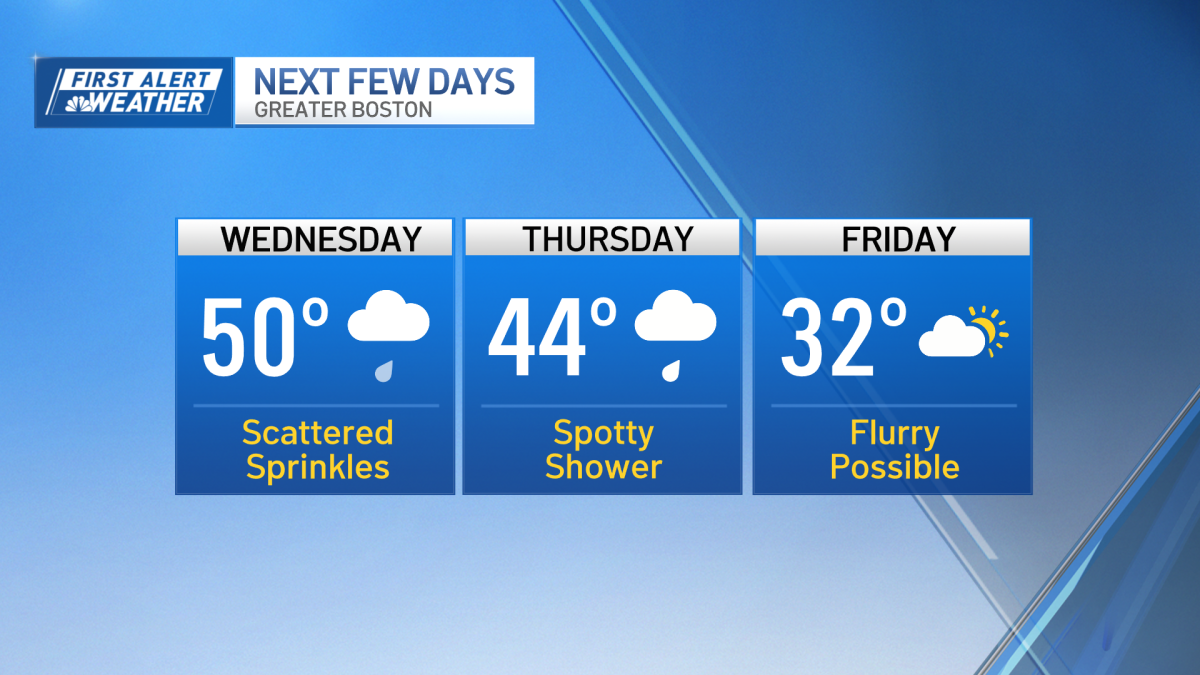
We’re cruising right along through this Tuesday with milder temperatures. And the temperatures are getting even warmer tomorrow! Woohoo! But first, for today, expect highs in the mid 40s under a mix of sun and clouds. The clouds will increase later today in advance of a weather system that could produce an isolated shower or two here and there tonight into Wednesday morning. We’re not expecting widespread rain in Greater Boston. A few flakes are possible in the higher elevations toward Worcester Hills and the Berkshires. Low temperatures tonight will fall into the mid to upper 30s. Wednesday will feature a lot of clouds. Again, a few spotty showers are possible. But our temperatures will be the main event. In fact, highs will climb to near 50 degrees! Enjoy the warmup, because it won’t last. By the time we roll into Thursday, high temperatures will dip into the mid 40s early in the morning. Then, by afternoon, gusty west winds will drop our temperatures even more, into the low to mid 30s. Yikes! Again, a spotty shower is possible, but it will be the exception and not the rule. On Friday, we’ll wake up to temperatures in the single digits and teens! Highs will reach the low 30s. Let us know if you see a flurry or two Friday. Seriously! Why, you ask? The threat for snow showers has decreased significantly for the Boston area, as some of our forecast models had originally suggested late last week. So while a few flurries could develop on Friday, we’re not forecasting any accumulations for much of our area. The higher elevations in Vermont and New Hampshire will see the best chance of accumulating snow. The same goes for Sunday. A few flurries are possible, but right now, we don’t believe we’ll have a snowstorm here in southern New England. We’ll keep you posted on any changes. Temperatures will fall into the 20s for highs on Martin Luther King Jr. Day on Monday.
Mass. audit law ‘standoff' flares up with complaints, allegations
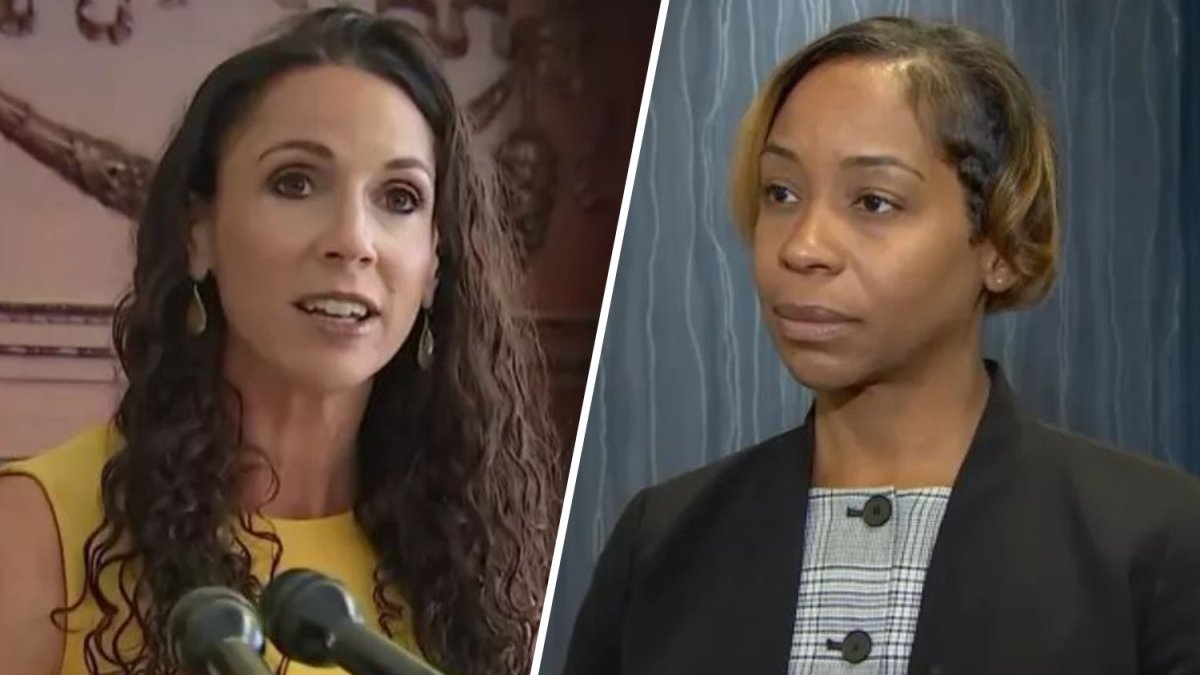
Massachusetts Attorney General Andrea Joy Campbell again suggested the future of the legislative audit law is in the hands of the auditor, who in turn accused Campbell of “public corruption,” continuing a saga that has metamorphosed since more than 70% of voters cast ballots in favor of the review more than a year ago. “I hope the voters get exactly what they voted for,” Campbell said when asked on GBH’s “Boston Public Radio” whether voters would “get what they voted for” should the audit back-and-forth continue between her and Auditor Diana DiZoglio. “I hope the auditor stops the standoff,” Campbell added. A majority of voters passed the DiZoglio-backed law enabling her office to audit the Legislature in November 2024. Top Beacon Hill Democrats have pointed to concerns about the constitutional validity of the law ever since, and Campbell and DiZoglio have gone back-and-forth during respective media appearances about each others’ roles in the process. “We represent almost every state agency and constitutional officer in the Commonwealth,” Campbell said Tuesday. “Anytime an agency comes to us and asks us to represent them, we ask them a certain amount of questions, they reply, and then we move forward or not. The only agency or constitutional office we have had any issue with since I’ve taken office is the auditor. And it’s not for lack of trying — it’s not for lack of trying to resolve this.” DiZoglio responded to Campbell’s Tuesday comments in a statement to the State House News Service. “The Attorney General continues to falsely claim that she needs more questions answered from my office. This is why I have called on the AG to sue me, and my office, so we can end this so-called ‘standoff.’ She won’t face me directly in interviews, however, and won’t sue me — as I have repeatedly called on her to do. Why? Because she is well aware that she needs nothing else from my office to be able to do her job,” DiZoglio said. The Methuen Democrat continued, “She cannot continue to claim that my office hasn’t given her what she needs, yet refuse to sue me. It’s her duty to this Commonwealth to drag me to court if I haven’t provided what she needs to get this law enforced — and I’ll skip into the courtroom happily providing whatever is allegedly needed from my office.” DiZoglio called Campbell’s actions “stall tactics” that are “giving the Legislature more time to destroy documents and records.” Campbell has repeatedly said her office has requested information about the scope of DiZoglio’s audit. She said Tuesday that there’s “a pathway forward” where DiZoglio could get an outside lawyer should Campbell’s office choose not to represent her. “Even in that posture, which we allow for other agencies, she still has to answer certain questions, and she has not provided us those answers,” Campbell said. Campbell said she would provide “Boston Public Radio” hosts with the questions she has been trying to ask DiZoglio, so that the hosts can ask the auditor themselves. “What we are all witnessing right before our eyes is nothing short of public corruption,” DiZoglio alleged in response. “Our AG has conspired with the Speaker and Senate President to secure a very large budget increase for herself as a reward for this cover up. It’s beyond disgraceful. Every taxpayer in this state should be calling on the AG right now to sue both me and the Legislature for whatever she allegedly needs to do her job so this law gets enforced. Anything less is an abdication of her responsibility as your AG and outright public corruption.” According to Campbell’s office, the core questions her office has asked DiZoglio revolve around her position on key legal…
One month after Brown University tragedy, city supports businesses & reviews response
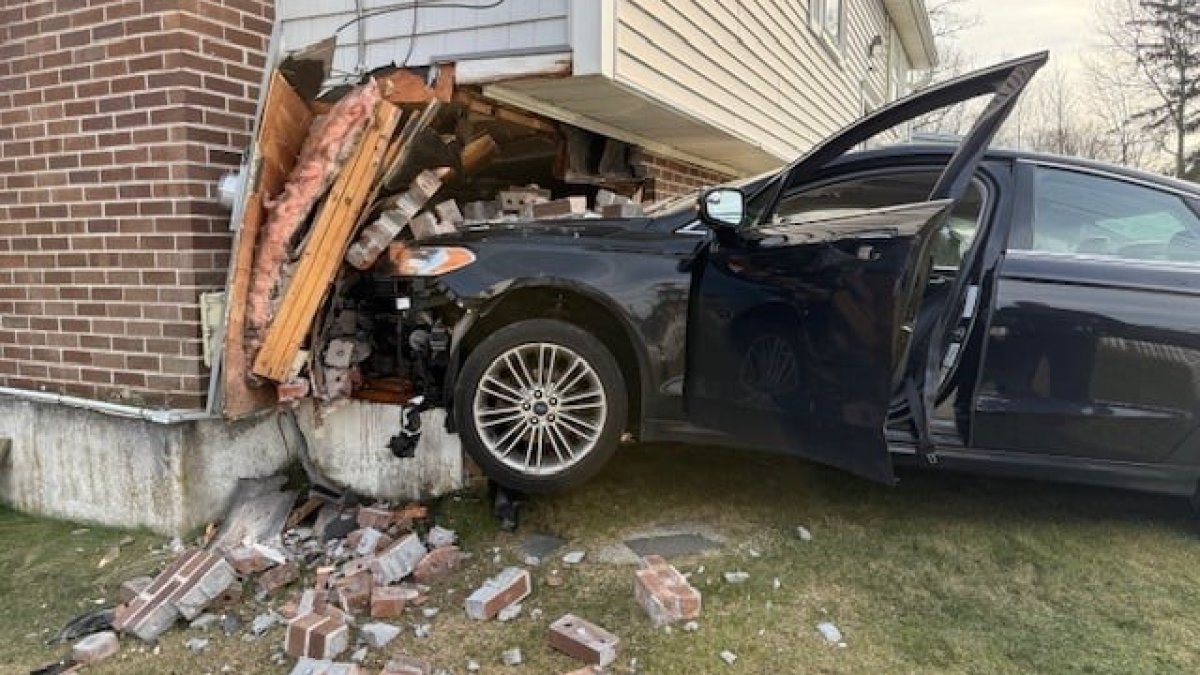
Car crashes into Raynham home after driver suffers medical episode

Residents displaced as flames spread between buildings in Chelsea
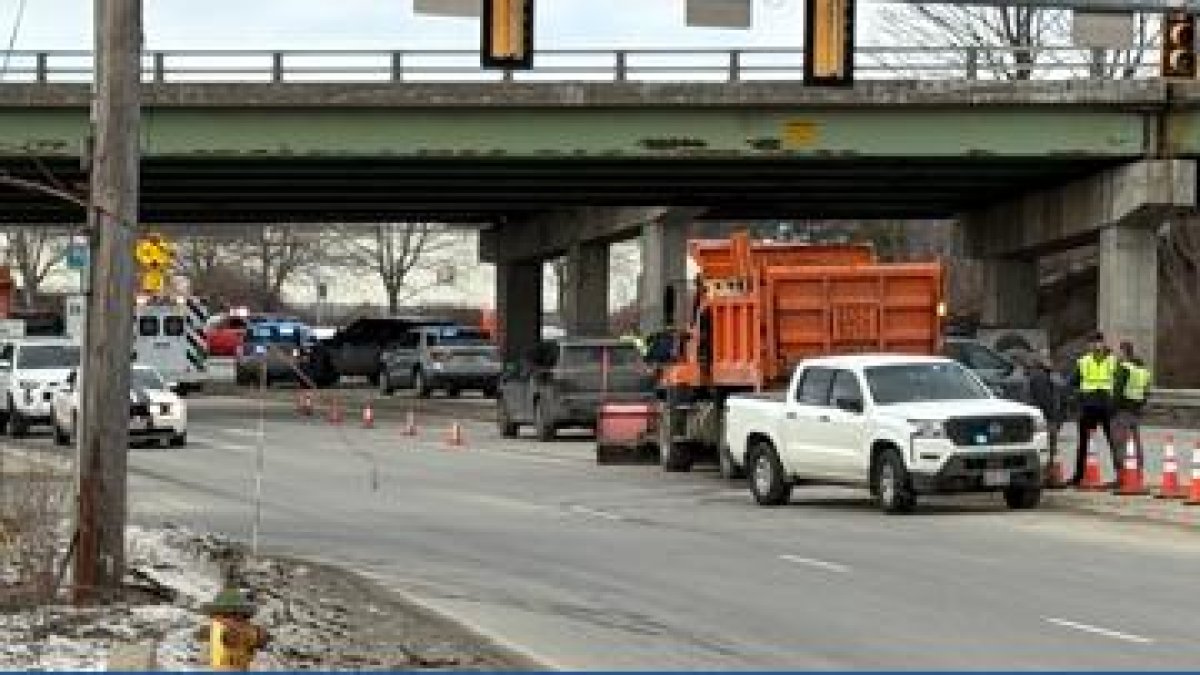
‘Terrible tragedy': Two Maine DOT workers killed, another injured in crash on I-95
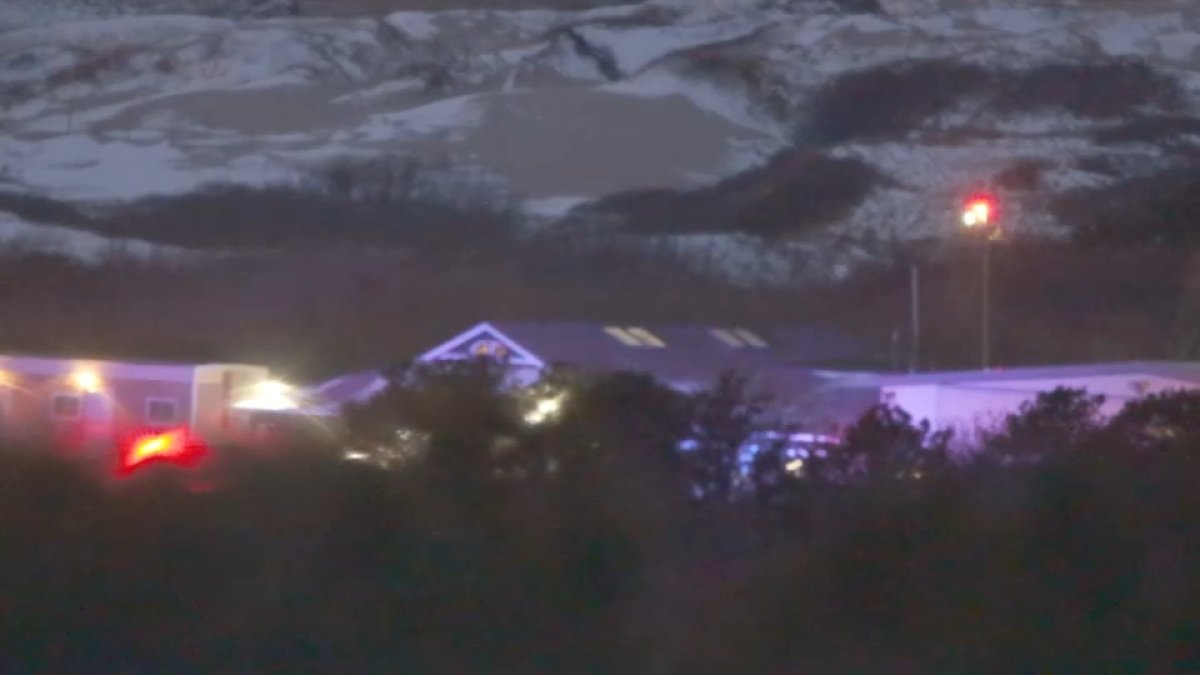
NTSB issues preliminary report on deadly Provincetown plane crash
The National Transportation Safety Board has shared a preliminary report as it investigates a plane crash that killed a pilot on Cape Cod earlier this month. Christopher Burroughs, a 60-year-old man from Attleboro, Massachusetts, was the only person on board the Cessna 172N when it crashed at Provincetown Municipal Airport on Jan. 4. He was pronounced dead at the scene. The NTSB said the plane was owned and operated by Brockton Flying Club, based at Taunton Municipal Airport, where it departed at 2:06 p.m. The airport manager in Provincetown said the pilot reported being inbound to Runway 7 at 2:30 p.m., but that he was informed the airport would be closed for the next 15 minutes for snow removal. The pilot acknowledged this, and the flight was tracked heading toward Marshfield Municipal Airport, the NTSB said. It approached that airport at 2:47 and climbed away three minutes later. According to the NTSB, the pilot told Provincetown Municipal Airport at 3 p.m. that he was inbound to land at Runway 25. That was his last communication before his altitude fluctuated, with surveillance footage showing the plane climbing slightly and suddenly descending. Marks where the plane impacted the ground were found 2,020 feet from the runway, with investigators connecting them to its landing gear, propellor and the underside of its fuselage. “Another ground scar was located 18 ft to the right of the nose landing gear impact signature consistent with right wingtip contact,” the NTSB added. The aircraft was fully engulfed in flames by the time police and fire crews arrived. The NTSB said this fire caused significant damage to the central part of the plane. The preliminary report did not identify the cause of the crash. More Cape Cod news Cape Cod 2 hours ago Homes to be seized for Sagamore Bridge replacement: ‘We're a checkbox' Cape Cod 16 hours ago North Atlantic right whale season is off to a big start in Cape Cod Bay Cape Cod Jan 10 Person killed in Route 6 crash on Cape Cod

Person hit by bus in South Boston, police say

Boston food hall closing after seven years