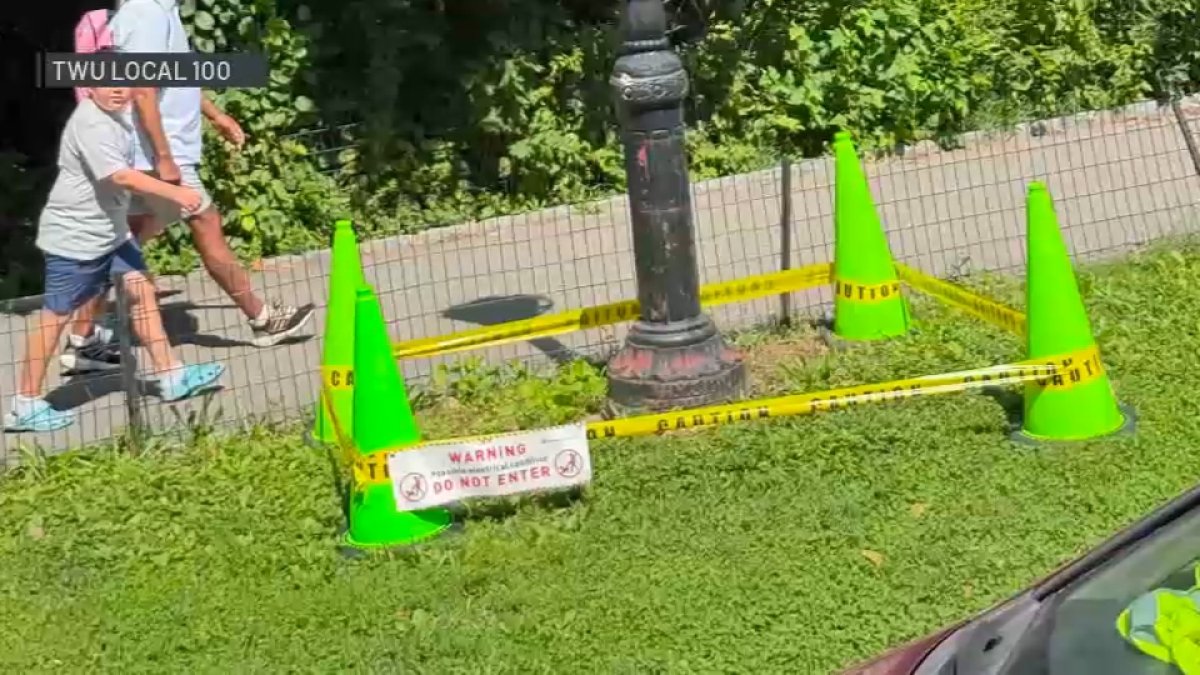
Every year, electrical inspectors sweep New York City for invisible currents pulsing through manhole covers, streetlight poles, fences, or control boxes on traffic lights. Electricity is not supposed to leak outside of the wires intended to conduct it, but stray voltage sometimes makes its way to places it should not be. How often does that happen?
According to state records reviewed by the I-Team, there were more than 7,000 “energized objects” detected by the utility Consolidated Edison last year. Most of the time the stray voltage would be virtually undetectable to human touch, but more than 500 of the objects involved readings greater than 25 volts, a point at which humans might be able to feel a tingle.
Electric companies are required to report stray voltage data to the New York Public Service Commission each year. However, one datapoint is absent from their public reporting. The precise location of electrified objects.
That absence of geographical data tied to stray voltage reports is now drawing criticism in the wake of a deadly carriage horse accident in Central Park.
Back in June, an eighteen-year-old tourist named Romanch Mahajan became the first person to die in a Central Park carriage horse accident since horse drivers began offering rides 150 years ago. Mahajan suffered a fatal head injury when the horse pulling his family’s carriage through the park got spooked and darted off, tipping the carriage over. A few weeks later, Con Ed detected errant electricity near the accident scene.
“Con Edison observed very low levels of stray voltage on July 16 and July 23,” a statement from the company said. “We determined that neither instance originated from Con Edison equipment.”
Though it is unclear whether that stray voltage condition played a role in spooking the horse, the Mahajan family and the union representing New York City carriage horse drivers believe they’re owed more detailed information.
“There was a current running through the ground that has the ability to trigger a horse or trigger an animal,” said Alexander Kemp, the administrative vice president of TWU Local 100. He added that his members are uneasy because they don’t know if there might be other electrified pathways where their horses roam.
“They would like to know where, and they also want to know why that information or that data hasn’t been collected from the park?”
Con Edison declined to provide specific data about stray voltage detected in Central Park, citing pending litigation over the horse carriage death. But the company says it makes conditions safe and fixes stray voltage problems when they involve utility-owned equipment. When stray voltage is detected in private or city-owned infrastructure, Con Edison says its personnel notify customers so they can make necessary repairs.
The city’s Department of Transportation, which maintains municipal lamp posts and traffic lights, did not respond to questions about its own stray voltage inspections and repairs. The DOT does publish annual results of random stray voltage checks, listing the hundreds of intersections where readings are taken. But a review of DOT inspections over the last five years includes no mention of any inspection location within Central Park.
“This is a concern because we don’t know at this point, is the city testing enough?” said Sagar Chadha, the attorney representing Mahajan’s family. “How often are they testing Central Park? How often are they testing these areas within the park that could be electrified and carry stray voltage? We do not have answers to this.”
The Mahajan family has filed a notice of intent to sue several city agencies including the DOT. Their lawyers said they also intend to name Con Edison and the horse carriage driver as defendants.
Just before Romanch Mahajan was killed, the TWU says the driver of the horse stepped away from the carriage in order to take a family photo of his customers. The union said safety protocols forbid leaving the carriage unattended with a horse uncontrolled. The driver himself has not responded to media requests for comment.
Although the Mahajan family and the TWU are both calling for more transparency about stray voltage, they are at odds over the future of the carriage horse industry in New York City.
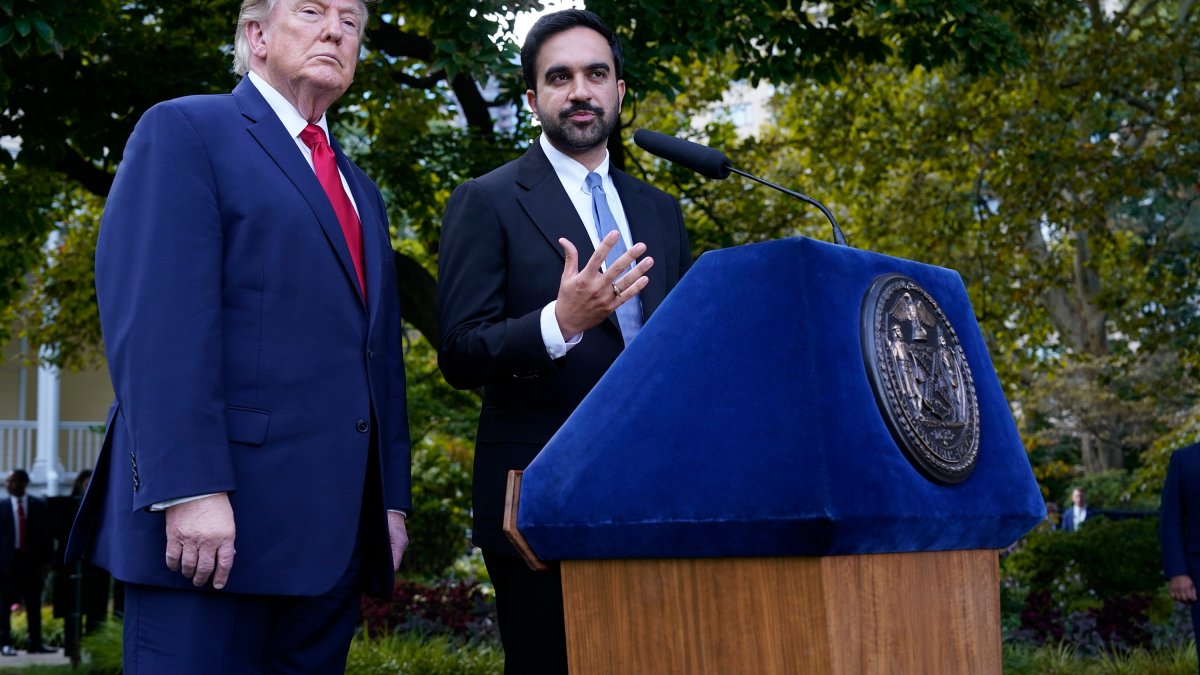
In the months since the accident, members of the Mahajan family have become some of the most vocal supporters of a City Council bill that would ban carriage horse rides in New York City. The bill, dubbed Romanch’s Law, has the support of Mamdani and the majority of the City Council. A spokesperson for Council Speaker Julie Menin said she is ready to pass the bill after it goes through a mandated environmental review.
But the TWU is lobbying against the ban, arguing this summer’s accident is being used as a pretext to shut down an industry that’s been targeted by animal rights groups for decades.
Deepak Mahajan, Romanch’s father, said he hopes the bill is passed and signed into law, as part of his son’s legacy.
“We want a complete ban on horse drawn carriages,” the grieving father told the I-Team from India. “We cannot bring Romanch back, but we can try to make sure that no other family suffers what we have suffered. No parent should have to watch their child die in front of them. We want Central Park to become a safer place.”