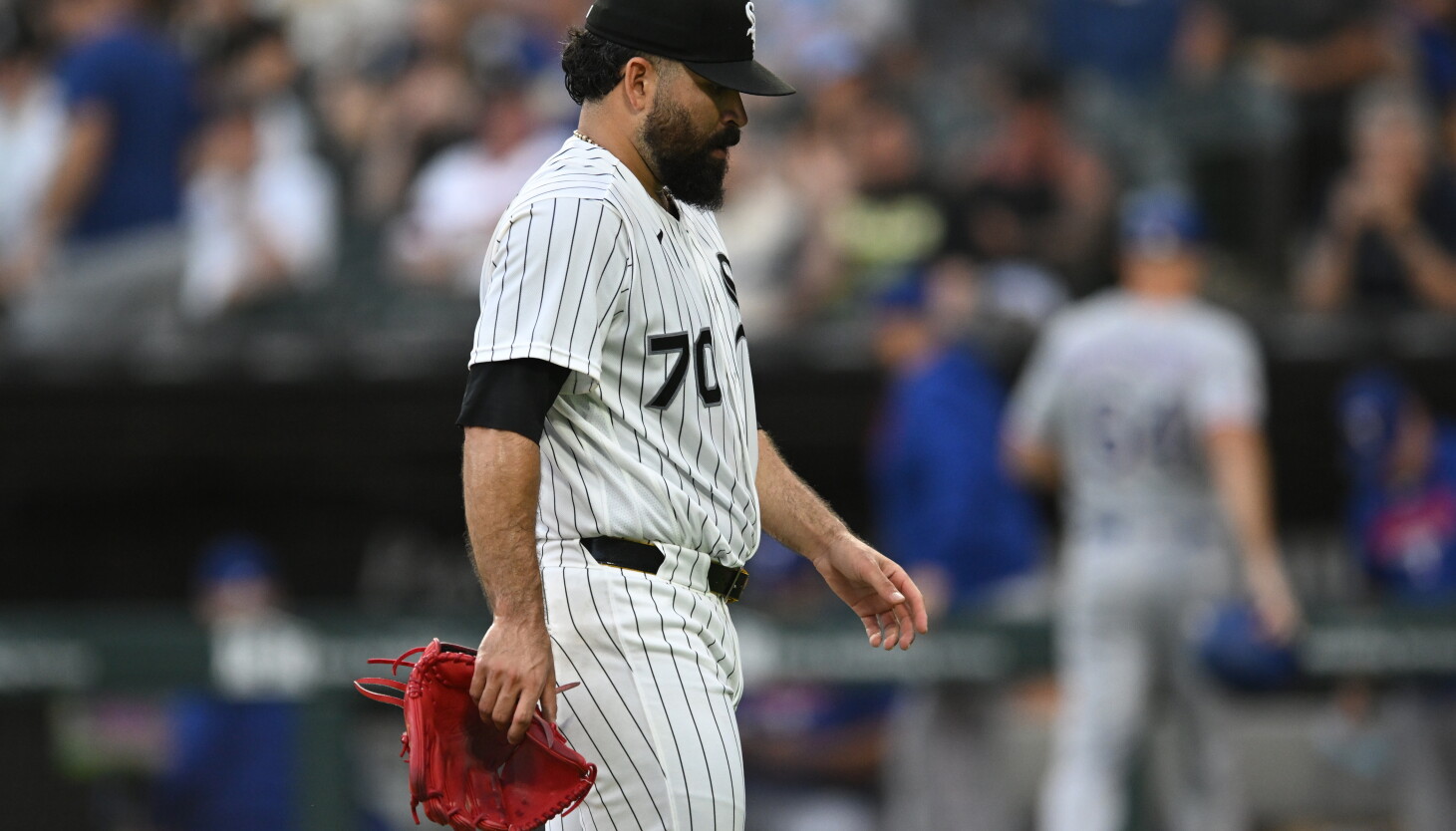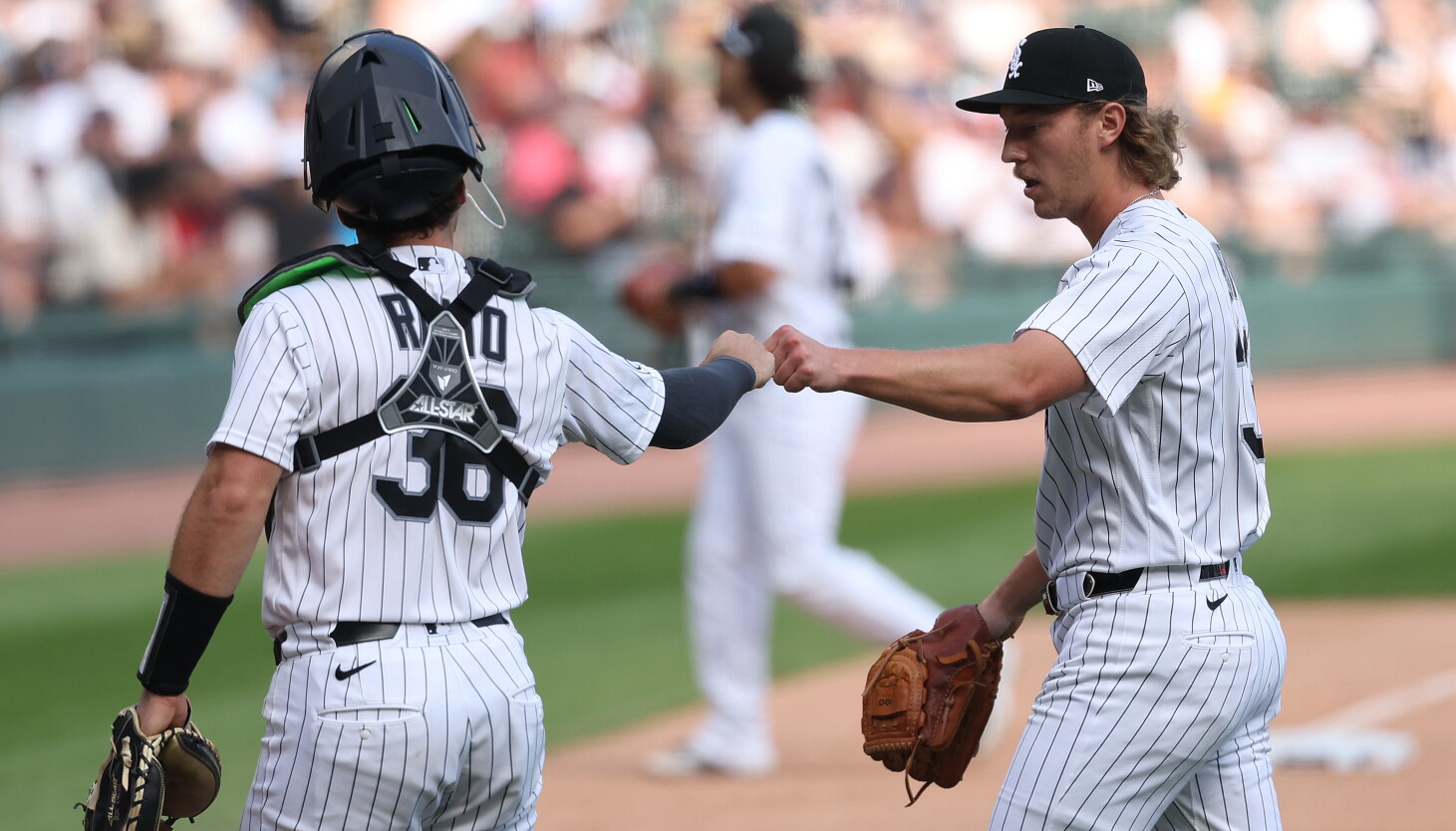

No one spins the baseball quite like White Sox rookie left-hander Hagen Smith.
After two perfect innings on Sunday to preserve a scoreless tie with the Mets, the former fifth overall pick has struck out 13 in his eight major league innings since being called up. That Pete Crow-Armstrong walk-off home run off Smith last week? It’s the only hit he’s allowed to a big leaguer (1-for-25).
But that opening line isn’t a qualitative assessment of Smith’s trademark slider, it’s descriptive. He doesn’t set his fingers on the seams to set his slider grip, but instead spins it off the skin of the baseball. At the tail-end of his second full year in professional baseball, he’s yet to meet someone who does it similarly.
“Kind of close, but not with no laces,” said Smith, who won’t be tweaking it anytime soon.
Part of a loaded 2024 draft class that’s seen players picked behind him like Konnor Griffin become the consensus top prospect in the sport this spring, Jac Caglianone swat 22 home runs for the Royals this season, and Trey Yesavage dominate the Dodgers in last October’s World Series, this month has been Smith’s first opportunity to strut his stuff. Elbow soreness slowed him last year, before shoulder impingement knocked him out for a month this year and shifted Smith to a bullpen role until next spring. Around that, he’s flashed wipeout stuff, but has walked over 16 percent of opposing hitters.
Becoming a dominant relief weapon for a Sox team that looks playoff-bound could shift his narrative quickly.
“When he's in the zone, he's--I don't want to say unhittable, but it's hard to square him up,” said Sox manager Will Venable. “We're seeing a lot of swing and miss with all of his stuff in the zone, and when he's able to do that, he's really impactful.”
The explanation du jour for Smith’s upturn is raising his armslot in his delivery, after it was substantially lower at the start of spring. More consistent movement, velocity, location and arm health have seemingly followed.
“It was a pretty easy fix,” said Smith. “I was just getting a little scoopy for a while, and then once we fixed that, I feel like everything got helped a little bit. Slider got better, cutter got better, fastball got better. All the shapes went back to normal.”
Smith reasons that his arm angle dropped on its own while he was working on other things, like the cutter he’s developed to better keep him in the strike zone. For the Sox, the commonality is both of Smith’s years in pro ball have ended with him in far better form than with which he began. In the future, if they want Smith to become the rotation solution they could desperately use right now, that cycle must end.
“Coming into spring training physically where he wants to be at, is definitely a focus for everybody and for him,” senior advisor to pitching Brian Bannister told the Sun-Times. “The battle is him just being physically ready to pitch on a five-day routine for six-to-eight months straight, along with being pitch-efficient enough to be able to get you five-to-seven innings before he hits his pitch count.”
Success leaves clues, and Bannister adds that Sox biomechanists have identified some hip movements in Smith’s delivery to key in on, alongside how clear it’s become where his armslot needs to be. The Sox ultimately drafted Smith so high because they believe his stuff is so good, his short arm action is so deceptive, that he only needs to be but so precise to be overwhelming.
Just eight major league innings of relief have already provided a glimpse to what Sox scouts saw in Smith, and relief weapons can become stars in October. But is the bullpen where he’s at his best, or the template for more?
“This version, no doubt, he's a weapon,” Bannister said. “We've kind of always known that.”