
President Donald Trump on Monday halted the planned detonation of several tons of degraded bomb-making material at an Iowa ammunition plant, urging a federal appeals court to first sign off on what he called the safest way to handle the situation.
The detonation of 68 barrels of lead azide was initially planned for last Friday, but the Army has since changed the date three times following an outpouring of public concern about potential health and environmental effects. They had planned for a detonation this coming Wednesday, saying the weather was most favorable that day.
The Army had no immediate comment when asked about the president’s social media post.
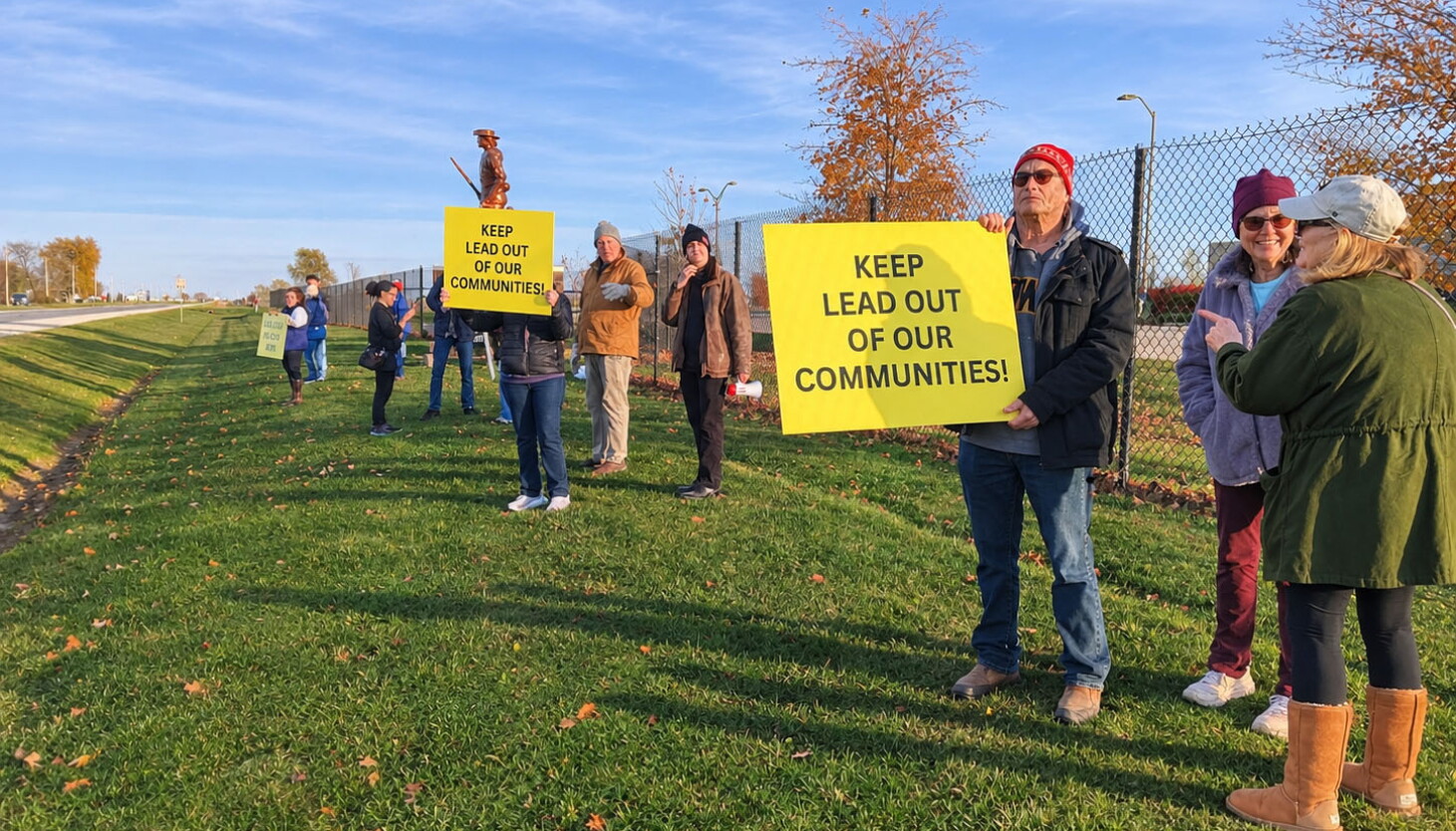
Environmentalists sued last week to stop the detonation, calling into question an emergency permit approved by the U.S. Environmental Protection Agency that cleared the way for the operation. The court temporarily halted the permit, prompting the Army to argue that it didn’t need authorization after all given that it was an emergency.
Trump says he’d blame incoming governor for any ‘death or destruction’
“I feel the proper course is to get rid of this longterm problem but, at the same time, have ordered the Military not to do so until such time as the Eighth Circuit agrees that we can go forward,” Trump posted.
If incoming Gov.-elect Rob Sand and the court don’t agree, Trump said the administration will have no choice but to not proceed with the planned detonation, adding that he would hold the incoming governor responsible for “any and all death or destruction caused by this very unfortunate, and longterm, situation.”
Sand said in a social media post on Sunday that because of previous decisions that have already been made, “No good options exist and the situation is more dangerous and unpredictable than it ever should have been.”
He questioned why a contract to remove the explosive risk was canceled, why nothing was done and “why we are rushing to demolition now in late November.”
“The safety of Iowans should be the top priority of everyone involved,” he said. “All relevant federal, state and local government resources should be focused on protecting everyone that could be impacted.”
Gov. Kim Reynolds activated the state emergency management office on Friday. The state also created a dedicated website for information about the operation.
Army says plans are aimed at avoiding something worse
In court filings over the weekend, Army Col. Aaron Teller, a munitions emergency response specialist, explained that less liquid inside the barrels means the solution inside is more susceptible to freezing, which increases the sensitivity of the crystals that have formed around the inside of the rim and underside of the lids.
“Even a small amount of friction can break the crystal formation, causing an explosive chain reaction,” he said in his declaration to the court.
In March, staff at the Iowa Army Ammunition Plant found several dozen barrels of degraded lead azide, which is used in munitions production. Crystallization of the material created an unstable and dangerous situation, prompting the Army to assemble experts in munitions chemistry, engineering and environmental safety to come up with a plan.
According to EPA documents, alternatives such as neutralizing and decomposing the drums’ contents with other chemicals were considered. But officials said handling the drums would increase the probability of an accidental, fatal detonation.
The environmental groups disagreed, arguing in their court filings that other alternatives were not fully considered. They also criticized officials for not sharing more information with the public.
Officials contend that the risk of an uncontrolled explosion is growing, particularly as temperatures drop. They said there is a risk that the chemicals may explode as temperatures are expected to drop below 30 degrees Fahrenheit (-1 Celsius) in the coming days.
Experts say there are no easy answers
Lead azide is “very sensitive” and also susceptible to heat, freezing, shock, friction and “all sorts of things that could cause an accidental detonation,” said John Goodpaster, a chemistry professor at Indiana University, Indianapolis. It’s also old, which increases the risk because explosives become increasingly unstable as they age, he said.
Add in the environmental threat caused by the lead that will escape into the atmosphere and the challenge is significant, Goodpaster said.
“I do not envy the Army,” Goodpaster said. “They are in a situation where they’ve got a large amount of very dangerous material and not very many good options in terms of trying to dispose of it.”
But it’s impossible to predict when it could explode on its own, he said.
“The longer we wait, the longer the risk accumulates that they might have an accidental explosion,” Goodpaster said.