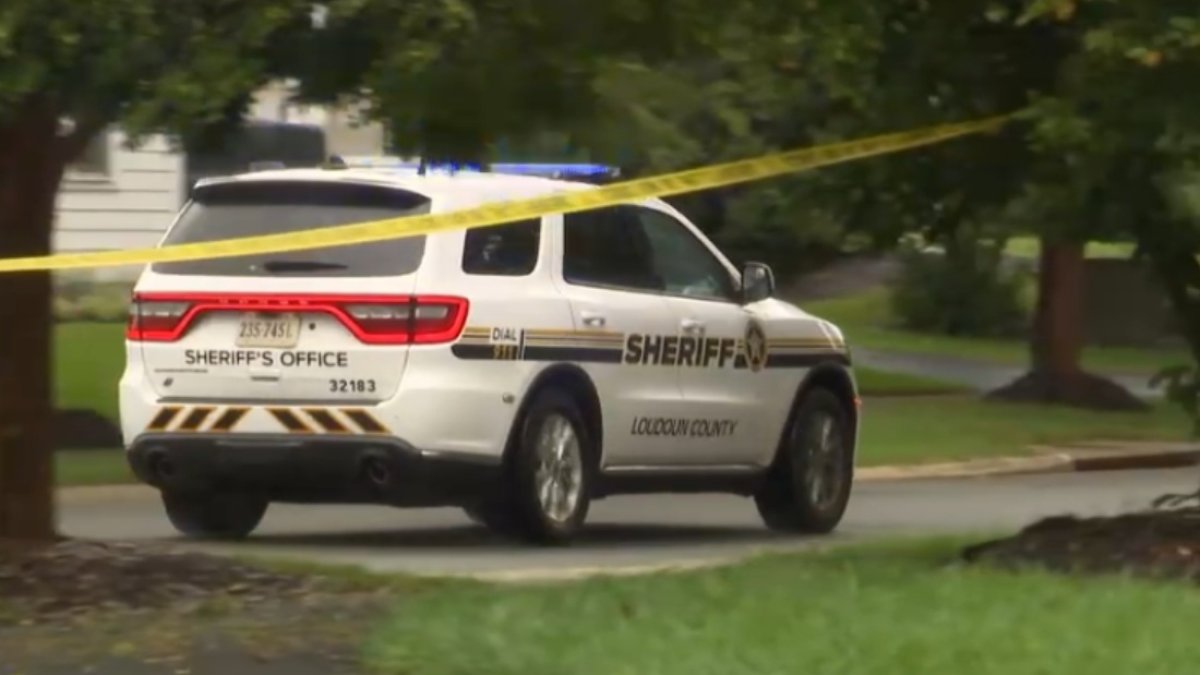
On Friday, a judge delayed a September hearing in the ongoing legal fight between Prince George’s County and the Maryland-National Capital Park and Planning Commission – a battle over control of tens of millions in taxpayer dollars.
The parties were expected to be in court Monday, Sept. 21, to hear arguments in a case over the county’s efforts to transfer $39.3 million from the bi-county parks and planning commission to itself. That hearing, at the request of the county, was postponed to Nov. 16 and Nov. 17.
At issue is $39.3 million the county council voted in May to take from the commission in this year’s budget, with proponents arguing the council is better suited to administer funds commonly called “project charges” to local nonprofits for parks and recreation purposes.
“It’s not their money. It’s the people’s money,” Prince George’s County Councilman Ed Burroughs said in June.
The commission, an independent state agency that includes the Prince George’s County planning board, sued in June to stop the transfer, arguing the commission alone has the legal authority to administer the funds as they are collected by a special state tax on homeowners.
“We’re not a piggy bank. The commission is not a piggy bank for other entities,” said former Prince George’s County Planning Board and commission member Manuel Geraldo. Geraldo, who was ousted from the planning board earlier this year, has become an outspoken critic of the county’s moves.
The legal case tests a nearly century-old relationship between the county and commission and could affect the future of the region’s award-winning parks and recreation system.
Through a monthslong investigation, the News4 I-Team has documented how the conflict came to a head, and how some of Prince George’s County councilmembers’ hand-picked organizations have received millions of dollars as a result.
The councilmembers behind the push to award money to preferred nonprofits
In May 2025, newly elected Council Chair Burroughs was on a mission to correct what he saw as a long-standing wrong.
“What I promise you for [fiscal year 2026], I will not use this fund to reward loyalty or punish dissent. I won’t politicize this fund,” he said in a county council meeting to discuss sweeping changes he was making to how the council chair awards grant funding to local organizations.
Burroughs has said he was convinced that, under prior Council Chair Jolene Ivey’s leadership, the county’s poorest districts, like his, were being overlooked. So after assuming the chairmanship, Burroughs overhauled Ivey’s grant awards, rescinding nearly $2 million already allocated to local nonprofits under her leadership.
“I was like, how could this happen? I did everything I was supposed to do. We worked very hard to receive that funding,” said Carlos Prillman, who heads the Fairmont Heights Football Alumni Association, an organization that helps low-income student athletes with supplies and meals.
Prillman, whom the I-Team interviewed last year, said he saw his funds cut but later restored.
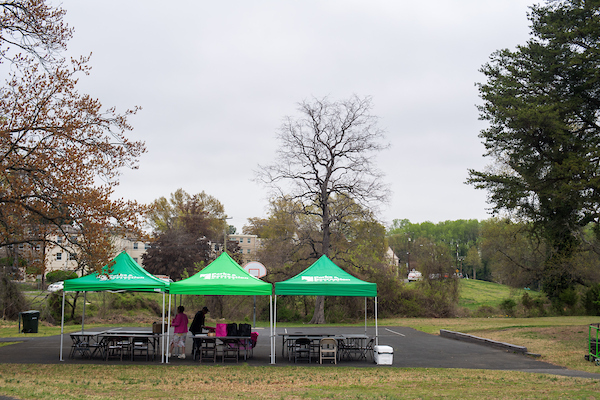
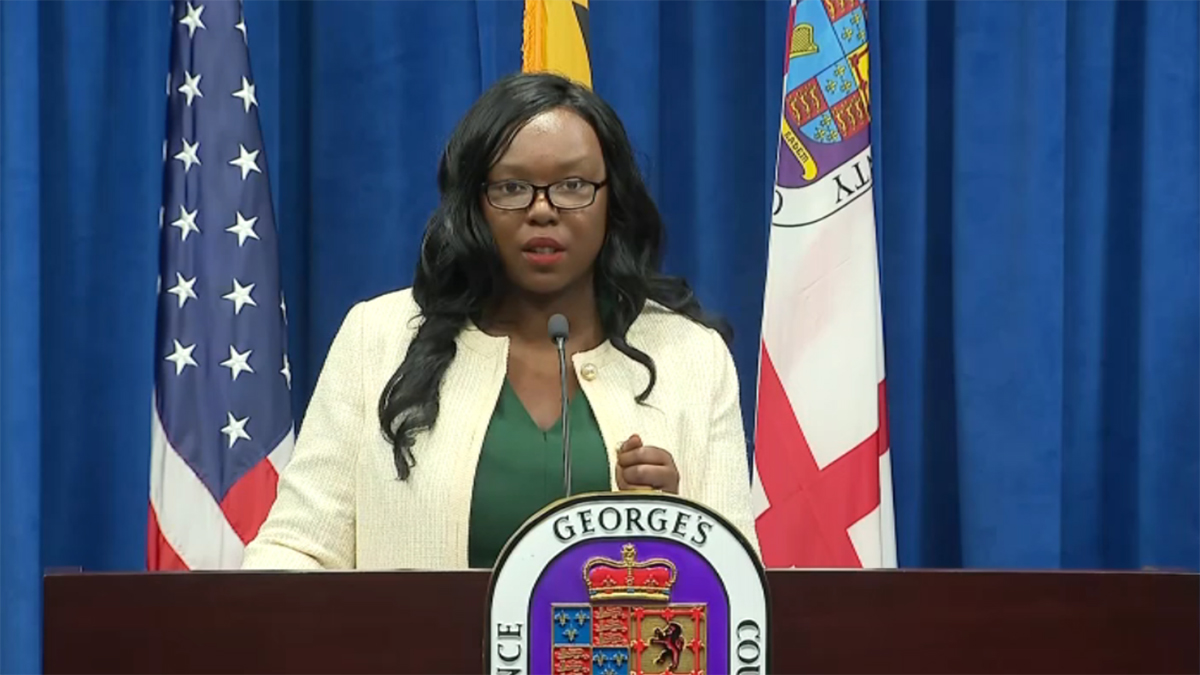
LaTasha Ward, who runs The Solid Foundation, a program that helps returning citizens after they are released from prison, saw her grant cut by $20,000.
“I was hurt, disappointed,” she told the I-Team in 2025. “You don’t hurt the people who are helping the community.”
Burroughs defended his decision at the time, saying he was seeking a more equitable distribution of money.
The I-Team found that wasn’t the only pot of public dollars he wanted to overhaul.
How councilmembers overhauled project charge awards
After becoming chair, Burroughs also changed which organizations could receive money through the park and planning commission, money called “project charges,” funded by a special state tax that homeowners in Prince George’s pay.
Under this process, the county council appropriates funding levels to an organization, but it’s up to the commission, which actually controls the money, to make sure the funds are used for parks and recreational purposes. In practice, the nonprofit first spends their money and the commission reimburses them.
Records show that, around May 2025, Burroughs doubled the allocation from $200,000 to $400,000 for a nonprofit called Joan’s House, run by friend Romel Williams.
The Boris Henson Foundation, named for actress Taraji P. Henson’s father and operated by her family, was initially proposed to receive $200,000. Burroughs increased that to $400,000 as well.
Shortly after, Burroughs introduced the park and planning commission’s 2026 budget, increasing funding for Joan’s House to up to $2 million and the Boris Henson Foundation to as much as $1.2 million.
Neither Williams nor the Henson Foundation have responded to the I-Team’s requests for comment.
Another organization emerged as a major player that budget cycle, one close to then-councilmember Krystal Oriadha. Community on the Frontline, an organization run by Oriadha’s friend, activist Janna Parker, was allocated more than $2 million. The two had previously worked together on grassroots efforts.
Parker declined an on-camera interview with News4 but said she never received any project charge money from the commission in the end.
Records reviewed by the I-Team show she would eventually receive that money through another funding mechanism, however, as Oriadha pushed for a solution.
Accusations of bias fuel push to bypass commission, award millions
For years, Oriadha, who did not agree to interview requests, accused the commission of sidelining her preferred organizations. Oriadha has argued in the past that project charge dollars overwhelmingly favored predominantly wealthy communities.
Oriadha and Burroughs also accused former Prince George’s planning board chair Peter Shapiro and his agency of blocking some nonprofits and groups from accessing those funds.
In early December 2025, Oriadha replaced Burroughs as chair of the council. That same fall, the council passed legislation to transfer $6.4 million from the park and planning commission to the county, including $5 million for non-department grants and $925,00 directly to the council.
Documents obtained through an open records request by the I-Team show $925,000 was ultimately given to Community on the Frontline as a grant.
Months later, those same records show, Community on the Frontline, through its parent organization, The Edward Charles Foundation, was given another $7.6 million in June.
The I-Team has reached out to The Edward Charles Foundation for comment but has not yet heard back. The Prince George’s County Council has not yet responded to requests for information about this payment.
That transfer was one of several the council would make using millions in park and planning commission dollars, setting the stage for a legal battle.
An effort to break up the commission
As the county council’s frustration with the Maryland-National Capital Park and Planning Commission grew, newly elected County Executive Aisha Braveboy was making plans of her own.
In one of her first actions in June 2025, she appointed longtime state delegate Darryl Barnes to replace outgoing Shapiro as the new chair of the county’s planning board and the park and planning commission.
Though the commission is an independent state agency, the county executive can appoint five members to the Prince George’s County planning board. Those board members make up half of the commission.
In March 2026, Barnes was back in Annapolis testifying in favor of a bill that would dramatically change the structure of the century-old commission.
Under a proposal brought by Maryland state Sen. Ron Watson, Senate Bill 1005 proposed breaking up the bi-county commission, which oversees legal and administrative duties for both Prince George’s and Montgomery counties, essentially giving Prince George’s County more control of its governance and a share of commission dollars.
Dozens of people connected to the commission, including a former commission chair and the president of the Montgomery County Council, opposed the legislation, saying it would threaten the commission’s financial stability, limit protections for the commission’s staff and risk the pensions of retirees.
At the hearing, Braveboy argued the bill gives both counties “more autonomy” and makes it easier to “hold those individuals accountable to our respective jurisdiction, who we appoint and who we ask to serve us in the way in which we ask, the way which our constituents need.”
Geraldo, who at that time was the longest serving member on the Prince George’s Planning Board and its vice-chair, also testified in support of the bill at the request of the Braveboy administration.
He said that, during that process, he learned the new county executive and her team would have a more hands-on approach to the board than he had experienced with prior leaders.
“I wanted to make an amendment to it or suggest an amendment to the bill, and they said, there’s going to be no amendments, we want this,” Geraldo said, later adding: “The regret came after I saw what the county was trying to do with the commission, which was to get control of its money.”
The bill failed, and soon, Geraldo became an outspoken critic of the county council’s efforts to move millions in project charge dollars from the commission to itself.
The I-Team asked Geraldo about concerns councilmembers Burroughs and Oriadha have raised about some organizations not receiving funding as directed – an accusation he called “disinformation.”
The I-Team also asked about criticism from others who have said the commission’s bureaucracy made it difficult for organizations to obtain their funding.
“I don’t think it’s bureaucratic. I think we have standards,” Geraldo said.
Text messages reveal concern: ‘This is nuts!!!!’
Since taking office, Braveboy has appointed new members to the commission to join Geraldo on the board.
He said he was blindsided this May when three of Braveboy’s appointees moved to replace him as vice chair, because that item was not on the agenda.
On the video, the board members behind the request – Brittany Jenkins and Lori Matthews – could be seen on their phones while discussing the motion and asking procedural questions.
Through a public records request, the I-Team requested any electronic messages the commissioners or staffers may have been sent to see what was being communicated. The commission told the I-Team that, when they asked the board members for the electronic records, they were told none existed.
The commission did release text messages exchanged by staff, however, that suggested concern over the proceedings.
One wrote: “They are texting her and feeding her what to say.”
Another texted: “They are going to vote to make Billy Okoye vice-chair. They are bullying the chair … this is nuts!!!!”
The I-Team reached out to the boardmembers for comment, but none have responded.
“I knew at that point that my time was limited,” Geraldo said.
In July, Braveboy removed him from the board, replacing him with former Maryland state senator Gloria Lawlah.
She’d later appoint a new leader of the Prince George’s board after Barnes resigned in May amid complaints that he abused his chairmanship, which he’s denied. Barnes, who is now suing the county over his departure, declined an interview with News4 for this report.
She’d later appoint a new leader of the Prince George’s board after Barnes resigned in May amid complaints that he abused his chairmanship, which he’s denied. Barnes, who is now suing the county over his departure, declined an interview with News4 for this report.
Geraldo said he’s proud of his years on the commission but regrets his support of the bill to break it up. While that effort failed, Maryland Gov. Wes Moore did sign legislation limiting the county council’s ability to move commission dollars outside of the budget cycle.
State legislators tell the I-Team it was supposed to be a deterrent. Instead, the council doubled down, announcing plans in May to move $39.3 million in project charge funds from the commission to the county in its annual budget process, setting the stage for a legal showdown.
Lawsuit filed, accusations fly
In early June, the Maryland-National Capital Park and Planning Commission filed a lawsuit against the county’s plans to take millions from its budget – saying the transfer would violate Maryland law that governs how the funds, collected through a state tax on homeowners, can be used.
In its filing, the commission cited organizations it says have “missions entirely unrelated to recreation” — including Community on the Frontline and Joan’s House Inc. – both slated to receive millions in the upcoming year.
Within hours, the county defended its move as legal, while Burroughs doubled down on the work of Joan’s House.
“We’re exposing young people to all the possibilities, and it’s absolutely in line with the mission of park and planning. And actually, we have documentation and emails from park and planning agreeing that these programs are aligned with their mission,” said Burroughs, who did not agree to an on-camera interview with News4.
Williams did not respond to requests for comment for this story.
As news of the lawsuits spread, Braveboy – who declined an interview request for this story due to ongoing litigation – challenged the commission’s priorities.
“I am concerned that park and planning cares more about paying their executives than providing money for programs for children in our communities,” she said.
Oriadha, who quickly convened a press conference to address the claims, vowed to “vigorously defend the investment we made on behalf of our residents.”
But she also acknowledged to News4 that the council hadn’t yet determined how it would distribute the $39.3 million it had requested the commission transfer in its upcoming budget cycle, whether by giving nonprofits lump sums upfront, or requiring them to first spend their own money and be reimbursed, as is the requirement by the commission.
In September, as the court hearing loomed, Oriadha would introduce legislation that, instead of transferring $39.3 million as a lump sum, would require the commission to transfer the funds through reimbursements to the county “based on invoices submitted to the commission.”
It’s unclear whether the commission will accept those terms in any potential agreement.
Hopeful for resolution
Darius Stanton, the director of Prince George’s parks and recreation, told the I-Team he’s eager for the legal dispute to end. His office oversees project charges recommended by the council, and he represents thousands of park and planning employees.
“I’m really looking forward to us being able to work more collaboratively with the county, more collaboratively with the council, continuing to support the nonprofits, as we have done for decades,” he said.
Stanton, who was hired by former planning board chair Barnes, is a commission employee and said he can’t speak about the litigation at hand. But he did say the commission has worked to reimburse nonprofits more quickly and clarify how new organizations can qualify.
“We continue to be open to listening, to taking whatever criticism we need to take,” he said.
News4 reporter Darcy Spencer, photographer Derrick Cheston and digital editor Andrea Swalec contributed to this report.
Sign up for our free deep-dive newsletter, The 4Front, to get standout News4 stories sent right to your inbox. Subscribe here.