

Ectopic pregnancies—in which a fertilized egg develops outside the uterine wall (and often in the fallopian tubes)—are relatively treatable, occurring in about 1% to 2% of pregnancies. Yet somehow, per a new report by ProPublica, more and more women are dying because of them, in a senseless trend the outlet calls “stark and baffling.”
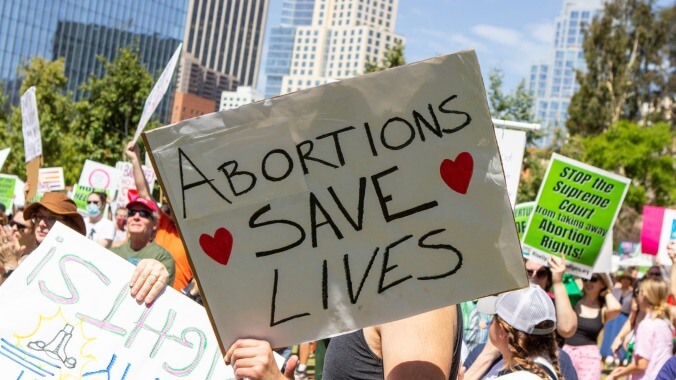
Per state data collected by the CDC and analyzed by ProPublica, almost 200 U.S. women with ectopic pregnancies died from 2020 to 2025—nearly double the six years prior. And, yes, the uptick has been much worse in the 13 states where abortion is near-totally banned. This serves as yet another reminder that such bans can delay or deny life-saving care—because, for one, they make it risky for doctors to treat patients in states where abortion is banned.
I’ve been tracking changes in state abortion definitions since Dobbs. 8 antiabortion states have changed their definition of abortion in the past 4 years to exclude ectopic pregnancy. W/o an exclusion, ectopic pregnancy treatment can fall under a ban. This chart is in a new paper (online soon!)
— Greer Donley (@greerdonley.bsky.social) September 9, 2026 at 8:20 PM
In one of the reported instances, an Oklahoma woman who’d been experiencing abdominal pain and heavy bleeding sought care across the border in Arkansas in February, only to be sent home and visit three different hospitals across both states the week afterwards. (Both states have a total abortion ban.) She eventually sought treatment in Kansas, where abortion is legal until 21 weeks and six days.
In a following lawsuit, the doctors that failed to treat the woman acknowledged she was suffering an ectopic pregnancy—which would have been treatable despite the states’ respective bans, as Arkansas and Oklahoma both have exceptions to save the life of the mother—but were worried they could face punishment for treating her. “10 years in the poky,” one of the clinicians said, per the filing. “I felt like my life was a risk he couldn’t afford,” she said of the comment.
In its reporting, ProPublica also points out that the CDC has yet to address the jump in deaths—nor acknowledge it, despite having all the same resources the outlet used to collect the data. (What do you expect from an administration that seems averse to tracking any kind of data, lest it improve public health?) As we well know, however, maternal mortality is twice as high in states where abortion is banned.
Today, ectopic pregnancies are the leading cause of pregnancy-related deaths in the first trimester, and abortion is the only treatment. Without care, the condition can be deadly, ripping through a person’s organs, causing massive hemorrhages, and typically for a pregnancy that is almost never viable.


