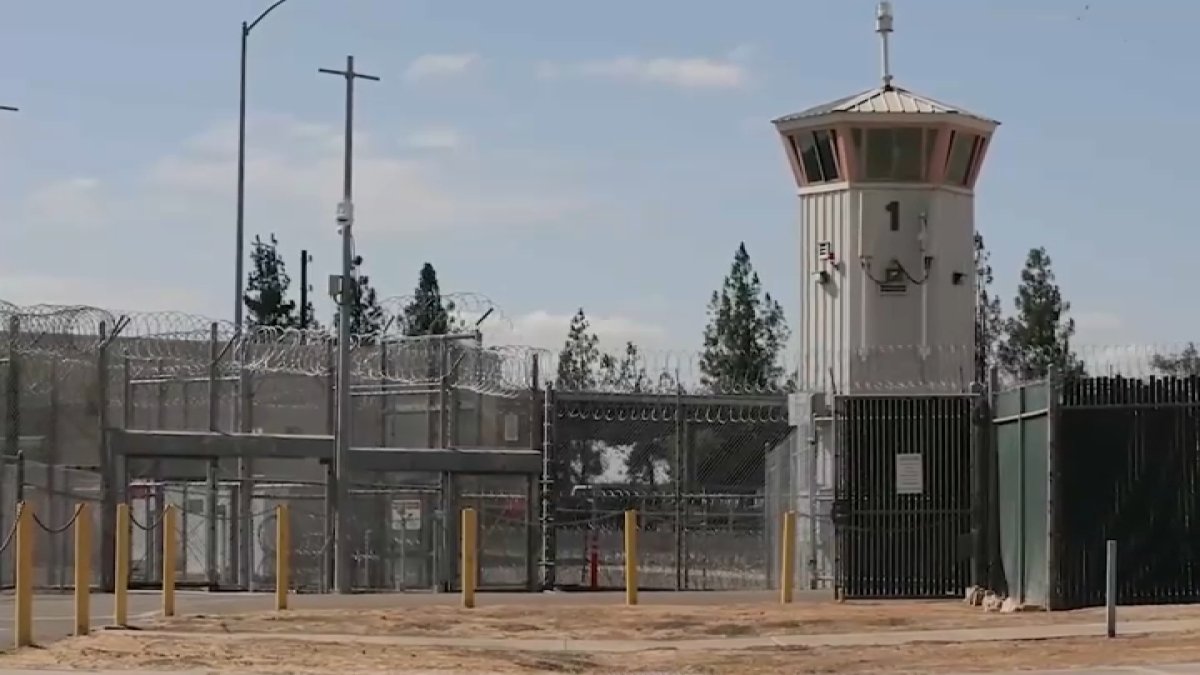
NBC Bay Area was granted rare access inside Central California Women’s Facility (CCWF) in Chowchilla. It is the largest of two women prisons in the state.
CCWF is located in rural Madera County. On the outside, one only sees barbed wires and guard towers. On the inside, it’s a sprawling 640-acre detention center.
Lt. Monique Williams, who has worked at CCWF for nearly 20 years, served as NBC Bay Area’s guide.
“We are working to send our women, prepare them to go back out into the community,” Williams said.
She said CCWF houses all levels of incarcerated women – levels one through four and condemned – from low-level felonies to murder convictions serving life. The women are not separated by color, race or gender.
Some 300 programs are offered inside CCWF, designed to rehabilitate and educate.
“I say they have their toe at the door at 4:30 a.m. and they wait for the officer to press that button and pop them out,” Williams said. “They’re going to their job to get their job skills.”
In addition to seven colleges working inside CCWF’s education department, two are onsite: Merced College and Fresno State. The women are getting high school diplomas, their GED or doing their master’s degree.
“It gives them hope of transitioning back out into our communities and going out there with something that can really empower them to get jobs,” Williams said.
Also inside, the women have access to a full gym, a children’s play and reading room when families visit, and a blook club where Oprah Winfrey has met with the incarcerated women. As part of another program, women are service dog trainers, spending their days with four-legged companions and preparing them for people with disabilities on the outside. One of the newest programs is the “Paper Trail,” an eight-page monthly newspaper.
The women are striving for that second chance to get a taste of what freedom could be like.
CCWF has a family visiting unit. It’s a small apartment where women can spend the weekend with loved ones.
“They bring their outside food and they’re able to come here and spend time, you know, watching TV. We have a room for the incarcerated person and for the children … we want to make sure that we’re preparing the population to go back home to their families,” Williams said.