You know that you’ve stumbled upon a great sports cheating scandal story when the method of cheating is so finicky and pedantic, it’s not even immediately clear to someone from outside the insular community of the sport why it would be an advantage to the athlete. What else could your first thought be, when you read that two former coaches and a “suit technician” of the national ski-jumping team of Norway were recently suspended for 18 months for the high crime of … adding an extra stitch to the crotch of a suit? I’m sorry, what? Well buckle up, because you’re about to learn more about ski-jumping suit crotches than you would have assumed there was to know.
The nation of Norway invented the modern sport of ski-jumping, and understandably dominated it on the professional field for many years. But as the rest of the world figured out the finer points of launching a human more than 800 feet down a snowy embankment, the sport increasingly became a heavily optimized game of inches. Wind tunnels and sophisticated computer modeling calculate the optimal way for athletes to launch themselves. Every millimeter of the ski suit is redesigned for maximum aerodynamic lift. And cheating naturally works its way into the conversation.
Typically, this kind of rules-bending approach in ski-jumping apparently involves teams attempting to slightly stretch or pad suits, in order to give them slightly more surface area. This kind of cheating is more or less universally acknowledged as an unsavory but ever-present aspect of the competition, and it does result in some competitors being disqualified when their suits are shown to have been subtly altered or fail inspection, either before or after competition. In the case of Norway, however, the team was caught up in a huge public scandal when two of its coaches and a technician were actually caught on video by an anonymous whistleblower, personally altering the already inspected suit of defending Olympic large hill ski jump gold medalist Marius Lindvik immediately before the 2025 Nordic World Ski Championships in Trondheim, Norway. Lindvik would subsequently surrender a silver medal and claimed ignorance of the changes, alongside another skier, Johann André Forfang. The pair were given lighter three-month suspensions and are expected to participate at the Milan Cortina Winter Games in February, although much of the Norwegian public still seems to be deriding them as cheaters and traitors.
For head coach Magnus Brevig, assistant coach Thomas Lobben and suit technician Adrian Livelten, the consequences have been much more severe–their 18-month suspension is an acknowledgement that they’ll probably never be welcome working in the sports industry again in Norway. Looking into the details of the case, as laid out following an 11-month investigation by the International Ski and Snowboard Federation (FIS) ethics committee, who handed down the suspension, you might walk away both incredulous of the punishment and amazed at the level of subtle effort put into the cheating scheme. Consider, for instance, that the suits after inspection already apparently have been outfitted with a variety of microchips in order to prevent tampering or replacement of an approved suit with an identical unapproved one. The Norwegian cheaters apparently circumvented those microchips, without any obvious sign to an outside observer. Without the video, no one would ever have known.
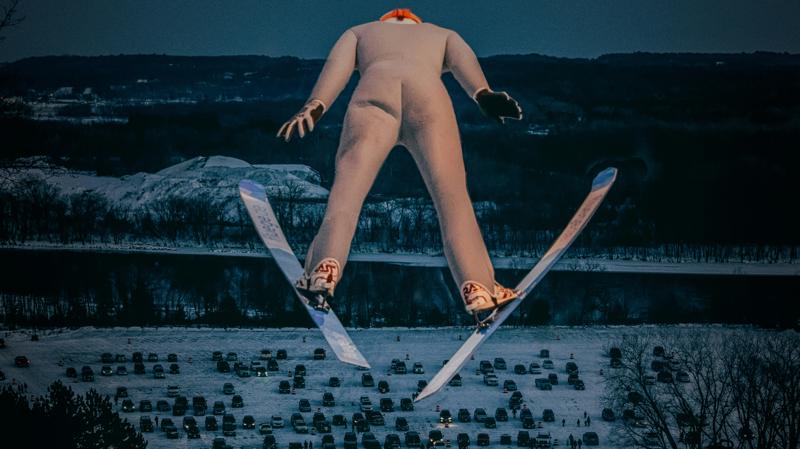
The obvious question an outside observer would have, though, is just how much difference does a few added stitches in the crotch of a ski-jumping suit actually make to how far the jumper is able to fly? And as it turns out, the answer is apparently “quite a bit.” A study this year from the journal Frontiers in Sports and Active Living showed that adding just 1 cm of additional fabric to the total circumference of a suit could have the affect of increasing total jump distance by 9.2 feet. This is because the suits effectively function like a sail or glider, catching the wind and providing lift to the falling jumper as they try to stretch their landing out by a few more feet. And the crotch, as it turns out, is apparently the easiest place to achieve more of this lift. Who knew? This is why the maximum allowed enlargement of a suit, by the rules, is no more than 4 cm larger than the surface area of the jumper’s body. It might seem absurd, but there needs to be a limit somewhere, or the logical endgame would be skiers in wingsuits, attempting to slip the surly bonds of Earth to touch the face of God. Perhaps if we made the skiers jump nude, such controversy could be avoided?
“In most cases, enlargement of the suit is beneficial,” said co-author of the aforementioned study Sören Müller to the Associated Press. “However, the area stretched by the V-position of the legs in the crotch area is the most noticeable and also offers the greatest advantage.”
nobody:
absolutely nobody:
My wife: “Excited to report we have a Norwegian ski jumping scandal involving illegal uniform crotch alterations ”
www.nytimes.com/athletic/696…
— Jay Jaffe (@jayjaffe.bsky.social) Jan 21, 2026 at 8:37 AM
In the case of the Norwegian coaches, whatever they did to the suit with their extra stitches apparently transformed its properties in the eyes of the FIS. The following quote from FIS’ Lasse Otteson, who works with the organization on upgrading inspection protocols, lays out what ultimately makes this a big deal in the eyes of the organization:
“The stretch of the material is quite elastic, and when we felt this suit, it was not elastic at all. They had opened up the five different layers of the material. They had in that part entered in a different kind of material, a stiff material, then they had sewn back the material together and then sewn the suit together. So for a normal eye or even for our equipment controllers, not possible to see. So when you compare that to basically everything that we’ve seen in terms of equipment and suits. It’s on a totally different level of what has been done before.”
So what do the coaches have to say for themselves? They haven’t disputed that they performed the alterations; not much point when you’ve been caught on tape. Instead, their defense has essentially rested on accusations that they’re not the only ones doing this sort of thing, and that they’re being punished disproportionately compared to other known or suspected instances of cheating, in order to make an example of them due to the publishing of the secret video. In an email to The Athletic, the lawyer for one of the athletes more or less blames the past, lenient punishments of FIS for why the coaches effectively assumed they could get away with this.
“They argue that it is part of an established culture within ski jumping, one that has not previously been harshly penalized,” wrote lawyer Pål Kleven. “They assert that it would be disproportionate to impose such a long period of ineligibility, which would effectively result in a career ban. … They could not have reasonably known that their actions would lead to such a harsh penalty, as the FIS has historically not enforced severe sanctions for similar offenses. The lack of predictability in FIS’s actions, they claim, further supports the argument that the proposed sanction is disproportionate.”
Ah yes, the “cheating hasn’t previously been punished very seriously, so clearly we had no choice but to cheat” defense. A classic.
The ski-jumping world, rocked by having its dirty ski suit laundry dragged into the light, has responded with new waves of regulation and screening for future events, including at the 2026 Winter Olympics, where the Norwegian skiers will be making a very awkward appearance. There will be more microchips. More 3-D measurements of suits will search for alterations and inconsistencies. The suits themselves have been redesigned in some instances to make cheating harder. There will even be a “yellow card” and “red card” system, as in soccer, where athletes disqualified for equipment violations will cost their team slots for skiers in the next competition.
All over a couple of furtively added stitches. And you thought Deflategate seemed dumb to non-sports fans.