This year, the Hartford area is predicted to be the hottest housing market in the country.
If the prediction holds true, then it could mean housing prices will rise. And at the same time, rents are going up.
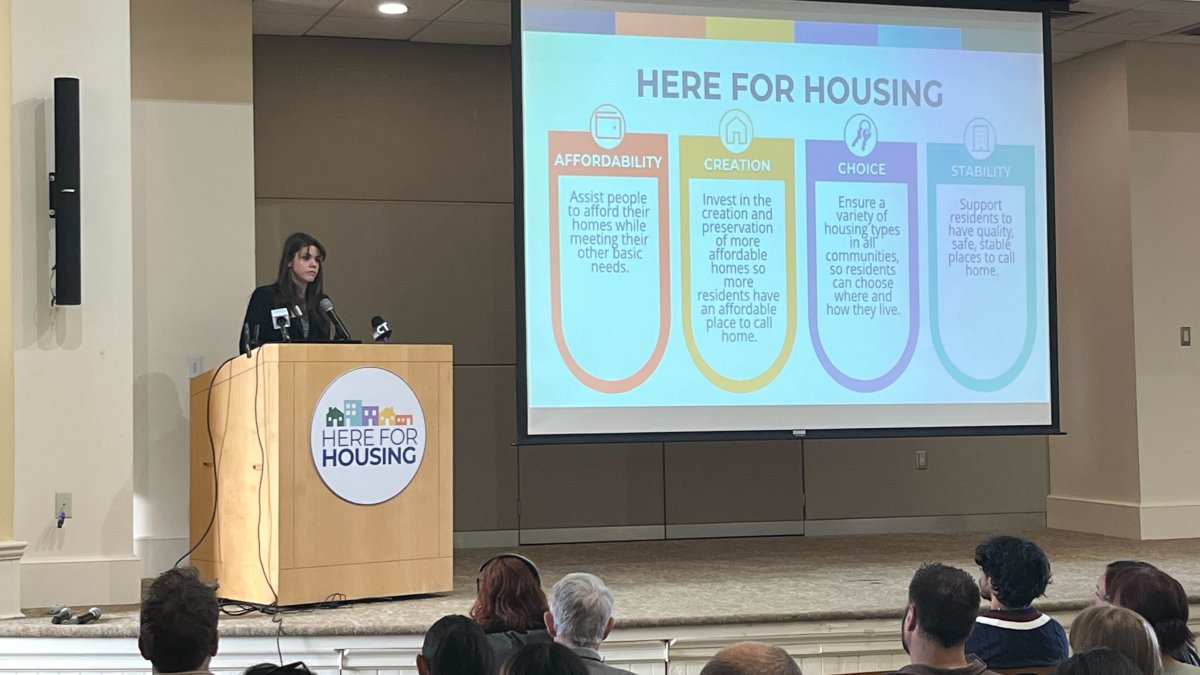
Now, some think more needs to be done to help with what they’re calling a crisis. A report from a housing advocacy group came out just about two weeks before the start of the legislative session, outlining what they say is an affordability crisis the state is facing.
The report from the Partnership for Strong Communities found that about 50% of renters in the state are cost-burdened, meaning they spend over 30% of their pay on housing.
The report also found that about a quarter are paying more than 50% of their income. For certain communities of color, the numbers are even higher.
The average sale price of a single-family home has soared in Connecticut over the past twenty years, hitting $370,000 in 2024 and still rising.
“We have a mismatch of our housing stock, how many homes we have, and the number of households who need homes. And so we’re really at a critical point like many states in the country,” Chelsea Ross, Partnership for Strong Communities executive director, said.
Gov. Ned Lamont is pushing for regions to build more.
That’s part of the plan of a major housing bill he signed last month.
“I’m also a believer in supply and demand. Make it easier to build, faster to build, and less expensive to build. Build where people want you. Take that old mall and turn it into something special,” Lamont said.
The governor has ideas for the next legislative session, as do advocates, who are pushing to remove barriers to the housing supply. That includes increasing funding for programs to help vulnerable families and safeguards to prevent high rent hikes.
“We’ve made a lot of progress, but we have a ways to go,” Ross said.
A group that fought the housing bill, CT 169 Strong, is raising some concerns about the proposals, including for zoning reform, writing in part:
“State-mandated upzoning for more density in no way guarantees that more affordable housing will be built; it only guarantees density development.”
It also raises concerns about the potential loss of local control while noting that affordability also includes energy and taxes, where Connecticut ranks high in costs.