Russia has throughout nearly four years of its 'special military operation' in Ukraine been largely successful in weathering constantly expanding US and EU sanctions. While isolated, its economy has stayed afloat, but it has been forced into desperate measures as sanctions take a toll on some key sectors.
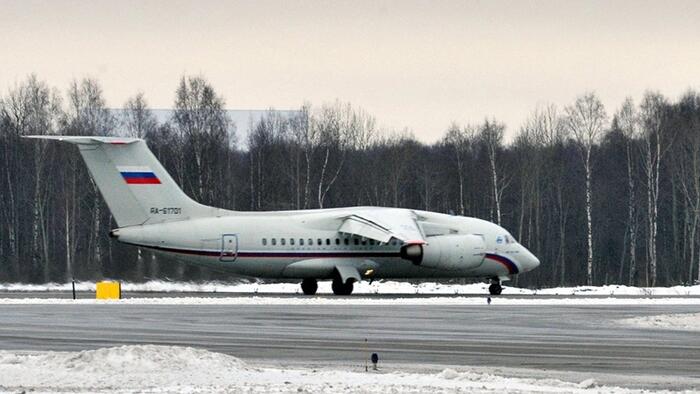
Russian newspaper Izvestia reports that Russia's commercial airline industry is having to call back aging, decommissioned planes in an effort to sustain passenger traffic. Soviet-made planes which are several decades old are being restored to service.
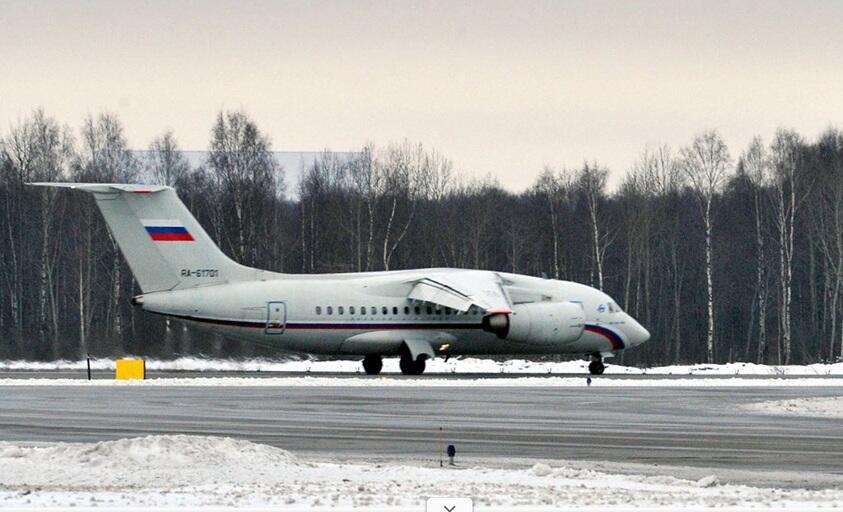
"The plan involves nine Tupolev Tu-204/214 jets, one Antonov An-148 and two Ilyushin Il-96 widebody planes delivered to carriers including Red Wings," The Moscow Times says of the Russian media reports.
"Ten of the 12 aircraft, which are reportedly up to 30 years old, have already been returned to service, Rostec told Izvestia," the report continues.
Out of a national fleet of over 1,100 airliners, nearly 70% are foreign-made aircraft. In 2022 soon after the Ukraine war kicked off, authorities launched a program to begin replacing foreign planes with domestically produced models.
But regional media says that the plan has failed over the past years in meeting its ambitious goals, which called for over 120 aircraft of different types to be produced between 2023 and 2025. Instead a little over a dozen have been produced.
Western sanctions have not only impacted the ability to replace parts and keep maintenance up to date, but entire factories and machines have had to retool and be revived to make up for the lack in foreign parts.
But the industry is about to find itself under even more pressure and strain, as Moscow takes drastic action in the face of isolation from the West:
In 2026, Moscow plans to slash federal aircraft and helicopter production spending by 1.6 times, from 139.6 billion rubles ($1.7 billion) to 85.7 billion rubles ($1 billion), according to Russian media citing the draft federal budget for 2026-28.
Subsidies for airlines to renew their domestic fleets will be eliminated entirely, down from 1.3 billion rubles ($16 million) in 2025. Support for aircraft maintenance is set to drop from 6.1 billion rubles ($75 million) to 3.6 billion ($44 million). Only the MC-21 medium-haul jet will see increased funding, with subsidies rising 25% in 2026.
In the meantime aviation accidents have been growing increasingly common in Russia, particularly in the recent years of the Ukraine war. While not every incident can necessarily be linked directly to sanctions, it is the case that these increasingly involve very old planes with subpar maintenance and mechanics upgrades.
Ukrainian officials have of late also pointed to cross-border drone attacks as successfully disrupting Russian oil and fuel...
⚡️⚡️⚡️BREAKING: 🇷🇺Russia’s largest private fuel supplier warns of a new aviation fuel CRISIS.
— Kyrylo Shevchenko (@KShevchenkoReal) November 4, 2025
After Ukrainian drone strikes damaged over 20 oil refineries, Moscow relaxed fuel standards — allowing “winter diesel” to be made by mixing summer diesel with kerosene. That quick fix… pic.twitter.com/bm63W45a6A
Like with most Western sanctions on 'rogue' states abroad, it is the common people who suffer most.
The same trend has been seen in Iran, which over the last decade has witnessed horrific aviation accidents, including the loss of a sitting president when his military helicopter crashed near Azerbaijan.