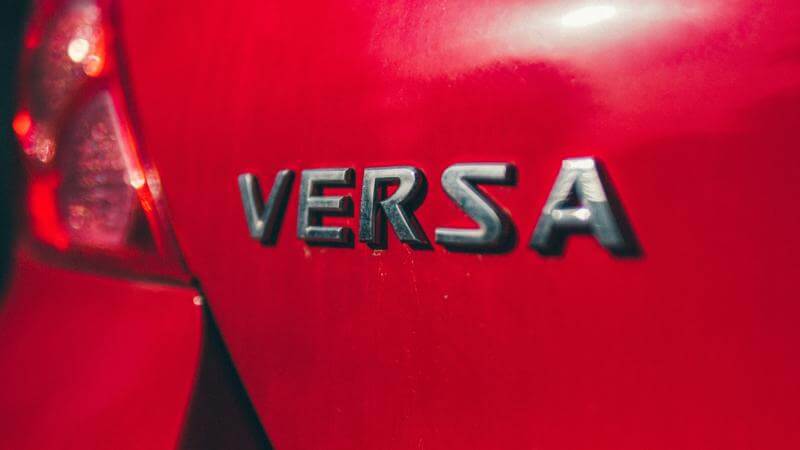
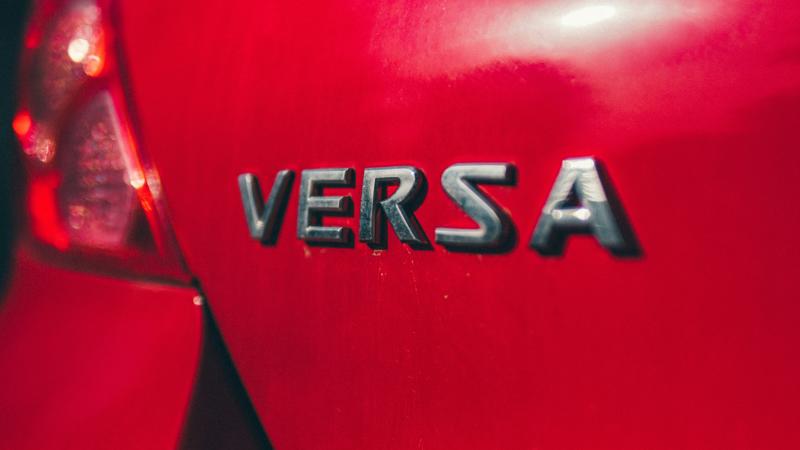
At the end of 2025, Japanese auto manufacturer Nissan announced, to relatively little fanfare, that after almost 20 years in production it was discontinuing its smallest and most affordable model of sedan, the Nissan Versa. It was not exactly mourned by the types of auto hobbyists who read car magazines: If you’d ever driven a Versa rental car, you’d probably understand. It was a tiny thing even by subcompact standards, and not rich in features, style or horsepower. But what it was, was a relatively cheap and affordable new sedan you could purchase in the United States. And that has now become an essentially extinct thing.
With the death of the Nissan Versa, there is now not a single new car in the U.S. that has a sticker price—even for a base model, with no frills—of less than $20,000. The Versa was the last, with its $18,585 base price for the 2025 model clocking in notably lower than any other vehicle positioned at the value side of the market. The next cheapest cars from Nissan, for instance, are the Sentra sedan or the Kicks compact SUV, and you can expect to pay at least $23,000, if not more, for a new one of either. The result is a market where new, cheap cars intended for value-conscious consumers have ceased to exist, replaced by a constant drive toward premiumization. If that feels like a familiar thing to be witnessing, then your sense of déjà vu is warranted—it’s the basis of the K-shaped economic recovery theory.
We’ve discussed the idea of the K-shaped economy before, in greater detail than I’ll go into here, in pieces like Jacob Weindling’s astute analysis of economic sentiment and the “vibecession.” In short, it describes the concept of an economic recovery where two different groups—high-earners and low-earners in America—experience very different senses of “recovery.” The high-earning group, which has the advantage of say, having money invested in the stock market and assets to appreciate, finds themselves lifted upward into greater prosperity during the economic recovery. The lower-earning masses, meanwhile, find themselves with less spending power, unable to build wealth and generally feeling hopeless about the prospect of affording everyday necessities.
And in America, a nation that is by and large the antithesis of “walkable,” where the ideal scenario of having all your necessary services and businesses within walking distance somehow gets turned into a MAGA conspiracy theory about the horrors of “15 minute cities,” a car is sadly one of those necessities. And cars, like so many other things, just continue to get more expensive: Kelley Blue Book reports that new car buyers paid an average of $50,326 for their vehicles in December, which was an all-time record high. This is reflective of the sticker prices on those new cars rising, but also the fact that cheaper new car options just keep being discontinued. Before the axing of the Versa, both the Mitsubishi Mirage and Kia Forte were discontinued in 2024. Both retailed new for less than $20,000.
Raising car prices. Tariff the cheap car to death, leaving more expensive cars for sale.
#Tariffs
#Trumpflation— rgbose.bsky.social (@rgbose.bsky.social) Jan 16, 2026 at 12:05 PM
The obvious move is that consumers trying to save money will pivot to buying used cars instead of new ones, but even used car prices will inevitably rise when, over time, the pool of used cars is made up exclusively of brands that started out with higher MSRPs. Ask anyone who’s bought a used SUV for $25,000 or $30,000. This pushes the more cash-strapped consumer—who represents the vast majority of Americans, by the way—toward ever older, junkier, less reliable vehicles, because none of the manufacturers are producing vehicles actually aimed at this massive demographic.
One might wonder, why is it not worthwhile for the auto manufacturers to continue producing these higher value models? Why leave money on the table and ignore a large percentage of the market? On some level, it comes down to profitability: Cars like the Versa make smaller margins for their manufacturer than expensive SUVs with big sticker prices, and thus need to sell in larger quantities in order to be worth making. The high-earning consumer doesn’t want to buy a new Versa; they want something more obviously affluent. And the low-earning consumer … well, many of them probably can’t afford to buy a new Versa. Consider the vast implications of this graph:
The top 10% now account for nearly half of all consumer spending.
— More Perfect Union (@moreperfectunion.bsky.social) Jan 16, 2026 at 11:11 AM
Only 15 years ago, the amount of overall consumer spending in the United States was relatively equal between the top 10% of earners and the bottom 80%. That is hardly an ideal scenario, given that it still implies fairly extreme income inequality, but it’s positively egalitarian compared to where we now are in 2026, where the top 10% of earners are now responsible for almost half of all consumer spending in the entire country. That is like, “Russian serfs vs. boyars” aesthetics. It speaks of a country where wealth is concentrated more and more in a tiny fraction of the population, where the economy refocuses itself structurally around just those people, their needs and desires. It also plays into Jacob Weindling’s piece on economic sentiment, and the measure called Asset Limited, Income Constrained, Employed household (ALICE), which adjusts for the cost of living by county in the USA to calculate that 42% of American households fall below the threshold of what would qualify as “financial hardship.” These people are not quite what society would term poor or destitute, but they live balanced in economic precarity, where one illness or accident could spell disaster. And they’re the ones who could really use some cheaper cars, believe it or not.
But companies like Nissan, or Kia, or Mitsubishi–not to even mention American manufacturers–don’t see much of a point in building cars to serve that market, not when they could all be trying to make a play for the more lucrative spending being done by those upper echelon earners. This is true of many other industries as well: Look at the air travel industry, where carriers are creating more premium seating and extra tiers in order to sell more expensive tickets to the higher-earners, leaving fewer and fewer “economy” seats for the plebs. In the fourth quarter of 2025, Delta stated that they achieved a 9% increase in revenue from premium seating, while revenue from basic economy seating fell by 7%. Everywhere you look, retailers are searching for that consumer with the deeper checkbook: Even Walmart is premiumizing in an effort to bring in the higher-earning shoppers. It’s like 80% of the U.S. population is just no longer supposed to participate in the economy.
Economist Peter Atwater popularized the “K-shaped economy” term, and has compared the state of the economy to “a top-heavy Jenga tower.” For people on the bottom, “a lot of things that were once viewed as part of the American Dream have become out of reach. They’re not only unaffordable, they’re unattainable.”
The data on U.S. car sales illustrates how much things have changed in just the years since the arrival of the COVID-19 pandemic. In 2019, households making less than $75,000 annually were purchasing 37% of the new vehicles sold, according to Cox Automotive. People making more than $150,000 were buying 29% of the new cars sold. In the last six years, those numbers have flipped: The lower-earners are now making only 26% of purchases, while the high-earners represent more than 40%. The least expensive new car in America, meanwhile, appears to be the 2026 Hyundai Venue, with an MSRP of $20,550 … but who’s to say it won’t get the axe as well? When every car is a “luxury car,” there’s going to be a lot of Americans left standing on the side of the road.