
Le Journal

Euthanasie : Michel Houellebecq, Emmanuel Hirsch et Laurent Frémont signent une tribune contre l’aide à mourir
« Il devient difficile de faire semblant de ne pas comprendre ce qui est en train de se jouer », amorcent Emmanuel Hirsch, Michel Houellebecq et Laurent Frémont dans une tribune signée conjointement dans Le JDD, lundi 19 janvier. Le lendemain, la proposition de loi sur l’aide à mourir doit être débattue en séance publique au Sénat. Les trois signataires parlent « d’un changement de nature, d’un déplacement décisif de la frontière morale sur laquelle reposent encore nos sociétés. L’interdit de tuer n’est pas un principe abstrait ». L’aide à mourir prévoit de recouvrir à la fois le suicide assisté et l’euthanasie. D’autoriser « une personne qui en a exprimé la demande à recourir à une substance létale ». Mais sous certaines conditions.« Quelque chose de profondément troublant pour une démocratie moderne »« Il y a, dans cette évolution, quelque chose de profondément troublant pour une démocratie moderne. Lorsqu’une communauté politique consacre tant d’énergie à se montrer plus soucieuse d’organiser la fin que d’assurer les conditions d’une vie digne jusqu’au bout, c’est que sa capacité à penser le bien-vivre s’est affaiblie, voire effondrée », peut-on ensuite lire dans cette tribune.« Lorsqu’une démocratie renonce à débattre lucidement de ce qu’elle s’autorise à faire aux plus fragiles, elle affaiblit son propre socle éthique », écrivent-ils. Avant de parler d’un « aveu de renoncement ».En mai 2025, la comédienne Line Renaud et Gabriel Attal signaient une tribune en faveur de ce texte dans La tribune dimanche : « Les malades qui souhaitent être accompagnés vers la mort ne le font ni par lubie ni par légèreté ». « Cette question est trop grave, trop lourde, trop sérieuse, pour être à son tour victime de récupération et otage de guerres purement politiciennes », disaient-ils aussi.L’article Euthanasie : Michel Houellebecq, Emmanuel Hirsch et Laurent Frémont signent une tribune contre l’aide à mourir est apparu en premier sur Valeurs actuelles.

François d’Orcival : Trump Street à Téhéran

22 Times Coretta Scott King Exuded Style & Grace
Black Political Figures Who Made Powerful Beauty Statements
By India Espy-Jones ·Updated January 18, 2026 < /> Getting your Trinity Audio player ready… Black women have never had the privilege of not being political––and neither has our beauty. Texturism leads to government-mandated hair discrimination, featurism turns into the fight against “pretty privilege” while systemic racism makes maintenance––like hair, nails, and makeup––unaffordable to the working class. Throughout history, however, Black political figures reclaimed their beauty to fight against––and attest to––the difficulties we face across the board. Below, ESSENCE takes a look at 3 times Black political figures used beauty to make a statement.Angela Davis Angela Davis (born January 26, 1944) is an American political activist, philosopher, academic, scholar, and author. She is a professor at the University of California, Santa Cruz. A Marxist, Davis was a longtime member of the Communist Party USA (CPUSA) and is a founding member of the Committees of Correspondence for Democracy and Socialism (CCDS). She is the author of over ten books on class, feminism, race, and the US prison system. (Photo by: Universal History Archive/Universal Images Group via Getty Images) Political activist, author and member of the Black Panther Party’s Los Angeles chapter Angela Davis used her afro as a symbol of Black liberation. While Black women often straightened their hair to assimilate––despite current studies linking chemical relaxers to cancer––Davis used her afro to defy European standards of beauty and affirm the African. According to the National Museum of African American History and Culture, “Straightening hair was a means of survival. However, both men and women in the Black Panther Party disrupted this narrative by embracing the afro, showing that straightening hair was not needed to survive.”Michelle Obama First Lady Michelle Obama during the Midatlantic Regional Inaugural Ball at the Washington Convention Center in Washington, DC, January 20, 2009. Obama was sworn in as the 44th US president earlier in the day. AFP PHOTO / Saul LOEB (Photo credit should read SAUL LOEB/AFP via Getty Images) As the first Black First Lady of the United States, Michelle Obama was a target for not only racist but misogynist attacks—all stirred up by sleeveless dresses dubbed “Armgate”. From a purple dress when the President addressed congress to a fuschia number on the cover of Vogue, showing her toned, elegant arms was somehow against the rules. While Black women are often called masculine in a racist, misogynistic attempt to strip us of our innocence, femininity, and womanhood, Obama took it as an opportunity to assert her power and show off how strong femininity can be.Jasmine Crockett NEW ORLEANS, LOUISIANA – JULY 07: Jasmine Crockett speaks during the 2024 ESSENCE Festival Of Culture Presented By Coca-Cola® at Ernest N. Morial Convention Center on July 07, 2024 in New Orleans, Louisiana.(Photo by Arturo Holmes/Getty Images for ESSENCE) Jasmine Crockett, lawyer and U.S. representative from Texas’s 30th congressional district, was attacked for her lash extensions by the now booted Marjorie Taylor Greene. She turned the infamous moment into a clap back, defending the Black beauty trend. “I just want to be clear, Black women are not the only people that wear lashes, but [people who support] MAGA do this thing where they talk about my nails, they talk about my hair,” Crockett told Allure. “They’ve said over and over that I’m ghetto, I’m a DEI hire. It’s this white superiority and privilege they decide they’re going to engulf themselves in.” TOPICS: beauty black women in politicsThe post Black Political Figures Who Made Powerful Beauty Statements appeared first on Essence.
Discover the MYSTERY Behind Nova Blast's Haunting Music
How To Use ChatGPT To Turn Your Skills Into Income
Preventing Another Cliff Dive
The African American Dream: A Look Back At MLK’s Focus On Driving Black Economic Equality
By Jasmine Browley ·Updated January 14, 2026 < /> Getting your Trinity Audio player ready… “In a sense, we’ve come to our nation’s capital to cash a check. When the architects of our Republic wrote the magnificent words of the Constitution and the Declaration of Independence, they were signing a promissory note to which every American was to fall heir…Instead of honoring this sacred obligation, America has given the Negro people a bad check, a check which has come back marked ‘insufficient funds.’ But we refuse to believe that the bank of justice is bankrupt.”Dr. Martin Luther King Jr’s 1963 “I Have a Dream’ Speech” has reverberated and resonated with many for generations because of its passionate lines about the effects of racism.His focus on the government’s collective economic failings of minorities roused deep feelings that were long buried, and ushered in civil rights movements that brought about changes we still benefit from today. But one important element of the iconic speech that’s not talked about enough is its spotlight on financial inequities the Black community suffered from at the hands of the government. Sadly, Black disenfranchisement have only become more stark U.S. in the 60 years since the speech was made. While we have seen some progress toward civil and social justice, unemployment remains a pervasive as it currently sits at 8.1 percent. And joblessness among Black people have consistently been twice that of whites for the past six decades, according to the Pew Research Center as the American Psychological Association points out.In King’s book, Where Do We Go From Here: Chaos or Community?, he suggests that the US labor structure encourages unemployment and idleness.“…We have come a long way in our understanding of human motivation and of the blind operation of our economic system. Now we realize that dislocations in the market operation of our economy and the prevalence of discrimination thrust people into idleness and bind them in constant or frequent unemployment against their will. The poor are less often dismissed from our conscience today by being branded as inferior and incompetent. We also know that no matter how dynamically the economy develops and expands, it does not eliminate all poverty.”In answer to the crisis, King suggested that the government create jobs to “enhance the social good” for those people out of work, often referred to as a welfare state. These ideas lean socialist, which some disagree with, but his focus was ensuring that opportunities were equally available for all who want them. “The problem indicates that our emphasis must be twofold. We must create full employment or we must create incomes. People must be made consumers by one method or the other. When they are placed in this position, we need to be concerned that the potential of the individual is not wasted. New forms of work that enhance the social good will have to be devised for those for whom traditional jobs are not available…”As we continue to observe and celebrate the legacy of Dr. King on his birthday and beyond, it’s important to acknowledge the full breadth of his work. Not only did he fight for racial equality, but financial empowerment as well. The post The African American Dream: A Look Back At MLK’s Focus On Driving Black Economic Equality appeared first on Essence.

Sky: Frank expected to remain in charge for Dortmund match

Bucs Need To Add No Less Than Two Linebackers
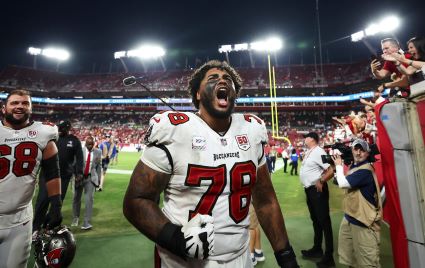
Tristan Wirfs And The Pro Football Hall Of Fame

Make The Call!
Flash poll posted at 5:13 p.m. Poll closed at 6:24 p.m. The post Make The Call! appeared first on JoeBucsFan.com.