In the Southeast, a vast wildlife refuge filled with alligators is now considered one of the most important natural sites in the world.
The United Nations Educational, Scientific and Cultural Organization, known as UNESCO, added 25 sites to the World Heritage List during their meeting in July. That accolade includes the Okefenokee National Wildlife refuge, which spans southeastern Georgia and northeastern Florida.
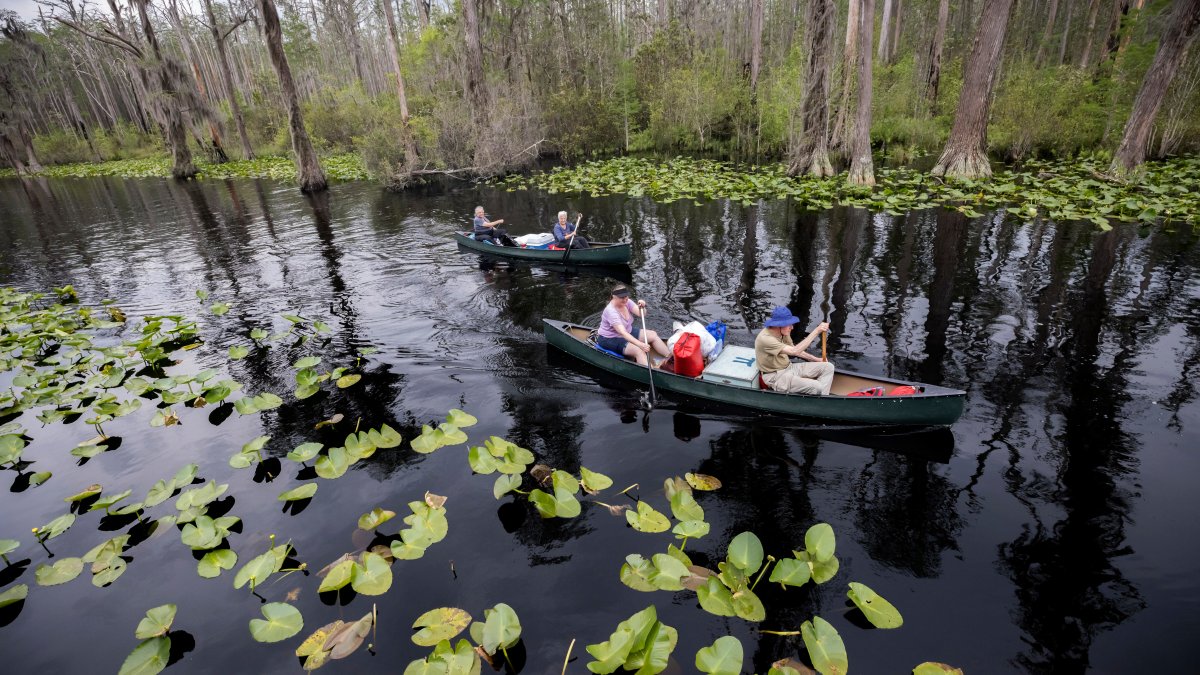
At 400 acres, the swamp is the largest of its kind in the world. Its geography ranges from ancient peat bogs to dense wetland forests, where savannas of endangered species like the longleaf pine thrive. Forty-eight mammal species, 238 bird species, 856 plant species, and 90 reptile and amphibian species — including American alligators — call the swamp home.
“The Okefenokee is truly wild,” Michael Lusk, who manages the wildlife refuge, said. “It’s a place for animals and plants to be able to roam free and do what they do without the influence of mankind.”
Dixie McGurn, owner of the Whistlin’ Dixie cafe near the Okefenokee, has waited for the refuge to become a UNESCO World Heritage site for years.
“Why not get this recognition? We might have more people, but my gosh, more people brings new things!” McGurn said.
Support for the designation has not been unanimous. Some residents question whether the United Nations will start influencing the region. Still, Josh Howard, president of Friends of the Okefenokee National Wildlife Refuge, said that the majority of people are not worried about the natural wonder’s new status as a World Heritage site.
The designation is expected to bring a big economic boost to the area.
“You’re going to see more folks from abroad coming to visit,” Howard said. “We welcome them, and we want people to see how amazing this place is. We want to be able to share it with them.”
Long-time visitor Alice Keyes agrees. “I came here for the first time 30 years ago, and I’ve been coming ever since,” Keyes said. “Now I bring my kids. We fish, we kayak, we camp quite a bit, and it’s just magical.”
The 25 new additions join the over 1,200 properties on the UNESCO World Heritage List, chosen based on their universal cultural or environmental importance.
This year, the D-Day landing beaches in Normandy, France, made the list. So did Mount Olympus, the tallest mountain in Greece. Jordan’s Aqaba Marine Reserve, the world’s northernmost tropical coral reef system, was also added, along with the village of Sidi Bou Saïd, which developed around the tomb of a Sufi master and saint.
The 2026 UNESCO World Heritage Committee meeting took place from July 19 to Wednesday in Busan, South Korea. The committee is made up of 21 members who are elected from among 196 countries.