A 911 call shows confusion when employees at a Virginia group home were asked about performing CPR on a nonverbal resident with disabilities as he was choking and dying.
News4 obtained that 911 call from 2024 and a report that found legal advocates have been sounding the alarm for years about whether group home workers in the commonwealth are prepared to handle medical emergencies.
“Is he breathing or is he not breathing, ma’am?” asked a 911 call taker.
“No, he’s definitely not breathing,” a group home employee said.
“Is someone able to do CPR, yes or no?” 911 asked.
“OK, I don’t, no, no,” the employee said.
“No, no, no,” another employee said.
Staff at the group home in Fairfax County said they couldn’t perform CPR on resident Erol Graeber as he was in distress.
“I don’t want it to ever happen to someone else, because he must have been really scared at the end,” his sister Leyla Oswald said.
State regulators warn about a broken system.
“The lives of people who were lost that may not have needed to be lost,” said Virginia Del. Leslie Mehta, D-Chesterfield County.
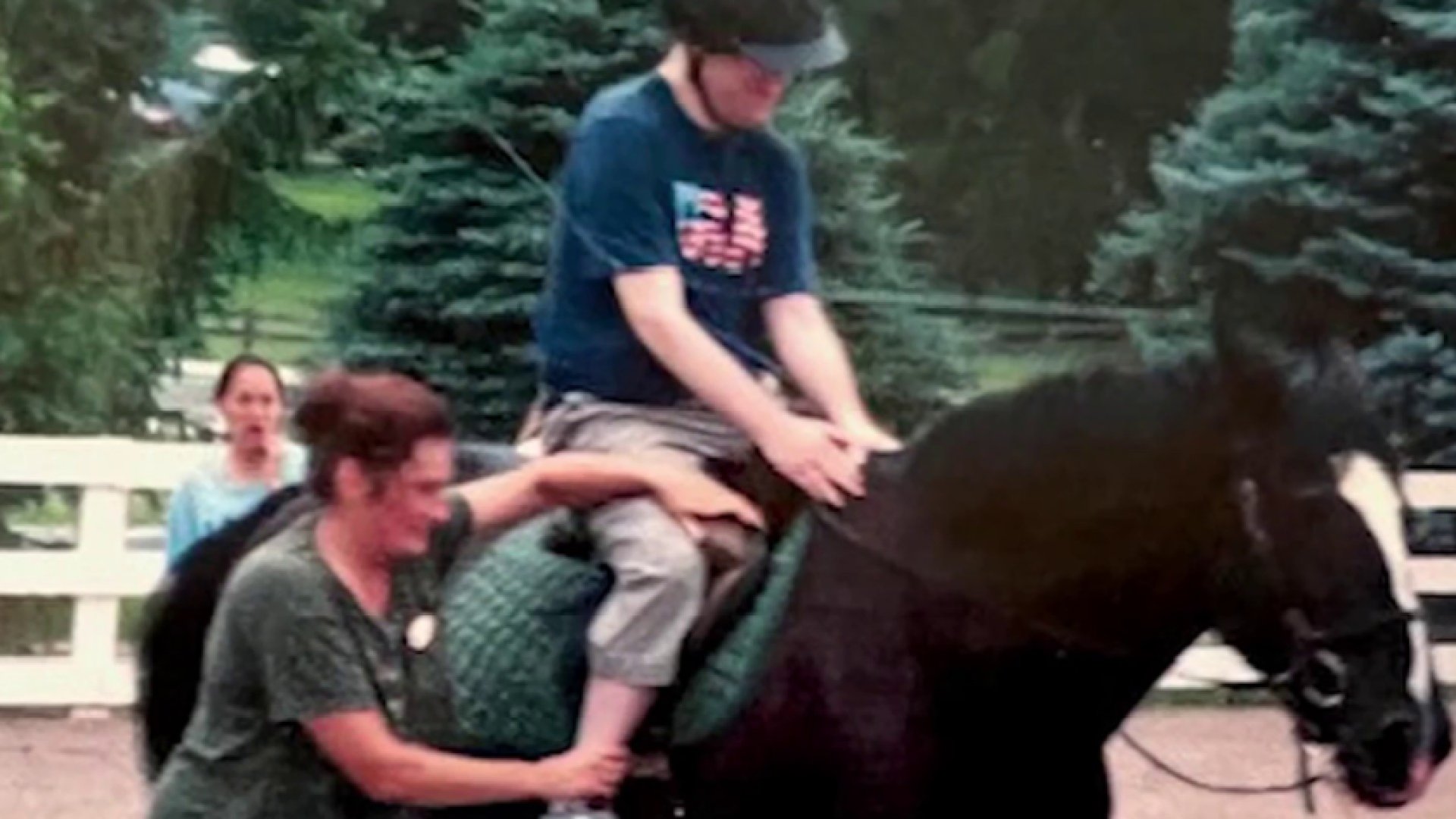
Erol Graeber choked eating his favorite food – a peanut butter sandwich
Graeber was born with a rare genetic condition called Angelman syndrome. He was nonverbal and needed constant care his whole life, but it never stopped him from doing the things he loved — enjoying the outdoors, making music with his family.
“My brother was deeply loved. But my mom, it was her baby,” Oswald said tearfully. “She wanted me to make sure I told you. He was her baby.”
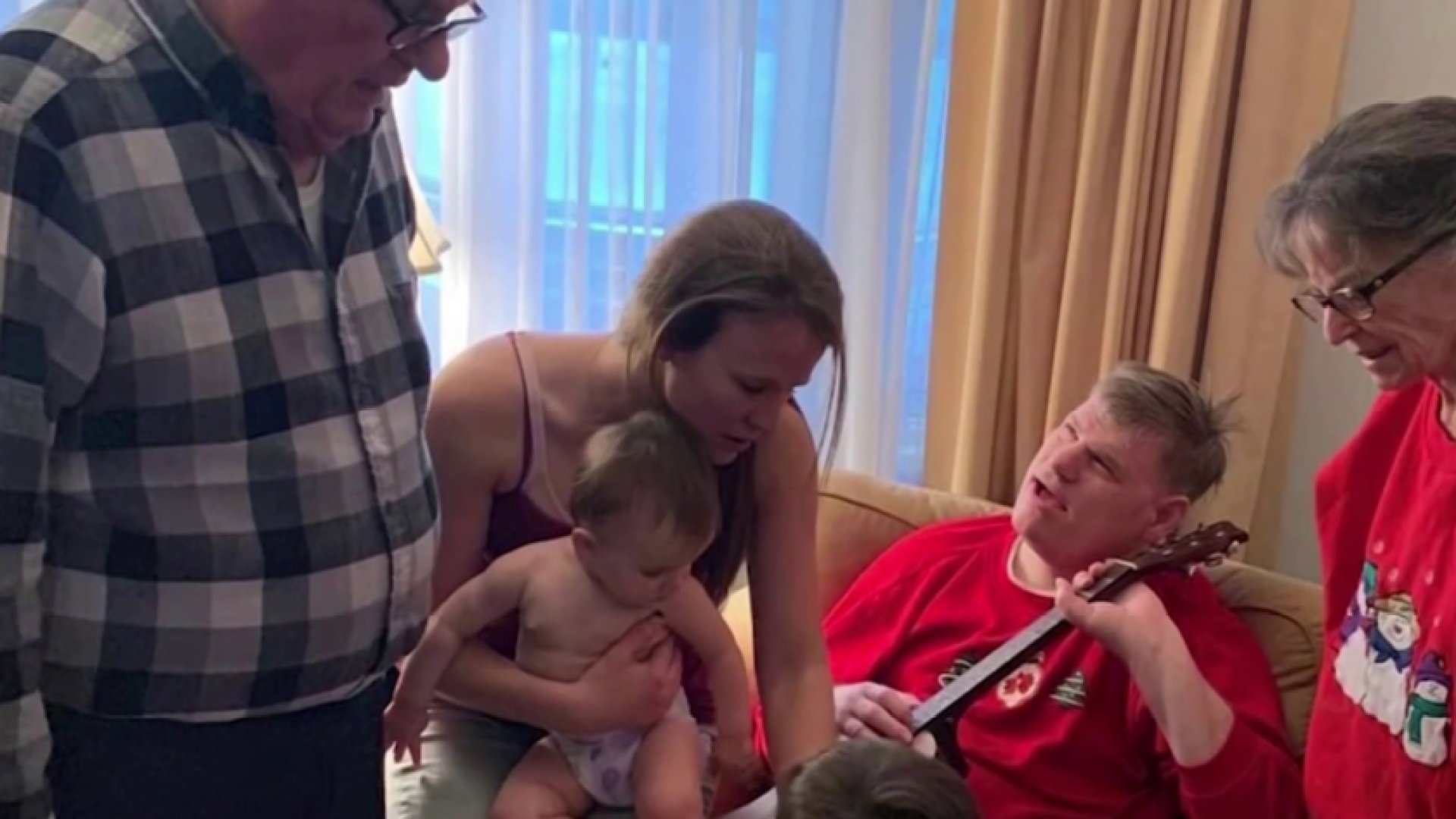
When Graeber’s dad died, his aging mom made the difficult choice to put her son in a group home. They chose the Hartwood Foundation in Springfield.
Graeber knew it well. He’d stayed there occasionally for decades, when his parents needed a break.
“It’s all about trust, and I trusted them,” Oswald said.
“Just writing it on your website that they’re safe didn’t mean my brother was safe,” she said.
Graeber was being fed his favorite food, a peanut butter sandwich, when he started choking.
“Is someone able to start CPR?” the 911 call taker asked. “If he is not breathing, we are delaying helping him.”
The call paints a picture of what happened in Graeber’s final moments.
“He’s dying,” an employee said.
“He’s dying? He’s dying, you know,” another said.
Over seven minutes, the operator asked the employees six times if they could do CPR. Every time, the staff answered no.
“My coworker is screaming, screaming, and I don’t know,” one employee told 911. “He’s dying. I don’t know, maybe.”
“That’s why I said, Is someone able to do CPR?” the call taker asked. “You said you guys don’t want to do CPR.”
“You know, we cannot help him,” an employee said.
“To hear it is excruciatingly painful, because it was so chaotic,” Oswald said.
Paramedics eventually arrived and took Graeber to the hospital.
The next day, his mother and sister made the tough choice to take him off life support.
He was 56 years old.
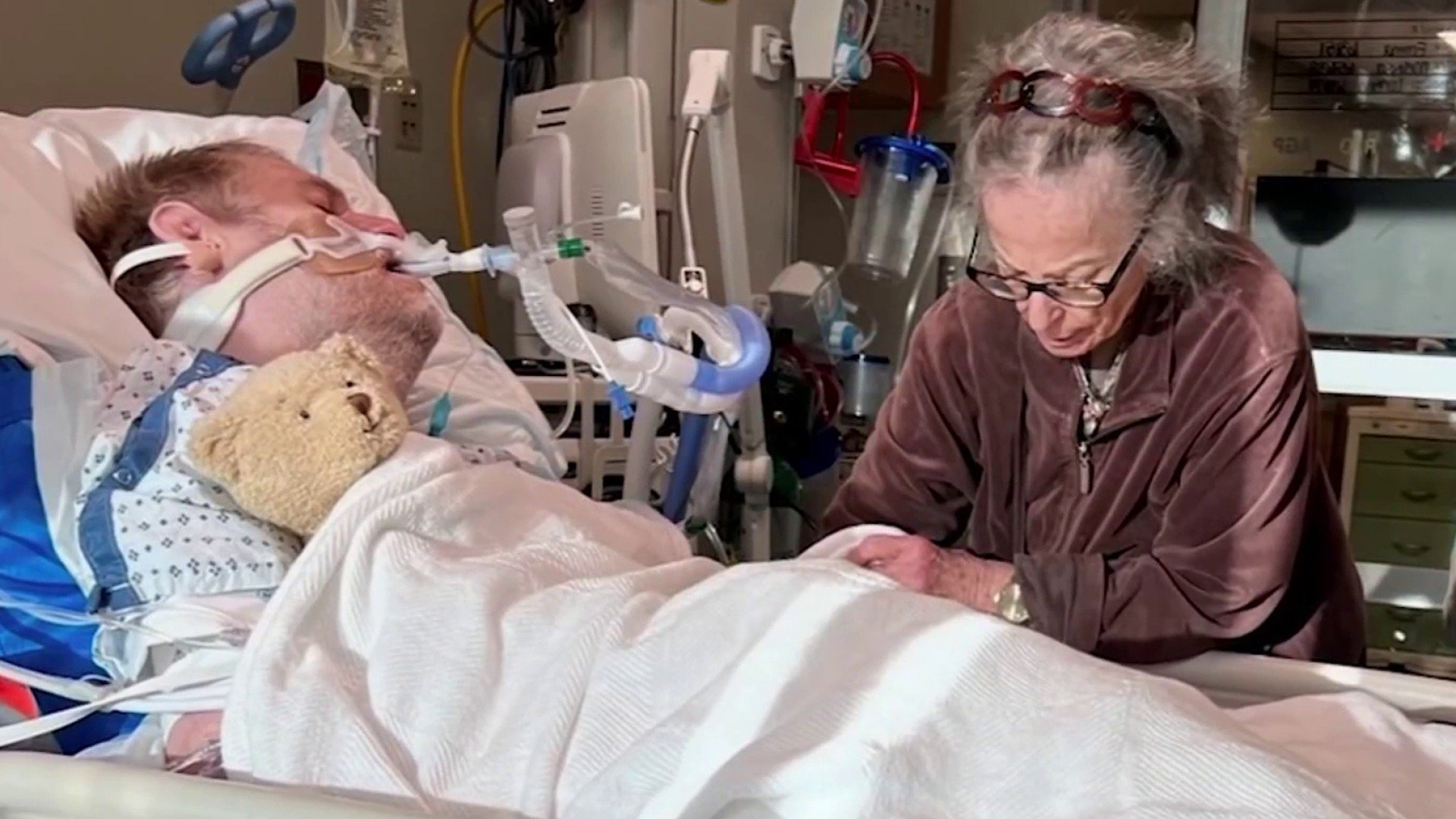
“We miss him,” Oswald said. “And my mom’s heart is broken, and she’s not the same woman. Every day she’s thinking about it; every day she thinks about what happened to him. And every day she has questions.
When the Virginia Department of Behavioral Health and Developmental Services (DBHDS) asked Hartwood what happened, the foundation submitted a report saying staff tried to do the Heimlich maneuver and CPR. The state later pointed out “the 911 call contradicted” that.
Hartwood also told the state Graeber “resisted staff attempts to help him” and “refused aid.”
Oswald said she doesn’t believe that. Her brother wasn’t mentally capable of accepting or refusing help.
“I just wanted them to be accountable and say, ‘Yes, we messed up,’” she said. “And they did not accept it.”
She reached out to Hartwood herself.
“They won’t speak to me,” Oswald said. “Even ex-employees won’t speak to me.”
The state report found “Hartwood was negligent” and had “delayed care.”
According to the report, Hartwood later suspended one of the employees and promised extra training on CPR and emergency preparedness.
Are group home employees in Virginia ready to act in a crisis?
“The adrenaline that comes with any emergency can be very challenging to manage in that situation,” said Heather Norton of DBHDS.
In 2022, Virginia lawmakers commissioned a report on group home safety that found “inadequate crisis response” is a yearslong pattern across group homes.
The report cited examples of staff panicking, calling their boss before 911, taking time to pull themselves together, thinking the person is beyond saving, and not knowing how to answer basic 911 questions.
The report also analyzed 14 choking deaths and said most of them were preventable.
“It’s our responsibility to make sure that our neighbors, our friends, our family have the supports and services they need,” Norton said.
She was once a care provider herself and now works in oversight at DBHDS. They require group homes complete extra training when things go wrong.
“Having practiced what needs to be done, you at least know what to do when it happens,” Norton said.
Concerns about staff at various Hartwood locations
As for Hartwood, DBHDS records show concerns about how staff at various Hartwood locations handled emergencies even before Graeber died.
In November 2022, the state “reviewed 911 audio from an incident” and “recommended Hartwood practice emergency medical drills.”
A month later, DBHDS records show, staff spent almost two minutes during a 911 call trying to figure out the home’s address and explaining what happened.
Then in January 2025 – after Graeber’s death – the state cited a separate Hartwood location, finding staff didn’t perform CPR properly.
And in March 2026, the state cited Hartwood again, finding it failed to keep an eye on someone, who choked on food and had to go to the hospital.
Hartwood Foundation Director Sean McGinnis noted Fairfax County police investigated Graeber’s death and ruled it an accident, which News4 confirmed with police.
McGinnis also described what happened as a tragedy and said he empathizes with the family.
“Hartwood remains committed to providing the highest level of care to the people we serve as we have for over 50 years,” he said in a statement. “People are at the center of everything we do, and we value every individual under our care.”
Health, safety and compliance are among their top priorities, he told News4, and all employees are thoroughly screened and supervised.
Staff get extensive training on things like first aid, CPR and emergency preparedness, McGinnis said. And they have a three-strike policy of firing employees over mistakes.
As for the report on group home safety, Del. Mehta said it shocked her when she read it.
“If something comes up, somebody needs to know what to do,” she said.
It’s personal for the delegate. Her daughter Brooke had a rare genetic condition called Rett syndrome. Brooke was nonverbal and died five years ago at age 5.

That’s part of why Mehta sponsored a bill requiring group homes conduct regular emergency medical drills. The bill passed in April and takes effect in December.
“Just being able to carry on this work in her name and in her honor means everything to me,” Mehta said.
Oswald wants cameras installed in all group homes and says she hopes no other families go through what hers did.
“I think there needs to be greater oversight for anyone caring for people that have no way to communicate when something isn’t right,” she said.
State records also show Hartwood employees logged three different times in their system that they’d given Graeber medication after he died.
Hartwood declined to comment on any of the specifics of Graeber’s case.
Oswald filed a wrongful death lawsuit against the Hartwood Foundation, but a judge dismissed the case because of charitable immunity, a legal policy in Virginia where nonprofits cannot be held liable for ordinary negligence. The goal is to protect charities that do good in the community.
The Hartwood Foundation had filed a motion to dismiss that lawsuit on the basis of charitable immunity, and the judge granted that motion, so a jury never heard the case.