It’s a tiny patch that could have a lifesaving impact.
Researchers at Virginia Tech are developing technology they hope could one day save someone, even when no one is there to help. It’s a wearable patch designed to detect dangerously high levels of fentanyl in the body and then automatically releases naloxone, the medication that can reverse an opioid overdose.
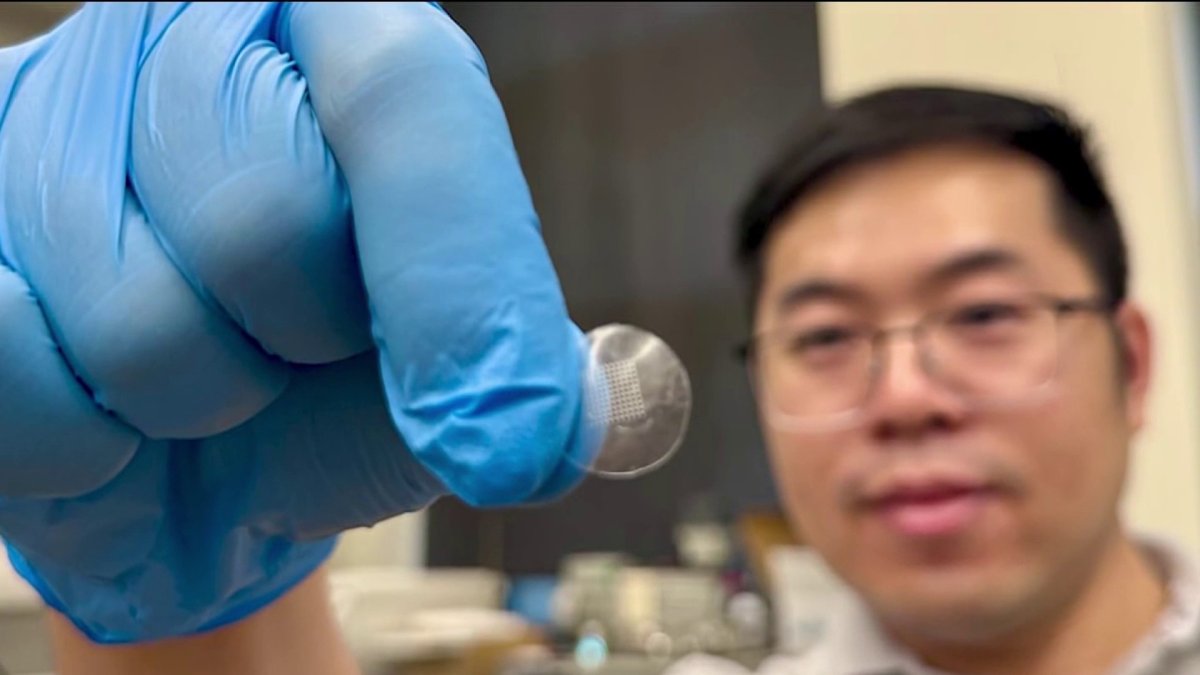
“It’s quite a sense of achievement,” said Wujin Sun, an associate professor at Virginia Tech who has spent the past four years developing the technology. “We are making a device that can help a lot of people.”
The patch is smaller than a penny but packed with more than 120 microscopic needles that penetrate beneath the skin. When the patch detects fentanyl, it triggers the release of naloxone.
It aims to address one of the biggest challenges in reversing a deadly overdose.
“In a lot of the cases, overdose happens when people are alone. There’s no one there to help, so that’s the idea behind our patch,” Sun said.
The patch is also designed to deliver more than one dose. Researchers said that’s important because naloxone can wear off while fentanyl remains in the body, putting someone at risk of overdosing again.
“When the effects of naloxone wears off, the fentanyl or the opioid can come back again, causing a subsequent overdose, so that can be very dangerous,” Sun said.
The need is still staggering, even as overdose deaths decline. About 44,500 Americans died from opioid overdoses last year, according to the Centers for Disease Control and Prevention, down nearly 20% from 2024.
Public health experts said easier access to naloxone is among several factors helping drive down deaths.
“I see that opioid overdose is a major challenge, and I feel my skills can be applied here,” Sun said.
The wearable patch has been tested in the lab and in mice, with the findings published in the journal “Advanced Science.”
But researchers said it is still in the early stages. More testing is needed to determine how well it works in people in real-world conditions and across different skin types.
While the technology may be tiny, researchers said it has a lot of potential. The big key is funding, as researchers try to do more testing and eventually clinical trials involving people.
They added that they’ve been testing the patch specifically with fentanyl and naloxone, but researchers said the underlying chemistry could one day be adapted to work with other drugs.