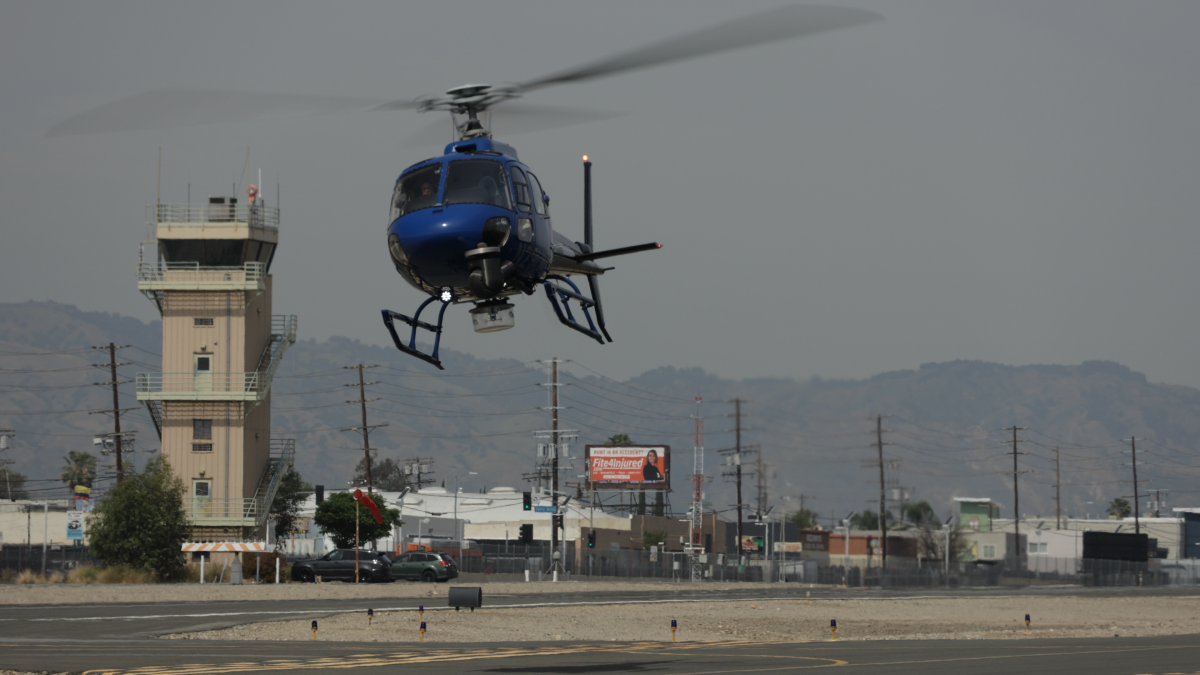
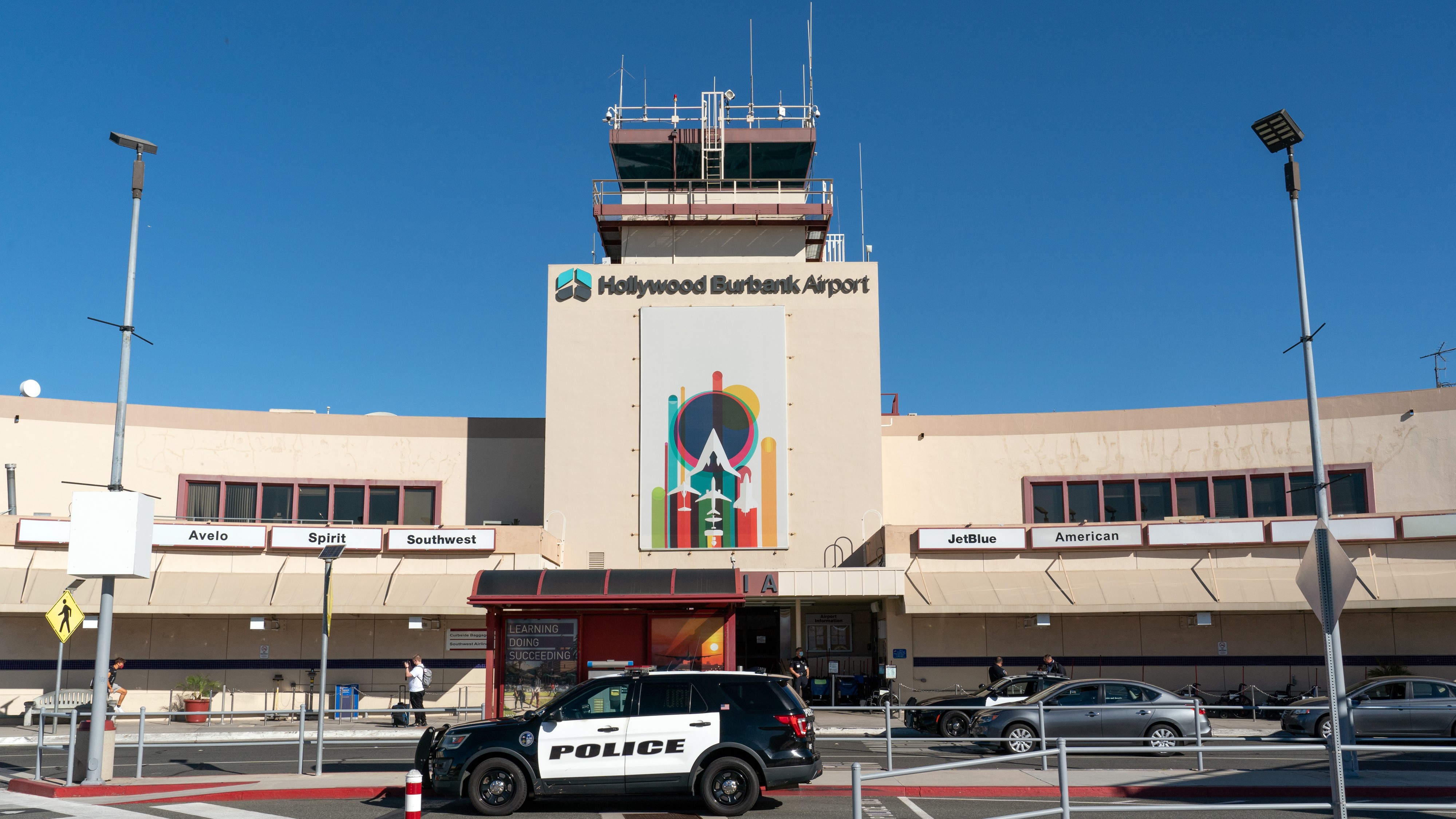
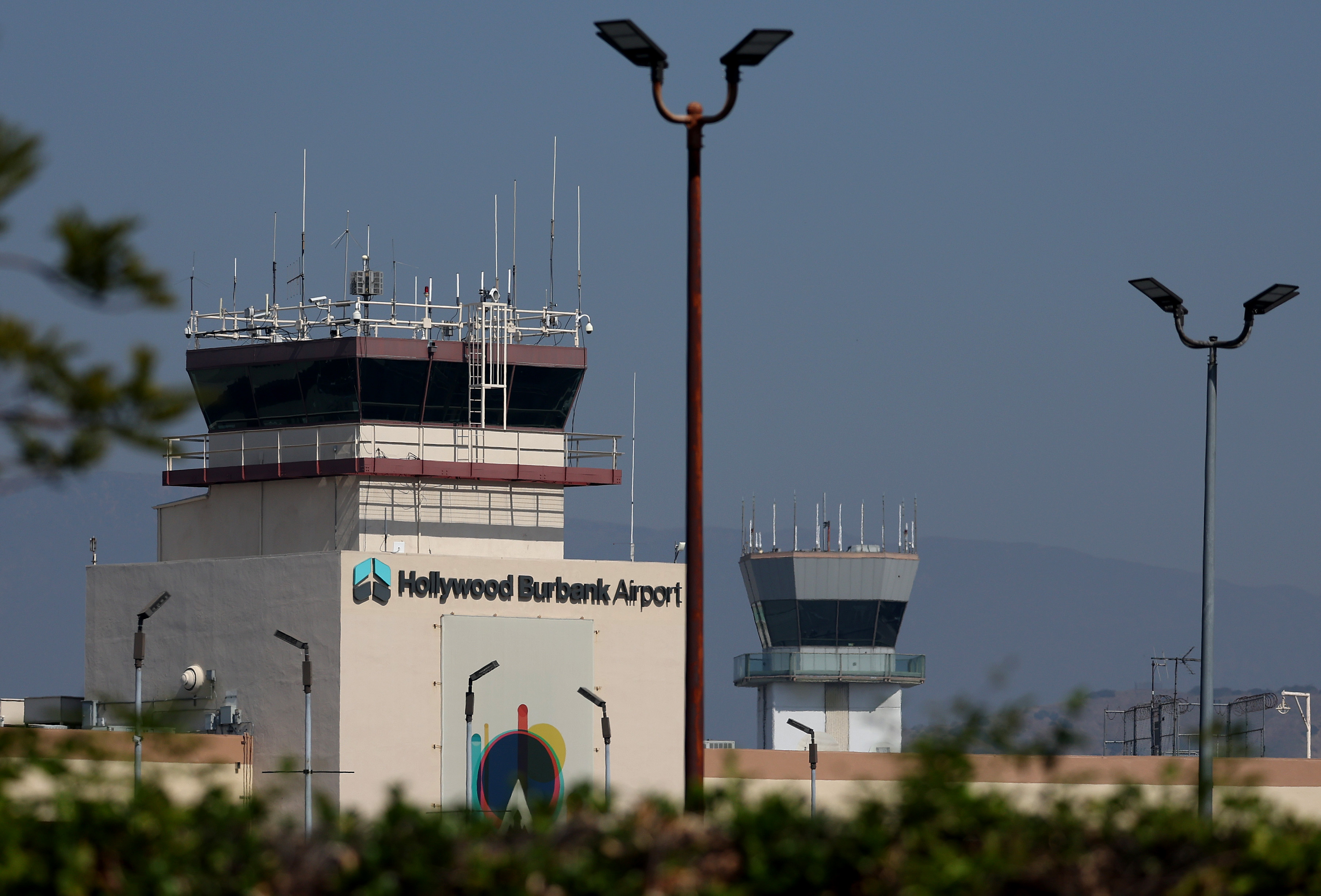
The pilot of NewsChopper4, NBC Los Angeles’ helicopter for aerial coverage, alerted air traffic controllers of an incident near Hollywood Burbank Airport that was cited this month when the Federal Aviation Administration announced new restrictions on helicopters flying through congested airport airspace.
When the FAA posted the rule change March 18, the agency described the March 2 incident as a “conflict” involving an unidentified helicopter and a small cargo plane approaching Hollywood Burbank Airport in the San Fernando Valley for landing, but offered few details about what happened.
Air traffic data and communications recordings offered more details, showing that controllers had approved the helicopter’s flight north above the 5 Freeway as the the turboprop was cleared to land and made a sweeping left turn to cross the freeway southbound. NewsChopper4 made a right turn to avoid flying into the path of the plane.
“Hey Burbank, if I didn’t turn right, I would have met that incoming airplane for I-5,” the NewsChopper4 pilot was recorded telling the controllers in reference to Burbank runway No. 15 where the plane was landing.
The pilot later notified the FAA of what happened.
“There was never an imminent danger,” said Larry Welk, whose company Angel City Air operates NBC4’s helicopters.
“(The pilot) elected to do a maneuver that would not interfere with the path of the airplane. He also informed the tower, ‘Hey, I see this airplane,'” Welk explained of the event. “Had he not made a move, something bad could have happened.”
The FAA referenced this incident when it announced a temporary rule change that now requires air traffic controllers to actively track helicopters on radar when they are permitted to fly through the airspace of busier airports, including Burbank.
The change follows heightened national scrutiny of mid‑air collision risks, including statements last year from National Transportation Safety Board Chair Jennifer Homendy, who called the airspace around Burbank one of her top safety concerns.
The new restrictions, considered temporary, may increase the workload for controllers, which, in turn, could limit helicopter access through certain corridors.
Welk said he hopes the FAA considers the input of local pilots before making these or other rules permanent.
“I think that you’ll see working groups come together to improve that,” he said. “For a short time, it may take an extra route to get somewhere if that’s what needs to be done, that’s what needs to be done.”