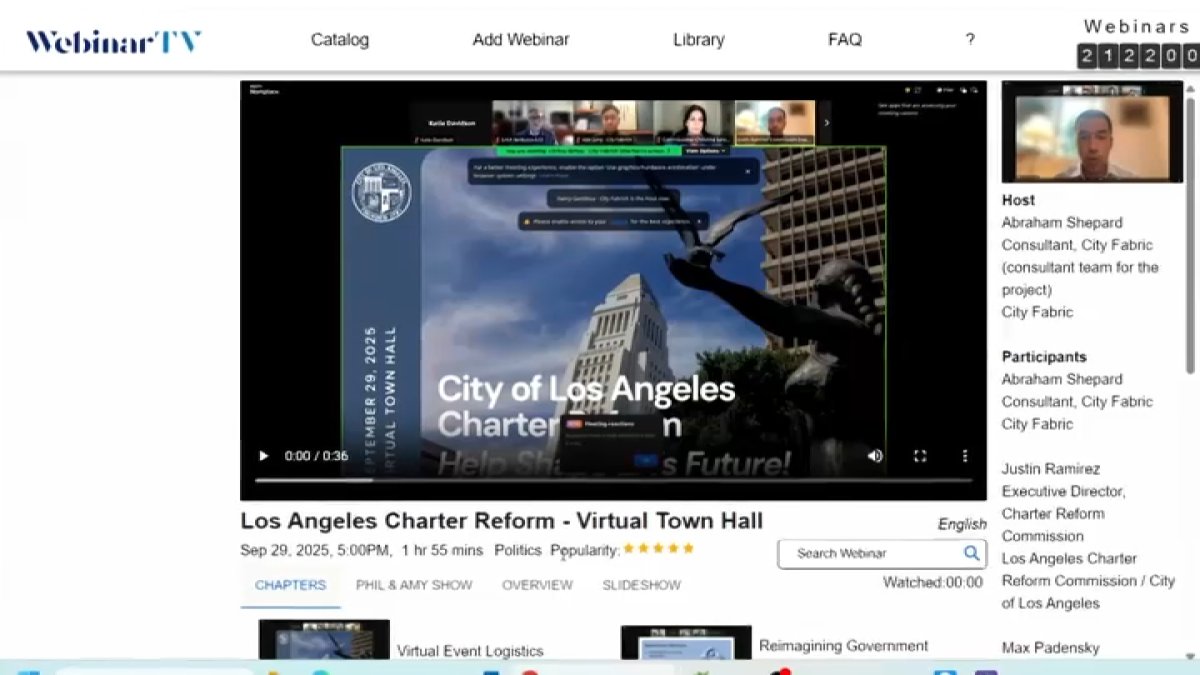
As work, school and community meetings increasingly move online, a streaming platform is reposting thousands of webinars for public viewing — sometimes without participants’ knowledge.
The website, called WebinarTV, hosts more than 200,000 recorded webinars, according to its own data. NBC Los Angeles’ investigation found videos originating from across Southern California, including meetings tied to private universities, health organizations and nonprofit groups.
The issue first gained attention after online journalists at 404 Media reported finding recordings of webinars they had participated in on the platform. In one case, a meeting involving Freedom of the Press was reposted without the organization’s permission, though it had been publicly accessible at the time.


NBCLA also identified a webinar from a Los Angeles-based nonprofit, Vision y Compromiso that appeared on the site without its knowledge.
“Vision y Compromiso places a high value on the work we do for community health workers, advocating for a healthy and dignified life,” said Fabiola Montiel-Téllez of the organization. “We did not approve for this webinar to be reposted.”
Online complaints about WebinarTV have surfaced on platforms, including Trustpilot, Reddit and the Better Business Bureau, with users alleging unauthorized use of their content.
In response to questions, WebinarTV CEO Michael Robertson said in a statement that the company notifies webinar hosts before listing their content.
“WebinarTV sends two emails to hosts letting them know that their webinar is being added to the search engine,” Robertson said. “If they don’t want to be listed, they can click one link and be removed.”
He added that the platform does not support private Zoom meetings, only webinars “open for anyone on the internet to view.”
However, NBCLA found dozens of links on WebinarTV labeled as Zoom meetings, raising questions about how content is sourced.
Zoom, the widely used video conferencing platform, said the issue is not related to any flaw in its system.
“This activity is not the result of a vulnerability or security issue on the Zoom platform,” a Zoom spokesperson said in a statement.
Experts say users can take steps to protect their meetings from being widely shared online. Recommendations include avoiding posting meeting links publicly, requiring participant registration, and enabling passcodes and waiting rooms.
As online communication continues to grow, the situation highlights ongoing concerns about privacy and control over digital content once it is shared on the internet.