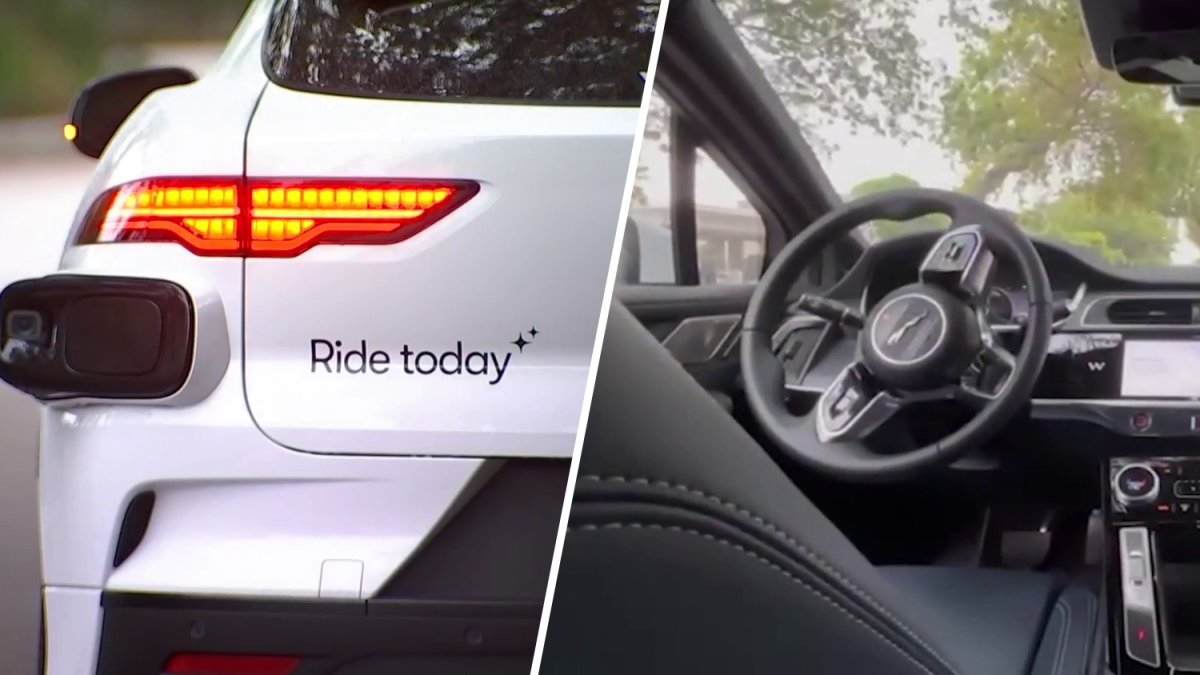
It’s been more than a year since drivers have seen the fully self-driving cars, decked out in cameras and radars, taking over the streets of Miami.
Starting Thursday, the cars will be getting an upgrade: now passengers will be able to ride them.
More than 10,000 people have been on a waitlist for the opportunity to ride in a Waymo. Since November of 2024, the company has been getting to know the landscape of Miami—it’s bridges, neighborhoods, areas with high foot traffic, and more.
For those not familiar with the company, Franklin Trujillo the Director of Commercialization Programs at Waymo explains: “Waymo is an autonomous vehicle company. We offer fully autonomous rides in comfortable electric vehicles, and we’re super super excited to be in Miami.”
Miami is the sixth city rolling out Waymo rides to the public. Each ride can be booked inside of the Waymo app and costs around the same as other ride shares. It currently provides service to 60 square miles, as seen in this map.
But what happens if you live or want to go somewhere outside of the designated area?
“If you are looking for a destination outside of the current service area, it will give you an error that says we don’t yet service that area, so you can’t yet set it up to get stuck outside of that area,” Trujillo said.
But you would be in luck if you are in Little Havana. Right off of 8th Street, a Waymo sits parked off the side of the road, lights blinking and lidars turning.
It means the Waymo is at your service.
When you hail the ride, it will show you the Waymo car closest to you. The app works similar to other ride share apps in that you can add destinations to your route. The car will remain locked until you select it.
As soon as you select it, the passenger door handles will pop out, meaning that the car is unlocked and ready to ride.
Once inside, the Waymo has all of the bells and whistles a regular car has: rearview mirror, controls, even windshield wipers. It’s all technology that is not needed for the driver (as there is none), but Waymo says it’s in place for the rider to feel more comfortable.
And in the event you do not feel safe, something goes wrong, or you take too long to get out of the car once you have reached your destination, driver support is at the ready.
But there’s other features. The car is equipped with 29 cameras, six radars, and five lidars.
NBC6 saw them operate in real time.
As we were about to cross an intersection, the car came to an immediate halt. The screen in the Waymo showed a blue car on the right hand side.
“So this car is going the wrong way, and so Waymo saw it and did a veer around it,” explained Mark, a Waymo representative inside of the vehicle.
As we came upon a complicated intersection that had bumper-to-bumper traffic, the route Waymo wanted to take called for a left.
“But it may be too traffic-ky so we will see how the AI of the system will decide on how best to procced,” Mark said.
And in less than two minutes, it slowly pushed forward, then continued on.
The decision-making skills of the self-driving car bring up a frequent question: how will the public feel about trusting these self-driving vehicles?
Mark says the company has “a tremendous amount of experience under us the last 16 years of development, the last five years of fully autonomous trips.”
“Safety is our number one priority,” he goes on. “We’ve done over 127 million fully autonomous miles. And in those miles we have seen 10x fewer serious injury crashes, 5x fewer injury crashes, 5x fewer crashes with airbags, and 5x fewer injuries with pedestrians.”
Soon the electric fleet will be available for more riders, as more and more people get off the waitlist and into the cars. There is no timeline for how soon they will be able to expand rideshare or their area coverage, but Waymo did note that other jurisdictions not in the current area scope will soon be partnering with the company.