Authored by Kevin Stocklin via The Epoch Times,
President Donald Trump has encouraged American oil companies to reinvest $100 billion in Venezuela to spur energy production and to rescue Venezuelans from desperate poverty.
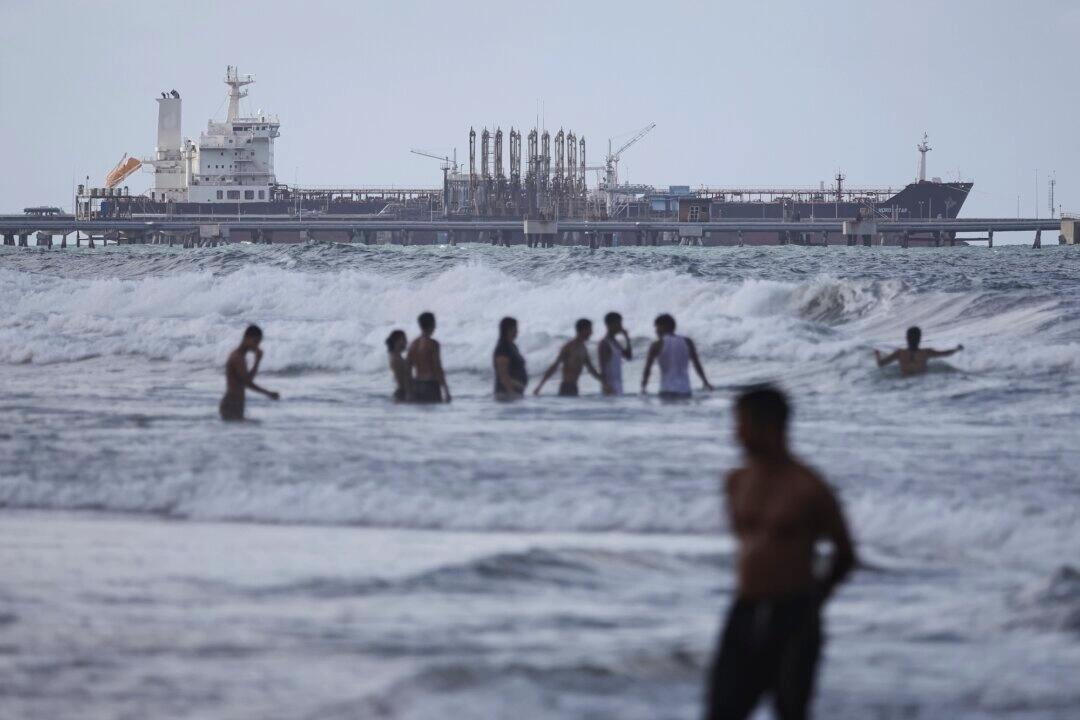
Oil companies, however, are taking stock of the decrepit state of Venezuela’s energy infrastructure after decades of communism, and seeing a number of critical impediments.
“We’re going to have our very large United States oil companies—the biggest anywhere in the world—go in, spend billions of dollars, fix the badly broken infrastructure,” Trump stated in a Jan. 11 press conference following a meeting with top oil executives.
Venezuela has the world’s largest known oil reserves, estimated by rating agency S&P at 300 billion barrels, which are located in a region along the Orinoco River called the Orinoco Belt. At its peak—and with investment and expertise from oil majors including Exxon Mobil, ConocoPhillips, Chevron, BP, Total, and Norway’s Statoil—Venezuela produced more than 3 million barrels per day and was America’s largest foreign supplier.
America’s gulf coast refineries were built to process the heavy sour crude from Venezuela, and they can refine it much more efficiently than the light crude produced from fracking. But trade with Venezuela slowed to a trickle after then-president Hugo Chavez seized the assets of western oil companies in 2007, leading to the imposition of U.S. sanctions. Since Venezuela’s wells and other equipment were nationalized, output collapsed by about 70 percent and is currently less than 1 million barrels per day, according to statistics website Worldometer.
Venezuela thus presents a massive opportunity for Western oil companies to rebuild what had once been a top global oil producer. But daunting problems remain.
“Commercially, the upside is long-life reserves, portfolio diversification, and service and infrastructure opportunities if the country becomes investable again,” Jason Isaac, CEO of the American Energy Institute, told The Epoch Times.
“But the investment case only works if companies can actually control operations, get paid, and move barrels transparently—otherwise the ‘gain’ is trapped capital and political risk.”
Venezuela Currently ‘Uninvestable’
On Jan. 9, Exxon Mobil CEO Darren Woods expressed little enthusiasm for an immediate return to Venezuela, stating in a meeting hosted by Trump at the White House that the country, in its current state, is “uninvestable.”
“We’ve had our assets seized there twice,” Woods said. “And so, you can imagine to re-enter a third time would require some pretty significant changes from what we’ve historically seen here and what is currently the state.”
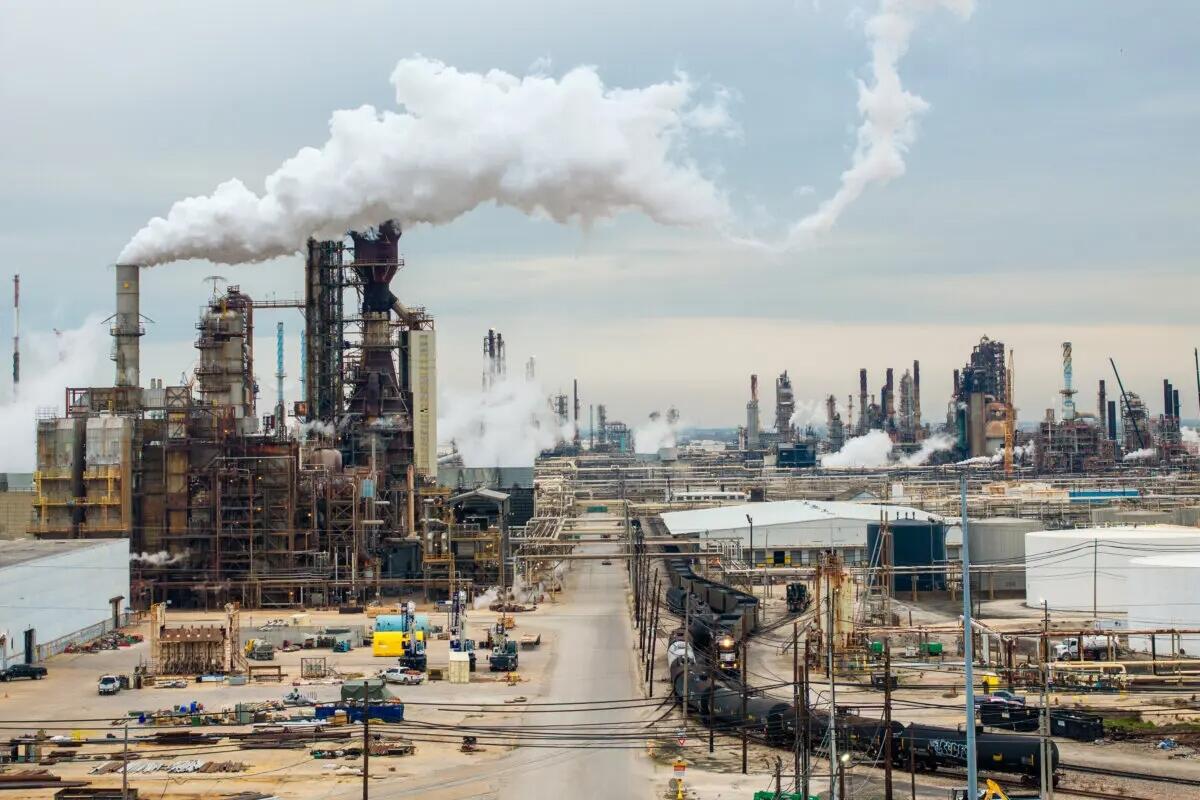
In an aerial view, the Exxon Mobil Baytown Refinery is seen in Baytown, Texas, on Jan. 13, 2026. President Donald Trump has threatened to sideline Exxon Mobil from Venezuela's energy market after expressing that he "didn't like Exxon's response," while making a push for oil companies to begin investing there. Exxon remains interested and is prepared to send a team to assess the existing oil infrastructure. Brandon Bell/Getty Images
Patrick Pouyanne, CEO of Total, likewise said that he would consider investing in Venezuela again at some point, but it is “not high on my agenda.”
Venezuela first expropriated the assets of western oil companies in the 1970s and again in 2007. By contrast to many governments in the Middle East and Africa that had done the same, Venezuela refused to compensate oil companies for their losses, leading the companies to sue and win in U.S. and international courts, claiming damages of around $60 billion.
Oil companies will likely want these claims to be paid before putting new money into Venezuela, but the country has little means to do so. Oil production has dwindled to less than 1 million barrels per day and, even at that level, still comprise about two-thirds of the government’s entire budget. China has replaced the United States as the top importer of Venezuelan oil, currently buying an estimated 80 percent of it, but at a discount.
And while Venezuela faces tens of billions of dollars in claims from western oil companies, it is now indebted to China as well. According to the U.S.-China Economic and Security Review Commission, Chinese banks have at least $10 billion in outstanding loans to Venezuela.
Venezuelan Crude Expensive to Extract
Beyond these factors, there are also technical problems. Venezuela’s oil reserves, though abundant, are a particularly dense and sulfur-rich form of crude oil that requires a level of investment and expertise to extract and process that only the world’s largest companies can provide, experts say.
“Venezuela has very large reserves, but when we’re talking about the actual production of them, they’re very difficult to produce and very expensive to produce,” Kenny Stein, a policy expert at the Institute for Energy Research, told The Epoch Times.
Another issue for America’s oil companies is that the full extent of the damage to Venezuela’s infrastructure has yet to be assessed, and the cost of rebuilding it could go well beyond the $100 billion figure that has been estimated.
“The total investment required is not immediately clear, given the lack of transparency under the Chavez and Maduro regimes, but it is likely to be substantial and exceed initial estimates,” Ryan Yonk, senior fellow at the American Institute for Economic Research, told The Epoch Times. “Rebuilding the oil infrastructure is likely to be a long-term project spanning multiple years and potentially decades, rather than the short-term expectations some hold for rapid development and immediate effect.”
Experts say that equipment located in Venezuela has not only been neglected but pilfered as well.
“The infrastructure, the wells, the pipelines, the entire oil industry in Venezuela has been really stripped down to the bone and is barely functional,” Stein said. In addition to theft by government officials, he said, “employees of the state oil company have been stealing copper from their facilities to sell to feed their families.”
Oil companies will likely want government co-investment in some form to help pay for the reconstruction, Yonk said.
Another issue when deciding whether to invest in Venezuela is that Western oil companies must weigh it against the alternatives.
“They could go to Brazil or Guyana, or places in the United States, that are all less expensive to produce,” Stein said. “There would be faster production, they’re not as volatile, and you’re not as much at risk of losing everything.”
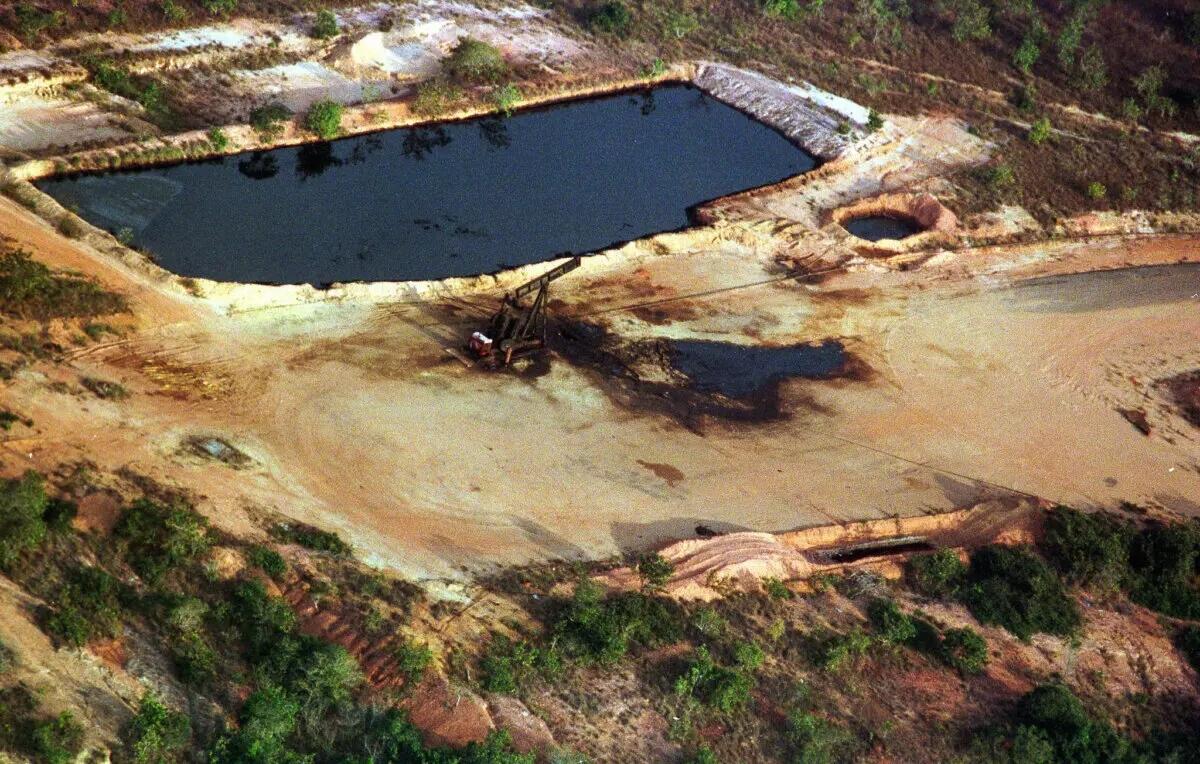
Aerial view of an oil well in eastern Monagas, in Maturin, Venezuela, on Feb. 13, 1998. Bertrand Parres/AFP via Getty Images
What It Will Take
For all these reasons, it will take significant changes for Venezuela to attract capital again, experts say.
“U.S. companies will not commit serious capital to Venezuela without a credible reset on rule of law,” Isaac said. “That means binding contract protections, enforceable dispute resolution, and a settlement framework for legacy expropriation and unpaid joint-venture debts.”
Oil companies will likely seek guarantees from the U.S. government that oil sanctions will not be reimposed, that whatever agreements they enter into will be honored, and that they can operate safely and repatriate whatever profits they may earn, he said.
“Without those conditions, any U.S. presence will stay limited to short-cycle, low-exposure activity,” Isaac said.
Exxon Mobil’s CEO stated that he is willing to take initial steps to help with Venezuela’s reconstruction “while these longer‑term issues are being worked.”
“We haven’t been in the country for almost 20 years,” Woods stated. “We think it’s absolutely critical in the short term that we get a technical team in place to assess the current state of the industry and the assets to understand what would be involved to help the people of Venezuela get production back on the market.”
If Exxon is invited by the Venezuelan regime and has security guarantees from the Trump administration, Woods said he is “ready to put a team on the ground.”
Chevron is the only U.S. oil major currently operating Venezuela, producing about 240,000 barrels per day in a joint venture with PDVSA, the country’s state-owned oil monopoly, though experts say much of that effort is simply to preserve the assets they already have in the Orinoco Belt.
“Chevron’s has continued to operate there, but basically doing the bare minimum to keep their wells from being ‘bricked,’” Stein said. “Because of the thickness and tar-like state of the oil, if you don’t keep it continually maintained and flowing at a minimum level, the well will be destroyed.”
Nonetheless, Chevron’s vice chairman Mark Nelson told Trump on Jan. 9 that he believed they could double their output in Venezuela immediately.
An incremental increase in Venezuela’s oil production is more likely than a rapid return to pre-Chavez levels, Isaac said, predicting that the country could reach approximately 1.3 million barrels per day within a couple years, and perhaps 2 million barrels per day within a decade.
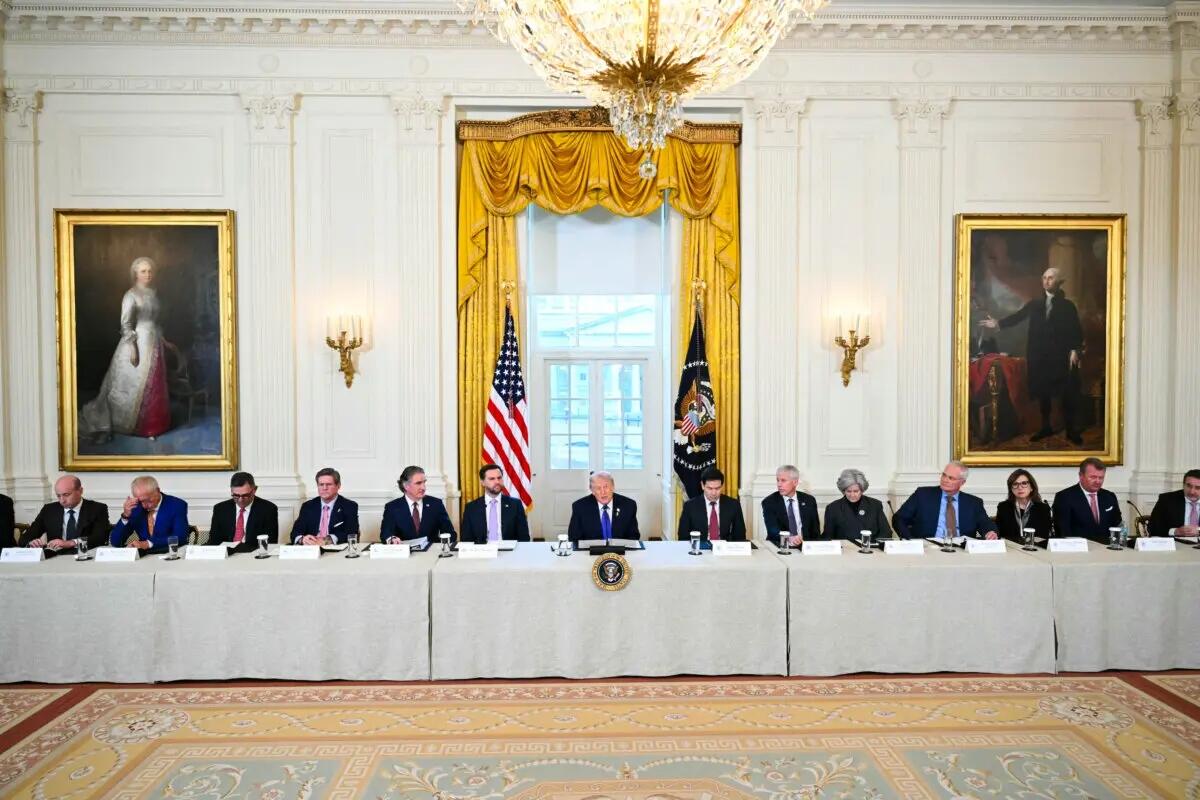
President Donald Trump speaks during a meeting with US oil companies executives in the East Room of the White House in Washington, DC, on Jan. 9, 2026. Saul Loeb/AFP via Getty Images
Strategic and Economic Goals
Despite the hesitancy of oil majors to commit significant capital to Venezuela at this point, the Trump administration has stated its strategic interest in preventing China and other U.S. adversaries from stepping into the void.
During an interview with NBC’s Meet the Press, Secretary of State Marco Rubio said that Venezuela had become “a crossroads for the activities of all of our adversaries around the world.”
For Venezuelans, however, the riches of oil have been both a blessing and a curse.
Calling Venezuela “a case study in the perils of becoming a petrostate,” a 2018 study by the Council on Foreign Relations stated that “since it was discovered in the country in the 1920s, oil has taken Venezuela on an exhilarating but dangerous boom-and-bust ride that offers lessons for other resource-rich states.”
In what has been called “Dutch disease,” developing countries that suddenly get rich from the discovery of natural resources develop a singular dependence on those resources, leaving other sectors of the economy to languish while government corruption and theft proliferate, with little of the wealth ultimately going to benefit the citizens at large.
For this reason, some analysts say that the best solution for Venezuela is to establish a system of free markets, democratic traditions, stability, and the rule of law, similar to what Poland and Chile have done since emerging from authoritarian regimes. Key elements of Poland’s reforms included a legal system that protected property rights, political stability under a democratic system, privatization of state-owned companies, a stable currency, and a tax regime that allowed investors to earn a decent return.
“Under the ‘warm embrace of communism,’ [Poland] was an economic basket case,” the Committee to Unleash Prosperity, a nonprofit founded by free-market economists Arthur Laffer and Steve Moore, stated in an op-ed.
Having embraced democracy and free markets, Poland recently achieved GDP growth rates of about 4 percent per year, and is predicted to overtake the UK in GDP-per-capita by the end of this decade, they said.