State lawmakers return to the Illinois House on Tuesday to gavel in the 2026 legislative session and prepare for months of wrangling over how to bridge a $2.2 billion budget gap in a critical midterm election year.
Leaders of Democratic supermajorities in the Illinois General Assembly are sticking to the national party message of addressing affordability for voters who face rising costs on utility bills, health care, home insurance and just about everything else.
Aside from legislators’ main task of passing a budget, new competition from Indiana officials looking to lure the Chicago Bears across the border could move the ball forward in Springfield for a new stadium in Arlington Heights.
Lawmakers could also tweak portions of the state’s polarizing SAFE-T Act in response to a horrific Blue Line attack that raised questions about electronic monitoring. And troubles for Bally’s Chicago Casino and Hawthorne Race Course — plus a new city tax on sports betting operators — could spur new legislation around the state’s bevy of gambling options.
Not that Democrats are likely to rock the boat with any controversial bills before the March 17 primary.
The Illinois Senate quietly kicked off its legislative calendar last week, Gov. JB Pritzker will deliver his budget proposal Feb. 18 and a spending plan has to be approved by May 31. Here’s an early look at the General Assembly’s spring session.
Budgeting for affordability — and maybe a millionaire tax
Reduced federal funding and the ever-present threat of further cuts under President Donald Trump’s administration make it another precarious spending year, with a projected $2.2 billion shortfall entering the state’s fiscal year that begins in July.
Cuts to Medicaid, food assistance and other social service programs in Trump’s Big Beautiful Bill put the onus on state lawmakers to set aside more money to maintain support for some of Illinois’ most vulnerable residents.
“I don't know how you see around the corners and predict the irrationality that's coming out of Washington right now,” said Illinois Senate President Don Harmon, D-Oak Park. “I don't know what tomorrow holds or the day after, but I think we're going to remain committed to a responsible, balanced budget living within our means, paying off our debts and investing in things that matter to people across Illinois.”
Harmon and Illinois House Speaker Emanuel “Chris” Welch, D-Hillside, downplayed the possibility of reviving the fight for a state constitutional amendment for a graduated income tax to bolster state coffers with a higher percentage from the wealthy.

Voters soundly rejected that Pritzker-backed initiative in 2020, but they’ve signaled support in past ballot measures for another progressive revenue idea Welch is floating: a surcharge tax on millionaires.
“I think it'll allow us to do some other things that are desperately needed with an additional source of revenue,” said Welch, who added that his chamber’s agenda will also include heightened state regulation of homeowners and auto insurance as premiums have soared.
“This affordability crisis that's been created by the current president and Washington Republicans has us laser-focused on bringing costs down for everyone,” he said.
Illinois House Minority Leader Tony McCombie, R-Savanna, said “House Democrats can’t talk about affordability and being relatable to Illinois families after repeatedly passing billion-dollar policies — often in the middle of the night,” referring to marathon sessions that typically see budget bills called in the wee hours. “We have a spending problem and Illinois House Republicans will continue to demand accountability.”
Bears stadium drive
The Bears could scarcely get a bill drafted throughout four years of lobbying Springfield for property tax help with the new stadium they want to build in Arlington Heights. Once the team threatened to move to Indiana, it took less than a month for Hoosier lawmakers to file a bill that could pave the way for a Bears dome across the state line.
While Illinois lawmakers haven’t completely changed their tune against giving handouts to a franchise valued at nearly $9 billion, they’ve certainly adjusted their tone toward the Bears since Indiana joined the stadium fray.
Pritzker walked back his September comment that “we need the Bears to pay off what’s owed on the existing stadium,” some $532 million in outstanding bonds that taxpayers are footing for Soldier Field’s 2003 renovation.

The governor, who has all along said the state could help out with infrastructure costs if the team covers the $2 billion stadium tab, noted last week the “responsibility for that debt does not fall on the Bears. Having said that, we do not want to leave the city of Chicago or the state of Illinois with an enormous debt that goes unpaid.”
Welch also emphasized “we've always said we're open to the discussion around infrastructure… We've been investing in our infrastructure all across this state, and the Arlington Heights area is going to receive infrastructure investments anyway, so if that's because the Bears are there, that's a plus.”
Still, Harmon tempered expectations for the type of legislation coveted by the Bears, which would let them negotiate with local taxing bodies over discounted payments in lieu of property taxes.
“The truth is everyone in the district I represent would like some certainty in their property taxes, from the bungalow across the street in Galewood to the biggest house in Oak Park,” he said. “I'm not sure we can give something like that to a billion-dollar professional sports franchise without figuring out a way to give it to the bungalow owner.”
SAFE-T Act tweaks
Scrutiny has intensified once more on Illinois’ SAFE-T Act following the gasoline-soaked burning of a woman aboard a Blue Line train, allegedly by a man who was free on electronic monitoring following a separate assault case.
Harmon and Welch said they’re awaiting a report from freshly sworn-in Cook County Chief Judge Charles Beach, whose office only recently took over the electronic monitoring system from the county sheriff’s office. It’s not clear what adjustments Democrats might try to make on landmark criminal justice legislation over which Republicans have made political hay for several years.
“I'm eager to learn from him and from his team what changes they might want to see made, but that's a very real issue as demonstrated by some awful incidents of late,” the Senate president said.
He and Welch stood by the most polarizing section of the 2021 legislation: the Pretrial Fairness Act, which eliminated cash bail and handed sole discretion to judges over whether defendants should be jailed ahead of trial.
“Bad guys are in jail, and they're behind bars because judges are locking them up and using the authority granted to them in the SAFE-T Act to put those bad guys away and keep them there,” Welch said. “Are there some things that we can do to make it better? We'll see.”
Bills for Bally’s Chicago Casino — and against struggling Hawthorne Race Course
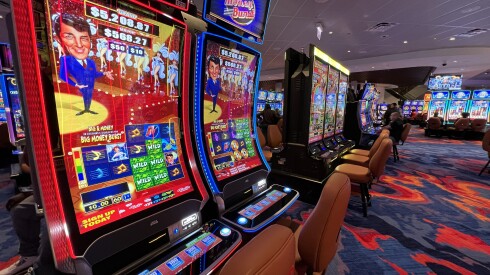
Lawmakers will weigh whether to throw a life raft to Bally’s, which is required to close its temporary Chicago casino this September after three years.
The company acknowledged its permanent $1.7 billion mega-casino — a project that has hit numerous stumbling blocks since landing a coveted license — might not be ready to open by then, so state Rep. Kam Buckner, D-Chicago, has filed a bill that would give Bally’s up to another year of temporary operation at Medinah Temple.
Elsewhere in the gambling sphere, legislators could crack down on owners of financially strapped Hawthorne Race Course, which has canceled three straight weekends of horse racing, raising concerns about how much longer one of Illinois’ two surviving racetracks can survive.
The massive gambling expansion law that authorized the Chicago casino and legalized sports betting in 2019 also allowed Hawthorne to add casino games as a means of rescuing the state’s rapidly shrinking horse racing industry. Five years and counting since getting a license, the Stickney track has failed to secure financing to build its racino.
“I think our patience is wearing thin. Not many folks are granted a license for a casino and turn it into this stew of nothing happening,” Harmon said.
A bill filed by state Sen. Patrick Joyce, D-Essex, would take away Hawthorne’s veto power over other Chicago-area racetrack projects, opening the door to a new suburban development.
Additionally, Mayor Brandon Johnson and City Council members will be watching a bill filed by state Rep. Dan Didech, D-Buffalo Grove, that would block municipalities from imposing their own sports betting taxes — as Chicago has done to help balance its budget.