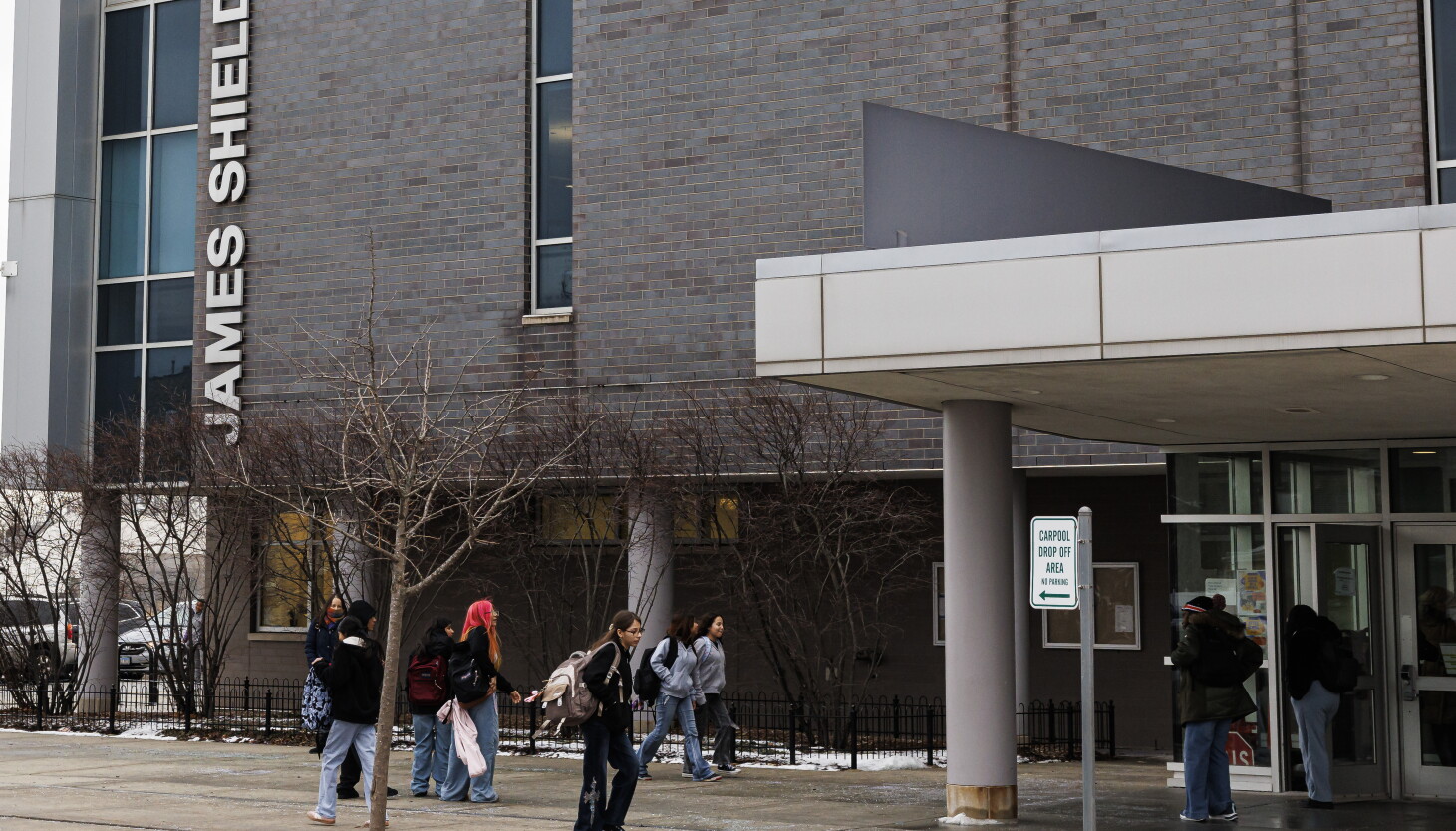
Seemingly unrelated places — from authors’ homes to grave sites to garbage dumps-turned-golf courses — serve as the imagination for writers of the essays in “Lingering Inland: A Literary Tour of the Midwest.”
The new creative nonfiction collection of 73 essays (University of Illinois Press) is inspired by the writers’ encounters with the places that make up Midwestern literature. Featuring essays about spaces important to writers like Toni Morrison and Sandra Cisneros, the literary tour snakes readers through places like St. Louis, Cleveland, and Chicago. There are seven essays devoted to Chicago area cities, from Hammond, Ind. to Forest Haven, Ill.

Contributor Ava Tomasula y Garcia knew she wanted to write about the Calumet City region, where her father is from. Although she grew up in South Bend, Ind., she returned to the region in January 2024 to do research on undiagnosed illnesses former steel mill workers from the region battle through.
“A lot of people experience brain fog, unexplained dizziness, things that don't fit into the kind of paradigm or a diagnosis you'd get in a clinic, and a lot of people seek to remedy and feel better by their own means,” said Garcia, a Chicago community organizer turned researcher and essayist. “So whether that be supplements, energy work, a lot of different kinds of things that people do that also don't fit the image of like science-based medicine.”
In Garcia’s essay, she discusses serious themes like the workers’ health conditions. But she also tackles more light-hearted memories such as biting into a steamy cheesy gordita on a freezing winter day.
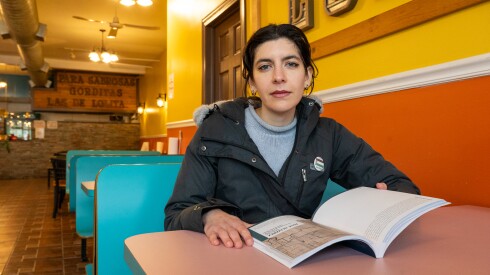
“Springtime bugs gliding back and forth on the Little Cal River, weaving a gossamer haze, summer heat shimmering, a thousand mirages. People always say that we have the prettiest sunsets and then joke that it is because of the pollution,” she says in her essay, which she wrote for the book while staying in the area.
“I want [readers] to know that this Calumet region, Cal City, Southeast Chicago, Northwest Indiana, has an incredible history, not just of waste, extraction, oppression, but of resistance and a kind of continuing of life that is just in this landscape,” Garcia said. “I want people to appreciate the history that they're walking in.”
Garcia also nods to the Calumet City writers who inspired her, including the poet Jose Olivarez. Olivarez, it turns out, wrote the forward to “Lingering Inland.”
He says being from Calumet City gave him deeper perspective on the world.
“The steel mill where my dad worked closed up. And not just his steel mill, but basically all of the steel mills closed up, and so it was hard for him to find work after that,” Olivarez said. “The house that (my parents) bought and were expecting to accumulate value because of all the jobs that left the area ended up decreasing in value, so that at the time that my parents were finally in a position to pay off the mortgage, it was a liability and not an asset.”

Reflecting on these large-scale demographic changes, Olivarez says in his forward for Lingering Inland, “Because no one is looking to the Midwest for innovation, it has become an excellent place to experiment. The worst has already happened. Our former industries have collapsed or are on life support. What is there to do but dream a new way of living?”
“Lingering Inland” editor Andy Oler says that conception of the future happens when humans connect stories with people and places.
“What this collection is trying to achieve is to take those individual, idiosyncratic stories and start to sort of create a whole mosaic, a much bigger picture of what the region is, of what Chicago is, of like, how we think about the Midwest,” Oler said.
He hopes readers engage with the works slowly, letting the words sit with them. Each essay is around 1,000 words.
“I hope that they don't read it all at once. I guess maybe, which is maybe a weird thing to say, but the brevity of the essays leads people to, you know, pick up one, read one or two, and put it down and then pick it up again,” Oler said. “I think that it's something that you can sort of pop in and out of while you're reading your coffee, while you're, you know, waiting to leave, like, whatever it is, I think that it's, it's a nice little hit, and it, it lets people access it at their own pace.”
The collection is available at University of Illinois Press.
Adora Namigadde is a contributor to WBEZ. Follow up with her on this story at madebyadora@gmail.com