
Le Journal

Les cyberattaques touchent de plus en plus le secteur maritime !

Le saviez-vous : les abonnés Freebox et Free Mobile peuvent corriger leur image détériorée sur Free TV avec une action ultra simple
Le saviez-vous : un simple réglage peut corriger l’image altérée sur Free TV avec Player Pop ou Android TV. Certains utilisateurs de Player Pop ou de Android TV peuvent constater une altération de l’image lorsqu’ils lancent un contenu sur Free TV. Les symptômes les plus fréquents incluent : un voile coloré (rose ou vert) sur […] L'article Le saviez-vous : les abonnés Freebox et Free Mobile peuvent corriger leur image détériorée sur Free TV avec une action ultra simple a été publié sur Univers Freebox

Abonnés Freebox : deux nouveaux services pour adultes débarquent sur Free TV, mais pas partout

Freebox Pop, Ultra et mini 4K : une nouvelle star débarque avec sa chaîne gratuite sur Pluto TV, et vous la connaissez forcément
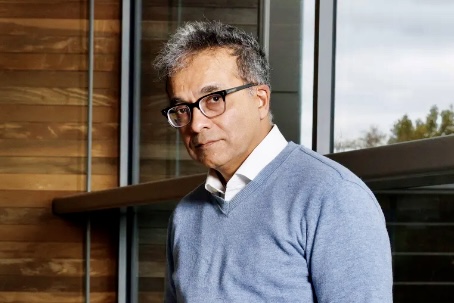
Harvard’s Aravinthan Samuel gets a better look at brains
A team of Harvard and MIT scientists led by Indian American researcher Aravinthan Samuel is developing a new AI-enhanced scanning method to get a better look at brains with microscopes that work more like human eyes. Until recently, the quest to build high-resolution maps of brains — otherwise known as “connectomes” — was stymied by the slow pace and cost of powerful electron microscopes capable of systematically capturing neuroanatomy down to billionths of a meter. But now Samuel’s team has found a way to bypass that bottleneck: using machine learning to guide a simpler, less-expensive variety of microscope in real time, according to Harvard News. The idea is to home in on key details first and minimize time spent on areas of lesser interest — the same way we might zero in on words on a page instead of margins. Researchers say the innovation, known as SmartEM, will speed scanning sevenfold and open the field of connectomics to a broader research community, boosting our understanding of brain function and behavior. “SmartEM has the potential to turn connectomics into a benchtop tool,” said Samuel, a researcher in the Department of Physics and Center for Brain Science and one of the senior authors of a new paper published in Nature Methods. READ: India-born Henna Karna selected to Harvard’s Advanced Leadership Initiative (September 5, 2025) “Our goal is to democratize connectomics,” he says. “If you can make the relatively common single-beam scanning electron microscope more intelligent, it can run an order of magnitude faster. With foreseeable improvements, a single-beam microscope with SmartEM capability can reach the performance of a very expensive and rare machine.” The method is the product of a five-year collaboration between researchers at Harvard, MIT, Johns Hopkins Applied Physics Laboratory, and microscope manufacturer Thermo Fisher Scientific. In December, the same journal proclaimed electron microscopy-based connectomics its “Method of the Year” for 2025 and cited SmartEM an example of cutting-edge innovation. SmartEM marks a new advance in the decades-long quest to create “wiring diagrams” of brains from across the animal kingdom, from worms to fruit flies to humans. Two years ago Harvard researchers published the first nanoscale map of one cubic millimeter of human brain, according to Harvard News. Packed into that poppy-seed-sized sample were 150 million synapses, 57,000 cells, 230 millimeters of blood vessels, and a wondrous diversity of structures never seen before. Researchers elsewhere have completed connectomes for the fruit fly and zebrafish. The next grand challenge is one for the mouse, according to Harvard News. To build these maps, scientists have relied on a technique known as serial-section electron microscopy It entails shaving samples of brain tissue into thousands of ultra-thin sections, which are then scanned and imaged by powerful electron microscopes. Next the images are stacked on top of each other to create 3D digital replicas. For example, that one cubic millimeter of human brain tissue published in 2023 was sliced into more than 5,000 sections, each thinner than one-thousandth of a human hair. These endeavors pose monumental technical hurdles for both capturing the images and processing the data. Until recently, connectomics had been the exclusive purview of a small number of researchers and institutions that can afford multimillion-dollar hardware such as high-throughput electron microscopes with up to 91 beams. With growing demand to generate brain maps of many species, one obvious way to push forward connectomics is to recruit more microscopes — particularly single-beam electron microscopes, which are widely available at research institutions around the world. READ: Harvard students to host India Conference in Feb. 2026 (December 1, 2025) Their speed largely is a function of the “dwell time” that the beam devotes to each pixel. In the standard approach, specimens are scanned with the…

One dead, democracy in critical condition following Minnesota shooting

Indian American couple charged in Dumfries motel sex trafficking, drug case

The dilemma of destiny as our own prisoners: What MLK would tell us
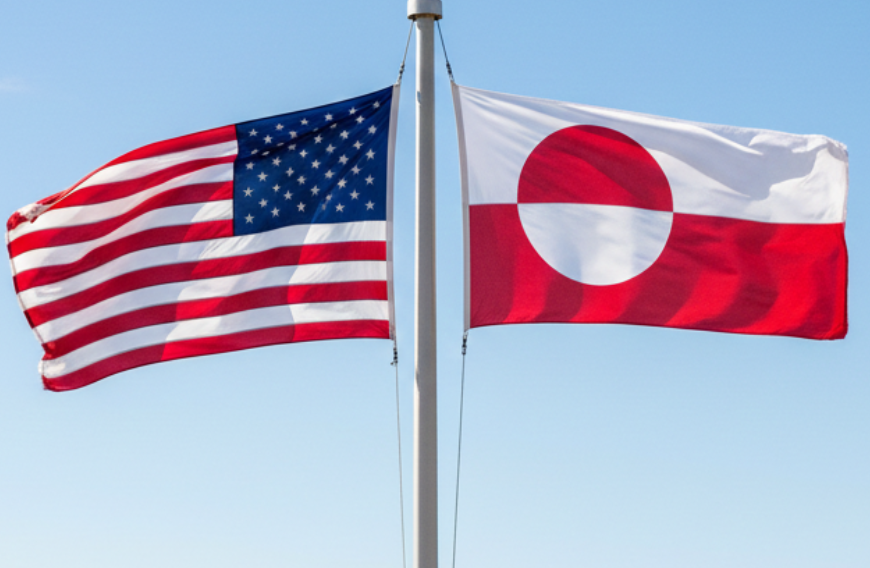
Europe pushes back as Trump threatens new tariffs over Greenland
By Keerthi Ramesh European leaders are preparing a strong response after President Donald Trump disclosed new tariff threats against several European countries tied to his controversial efforts to gain control of Greenland. Trump announced last weekend that starting from Feb. 1 the United States would impose 10% tariffs on goods from eight European nations, Denmark, Norway, Sweden, France, Germany, United Kingdom, Netherland and Finland, until he finalizes a deal to buy Greenland or otherwise resolves a dispute over the island’s future. If no agreement is reached by June 1, he said the duties could rise to 25% The move stems from Trump’s assertion that Greenland, an autonomous territory of Denmark, is strategically vital to U.S. security. Drawing criticism at home and abroad, Trump wrote on social media that other global powers such as China and Russia “want Greenland,” and only the United States can secure it effectively. European capitals reacted with alarm. Leaders from the eight targeted nations issued a joint statement on Sunday saying the planned tariffs would undermine translantic ties and risk a dangerous downward spiral for economic and diplomatic cooperation. Denmark’s Prime Minister, Mette Frederiksen, used forceful language to describe the situation, declaring that “Europe will not be blackmailed” in response to the U.S. pressure. Her remarks were echoed by senior officials in Germany and Sweden, emphasizing a shared stance against what they describe as coercive tactics. READ: US ‘disrespectful’ stance on Greenland alarms NATO allies (January 7, 2026) Trump’s tariff plans also featured in the U.S. political discussions. Treasury Secretary Scott Bessent, appearing on the television program “Meet the Press,” suggested the president sees strength in his approach, asserting that Europeans “project weakness” while the United States signals resolve. In Greenland and Denmark, public protests broke out over the tariff threat and the broader push to influence Greenland’s governance. Thousands marched in Nuuk, Greenland’s capital, chanting the island’s native name, “Kalaallit Nunaat,” and demonstrating against outside pressure on their homeland. READ: Greenland and Denmark to meet JD Vance to discuss Trump takeover threats (January 13, 2026) European Union officials have signaled that discussions are underway in Brussels about possible retaliatory tariffs on U.S. exports, with figures mentioned at around $107 billion in goods. Emergency meetings among EU members are planned to assess options, balancing the need to defend economic interests with a desire to avoid an all-out trade war. For now, both sides face heightened uncertainty in relations between long-standing allies. European leaders continue to insist diplomacy should guide the path forward, while the Trump administration appears prepared to use tariffs as leverage in its broader strategic aims. The post Europe pushes back as Trump threatens new tariffs over Greenland appeared first on The American Bazaar.

Mamta Singh takes oath on Bhagavad Gita in Jersey City
Mamta Singh, Jersey City’s first Indian American Councilwoman-at-Large, took her oath of office on the Bhagavad Gita at a public inauguration on Jan. 15 at New Jersey City University (NJCU). Singh, the first elected official of Indian descent and the first generation Indian woman to win office in one of the largest centers of Indian community, was part of Mayor James Solomon’s winning team. Prominent Indian American leaders, including New Jersey State Senator Raj Mukherji and Assemblyman Ravi Bhalla, alongside dozens of community members witnessed the milestone event. READ: Mamta Singh makes history with election to Jersey City Council (December 4, 2025) Solomon, 41, a Democrat who became the city’s 50th mayor also announced the appointment of Indian American Keshav Poddar as Deputy Mayor for Housing and Economic Development. Solomon and all nine members of the newly reorganized Jersey City City Council were administered the oath by Senator Andy Kim at an event thick with pomp, including a procession by the Honor Guards of both the Jersey City Police and Fire Department. The Aidan C. McMullen Chorale from St. Peter’s University performed the Star Bangled Banner, preachers from churches throughout Jersey City gave the invocation, and a student from the St. Joseph’s School for the Blind confidently led the overflow crowd in the Pledge of Allegiance. Singh’s election marked a moment of long-awaited representation for the tens of thousands of Indian American residents who have helped shape the cultural and economic life of Jersey City for decades but had never before seen one of their own elected to City Hall. Singh ran as part of “Team Solomon” ticket with a platform focused on stable property taxes, expanded recreation for youth, and stronger services for working families. But her impact extends far beyond her policy agenda. READ: From New York to Washington, Indian Americans score wins (November 4, 2025) A nonprofit leader and community organizer, Singh founded JCFamilies, one of the city’s most influential grassroots organizations advocating for women, children, and working parents. She also founded Indians In Jersey City, a group dedicated to supporting immigrant families and celebrating Indian culture. Her work has made her a familiar and trusted figure across Jersey City’s diverse neighborhoods — from longtime residents to newly arrived immigrants seeking connection and community. Her win marked a shift in Jersey City’s political landscape toward leaders who reflect the demographics, aspirations, and lived experiences of the people they serve. “As a lifelong Jersey City resident and community advocate, I understand the challenges our neighborhoods face,” she posted on X after her victory. She also noted that her “background in public service and community organizing has prepared [her] to be an effective voice for all residents on the City Council.” Singh said she believes “in transparent governance, economic development that benefits everyone, and ensuring our city remains affordable for working families while we build for the future.” The post Mamta Singh takes oath on Bhagavad Gita in Jersey City appeared first on The American Bazaar.

« Les drones navals sont une première étape vers une recomposition profonde des marines. » (Olivier Dujardin et Lauraline Maniglier)
Entretien avec Olivier Dujardin et Lauraline ManiglierPropos recueillis par Bertrand de Lesquen *** À l’heure où les drones occupent tous les espaces, Olivier Dujardin, spécialiste reconnu de la guerre électronique, et Lauraline Maniglier, chef de produit chez Cerbair, leur dédient un ouvrage de référence destiné à en faire un état des lieux précis et à […] L’article « Les drones navals sont une première étape vers une recomposition profonde des marines. » (Olivier Dujardin et Lauraline Maniglier) est apparu en premier sur MARINE & OCÉANS.
