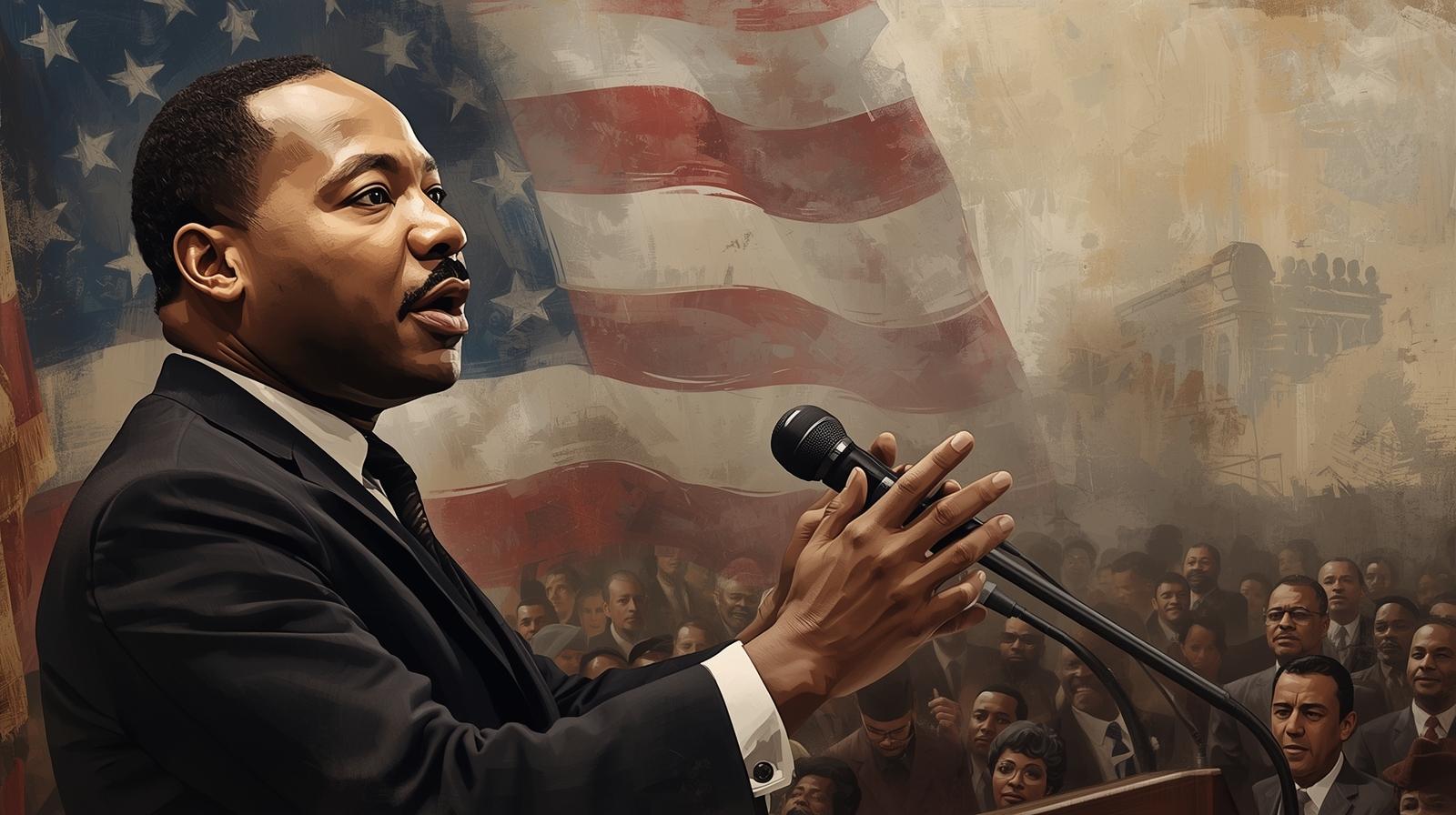
What MLK knew about the game
Martin Luther King Jr.’s leadership through the lens of game theory, argues that his commitment to disciplined nonviolence was not only moral, but strategic—a deliberate attempt to move society out of a bad equilibrium such as the famous game theory called “The Prisoner’s Dilemma,” from Martin Luther King’s “Game Theory,” in the January edition of The Wall Street Journal.
The Prisoner’s Dilemma theory has endured for more than seven decades not because it is clever, but because it is still relevant to many situations we confront in our daily lives. At its most basic level, the problem captures a paradox that plays out repeatedly in our lives — where rational individuals and institutions, acting independently and in good faith, can produce outcomes that are predictably worse for everyone involved. Here we look at how the Prisoner’s Dilemma applies to the affordability crisis for everything from homes, to health to food.
King understood what The Prisoner’s Dilemma shows that when people act alone, everyone sticks with self-interest and the status quo continues; when expectations change, cooperation becomes possible. By consistently showing restraint and trust, he shifted how others weighed risk and reward. The lesson is clear today. In healthcare, food, housing and many other areas we are not stuck because cooperation is impossible, but because no one has yet changed the system to make working together safe. Whether it’s healthcare, housing or food, millions of people are struggling to survive because life has become simply too expensive. In this game, the prisoners are not abstract actors but all of us—consumers, patients, workers, employers, insurers, providers, developers, lenders, and policymakers each making rational, self-protective decisions within our own silo, yet collectively sustaining a system that makes basic necessities increasingly unaffordable.
The Prisoner’s Dilemma is prison is different from theory
The formal structure of this game theory was developed in 1950 by mathematicians Merrill Flood and Melvin Dresher at the RAND Corporation as part of early work in game theory, and it was later framed and named by philosopher and mathematician Albert W. Tucker. In its original version, two prisoners are interrogated separately and offered incentives to betray one another.
Each person faces a choice of defection that minimizes their own punishment if the other defects, yet when both choose it, the result is worse for each than if they had cooperated. Game theorists quickly understood that the model was never really about crime. It was about coordination failure in situations where cooperation would lead to better outcomes.
One is left to wonder whether the architects of The Prisoner’s Dilemma had ever set foot inside an actual prison. Because the central choice the model hinges on—cooperate or “snitch”—rarely exists in the way the theory imagines.
Inside prison, there is an unwritten code: cooperation through silence is expected, and betrayal carries consequences that extend far beyond the immediate transaction. The mantra is simple “stay in your lane” and snitches get stitches. The dilemma, in prison, is not whether to cooperate, but whether one is willing to live with the long-term social cost of defection. Those that have cooperated in criminal cases never really knew the consequences of breaking the code until it was too late.
Are we all captive in our cells?
The real insight of the theory, then, is not about just prisoners, but about how people and institutions behave when they operate in vacuums—isolated from one another, stripped of shared context, and guided by incentives that reward self-protection over collective benefit. This distinction matters because it reveals a flaw in how we often apply economic and policy models. In some ways, we all live in our own cells.
Game theory assumes people make rational choices in isolation. In real life, people make decisions inside social systems. Ironically, it is our modern institutions and not people in prison—that behave like the prisoners in theory, making important decisions within narrow incentive structures, cut off from the broader consequences their choices create for everyone else.
If those vacuums did not exist insurers, physicians, hospitals, pharmacy benefit managers, and patients would not be working at cross purposes. They would be aligned around a common objective: delivering high-quality, cost-efficient care that benefits the system as a whole rather than optimizing narrow outcomes that ultimately undermine it.
Healthcare offers one of the clearest examples. A recent analysis describes how hospitals feel compelled to invest in expensive technologies such as surgical robots, not because they meaningfully improve outcomes or lower costs, but because failing to do so risks losing physicians to competing institutions.
But focusing only on hospitals understates the complexity of the game. The healthcare affordability crisis is a multi-player dilemma involving hospitals, physicians, insurers, employers, and patients, each responding rationally to misaligned incentives.
Hospitals invest in costly infrastructure to signal capability and competitiveness. Physicians gravitate toward institutions with advanced technology, higher compensation, or greater procedural volume, even when lower-cost settings might deliver comparable care. Insurers design narrow networks and administrative controls to manage utilization, shifting friction onto clinicians and patients. Employers, who finance much of private insurance in the United States, prioritize predictable premiums over long-term population health investments.
Consumers are pulled into this same game even though they have the least power and the least information. Faced with rising premiums, deductibles, and out-of-pocket costs, patients delay care, skip medications, or avoid preventive visits to protect their immediate finances. That choice is rational in isolation, but collectively it drives worse health outcomes and higher downstream costs—more emergency visits, more hospitalizations, and more expensive interventions—ultimately reinforcing the very affordability crisis consumers are trying to escape.
Taken together, these choices push costs higher, add layers of paperwork, burn out clinicians, and widen gaps in access—especially in rural and underserved communities—without clear improvements in health outcomes, a pattern well documented in health policy research. Cooperation—through aligned payment models, shared standards, and value-based care—makes sense in theory, but feels risky for any one player to pursue on their own.
READ: Upside-down food pyramid: When nutrition advice ignores economic reality (January 8, 2026)
Captive to food choices
The same logic plays out in the food system, where affordability and nutrition are drifting further apart. A revised food pyramid has challenged decades of dietary advice by emphasizing nutrient-dense foods such as red meat, whole milk, and healthy fats over grain-heavy, low-fat diets. From a metabolic standpoint, the shift is defensible. From an economic standpoint, it exposes another dilemma. These foods are among the most expensive items in the grocery store, and analyses suggest that following this guidance could significantly raise household food spending, putting it out of reach for many families already under financial strain.
Farmers respond rationally to subsidy structures and commodity markets by prioritizing crops optimized for yield and price stability rather than nutritional value. Food manufacturers compete on cost and shelf life. Retailers compete on price, squeezing margins and wages. Consumers are told to eat better while navigating a system that makes the healthiest choices the least affordable. For them the rational choice is often to buy cheaper, calorie-dense processed foods to stretch a limited budget, even though, collectively, those choices fuel higher rates of obesity, diabetes, and long-term healthcare costs that make the system more expensive for everyone.
Each participant is acting rationally within the system as it exists, yet together these choices lead to higher prices, poorer nutrition, and widening health disparities. Cooperation—through agricultural policy reform, smarter pricing incentives, and more coordinated supply chains—would benefit everyone, but no single actor can afford to move first.
READ: What it will take for doctors to transform US healthcare in a widening gap (January 13, 2026)
Getting locked out of housing
Housing completes the picture, especially for Gen Z who increasingly find themselves locked out of homeownership. Developers rationally pursue high-margin luxury projects. Investors treat housing as a financial asset rather than shelter. Local governments approve projects that maximize tax revenue while limiting fiscal risk. Mortgage markets favor borrowers with existing wealth, reinforcing intergenerational inequality. Each decision makes sense on its own, but together they produce a housing market marked by too few affordable units, rising rents, and delayed household formation.
For Gen Z, this is not an abstract model but a lived experience since the rational consumer choice is to keep renting, delay family formation, or move farther from job centers to manage costs, even though collectively these choices deepen shortages and push prices higher. They are not locked out because of poor decisions, but because the system rewards defection at every level. Cooperation—through zoning reform, affordability mandates, and coordinated public-private investment—would lower long-term social costs, yet remains fragile because no single actor can trust others to move first.
Across healthcare, food, and housing, the Prisoner’s Dilemma reveals the same underlying pattern. Affordability crises persist not because people or institutions are malicious, but because they are operating inside systems that reward short-term self-interest and penalize cooperation. The most important insight of the dilemma is not about betrayal, but about perspective. We are all prisoners of the incentive structures we live in, making decisions in isolation, guided by narrow definitions of risk and reward. Recognizing this does not solve the problem, but it reframes it. Affordability is not simply a pricing problem; it is a coordination problem.
Until our systems are structured so that cooperation is safer than defection, we will keep reproducing outcomes that no one truly wants and we will remain imprisoned. Just as King shifted a broken equilibrium by making trust and coordinated action possible, solving today’s affordability crises will require creating rules and incentives that make working together the rational choice for everyone.
The post The dilemma of destiny as our own prisoners: What MLK would tell us appeared first on The American Bazaar.