Le Journal

Kyriba OPR Index zeigt: 76 Prozent der deutschen CFOs blicken optimistisch in die Zukunft und erwarten eine positive Wirtschaftsentwicklung
Deutsche Finanzvorstände zeigen sich laut dem ersten OPR Index von Kyriba* trotz globaler Herausforderungen bemerkenswert zuversichtlich. Ihre Einschätzung steht im Einklang mit den globalen Ergebnissen und ordnet sie im oberen Bereich der in der Umfrage berücksichtigten großen EU-Märkte ein: 76 Prozent sind optimistisch hinsichtlich der wirtschaftlichen Entwicklung und liegen damit leicht über dem globalen Durchschnitt von 75 Prozent. Mit 78 Prozent liegt der Anteil der deutschen CFOs, die sich gut auf makroökonomische Veränderungen vorbereitet fühlen, geringfügig unter dem globalen Durchschnitt von 79 Prozent. Während regulatorische Compliance, Inflation und Marktvolatilität als zentrale Risiken identifiziert werden, setzen deutsche CFOs verstärkt auf digitale Transformation, Innovation und Kosteneffizienz als Wachstumstreiber für 2026. Auch die Einführung von KI ist fest etabliert: 92 % der deutschen Finanzvorstände nutzen KI bereits in irgendeiner Form, was dem globalen Durchschnitt entspricht und den zweithöchsten Wert unter den untersuchten europäischen Ländern darstellt. Deutsche CFOs zeichnen sich zudem durch eine erhöhte Sensibilität für geopolitische Risiken im Vergleich zu aus: Über 40 Prozent betrachten weltweite Verschiebungen als entscheidenden Veränderungstreiber – der höchste Wert im Vergleich zu Großbritannien und Frankreich. Diese Ergebnisse liefert die aktuelle globale Umfrage von Kyriba unter 1.400 Finanzvorständen aus acht Ländern**. Aus den Umfrageergebnissen wurde zudem der OPR-Index ermittelt. Dieser bietet den ersten umfassenden Rahmen, um nicht nur zu verstehen, wie groß die Zuversicht der CFOs ist, sondern auch, wie gut sie darauf vorbereitet sind, diese Zuversicht in die Tat umzusetzen. Der globale OPR Score von 93,28 signalisiert ein „verhaltenes Vertrauen”. Diese Vertrauenswerte wurden durch einen positiven Geschäftsausblick (77,43) gestützt, der durch eine solide operative Bereitschaft (90,21) untermauert wurde. Jedoch wurde er auch durch ein gesteigertes Bewusstsein für anhaltende externe Belastungen (74,36) gedämpft. Ein auffälliger Widerspruch prägt die Finanzfunktion im Jahr 2026: Während weltweit 67 Prozent der CFOs davon ausgehen, dass KI in den nächsten fünf Jahren die größte Veränderung in ihrer Rolle bewirken wird – ein Anstieg um 14 Prozentpunkte in nur sechs Monaten –, nennen zugleich 77 Prozent Datenschutz und Sicherheit als kritische Risiken. Das deutet auf eine anhaltende Vertrauenslücke hin, die die Herangehensweise von Finanzverantwortlichen an Innovationen bestimmt. Diese neuen Erkenntnisse von Kyriba, einem weltweit führenden Anbieter von Liquiditätsmanagement-Lösungen, zeigen, dass diese Spannung im Zentrum eines breiteren Vertrauensumfelds steht, in dem CFOs einen stetigen Optimismus bewahren und gleichzeitig geopolitische und wirtschaftliche Unsicherheiten sorgfältig managen. Regional variieren die Ergebnisse. Singapur, Deutschland, Großbritannien und die USA weisen den höchsten OPR Score auf, was auf eine höheren Vorbereitungsgrad und ein geringeres wahrgenommenes Risiko hindeutet. Frankreich, Italien, Spanien und Japan hingegen weisen ein eher vorsichtiges Vertrauensprofil auf. „Was wir im Jahr 2026 beobachten, ist ein perfektes Beispiel dafür: CFOs sind sehr optimistisch, was das transformative Potenzial von KI angeht, gehen jedoch bei der Implementierung mit strategischer Vorsicht in Bezug auf Sicherheit und Datenschutz vor“, so Monica Green Boydston, Chief Product Officer bei Kyriba. „Indem der OPR Index neben Optimismus und Risiko auch die Vorbereitung als zentrale Kennzahl berücksichtigt, kann er diese Komplexität darstellen. Er zeigt, dass echtes Vertrauen nicht nur eine Frage der positiven Einstellung ist, sondern auch der Bereitschaft, selbst in unsicheren Zeiten entschlossen zu handeln. Finanzverantwortliche, die diese Balance beherrschen, werden in der Lage sein, das volle Potenzial von KI auszuschöpfen und gleichzeitig das Vertrauen und die Kontrolle zu…

77% of Global CFOs Cite Security and Privacy Risks as AI Trust Gap Persists Despite Surging Adoption
A striking paradox is shaping the finance function in 2026: while 67% of CFOs expect AI to drive the biggest transformation in their role over the next five years — a 14-point surge in just six months — 77% cite privacy and security as critical risks, creating a persistent trust gap that's defining how finance leaders approach innovation. New findings from Kyriba, a global leader in liquidity performance, reveal this tension sits at the heart of a broader confidence landscape where CFOs are maintaining steady optimism while carefully managing geopolitical and economic uncertainty. To quantify these competing forces, Kyriba developed the OPR Index, which is a new approach that moves beyond traditional sentiment tracking by measuring the three dimensions that truly drive CFO decision-making: Optimism, Preparedness, and Risk. The OPR Index uses a 0-200 scale with five confidence categories – from Vulnerable (below 60) to Aspirational (150+ ) – that indicate how CFOs are likely to approach investment and growth decisions. Unlike existing CFO indices that focus primarily on how leaders feel, the OPR Index reveals why they feel that way and what enables them to act on it. Based on responses from 1,400 CFOs across eight countries, the global OPR score of 93.28 signals "measured confidence." Those confidence levels were buoyed by a positive business outlook (77.43) supported by solid operational readiness (90.21), yet tempered by heightened awareness of persistent external pressures (74.36). Regionally, results vary. Singapore, Germany, the UK, and the US post the highest OPR scores, reflecting stronger preparedness and lower perceived risk, while France, Italy, Spain, and Japan show more cautious confidence profiles. "What we're seeing in 2026 is a perfect example: CFOs are highly optimistic about AI's transformative potential, yet they're approaching implementation with strategic caution around security and privacy,” said Monica Green Boydston, Chief Product Officer, Kyriba. “By elevating preparedness as a core measure alongside optimism and risk, the OPR Index captures this complexity and shows that true confidence isn't just about feeling positive – it's about being ready to act decisively even amid uncertainty. Finance leaders who master this balance will be positioned to unlock AI's full potential while maintaining the trust and control their organizations demand. The OPR Index is designed to be more actionable than traditional sentiment measures because it separates optimism from the operational conditions required to sustain it." There are three major trends shaping confidence that offer a clearer picture into how CFOs are operating throughout the next year. #1: The Enduring Trust Gap CFOs view AI as the top driver of finance transformation, with 67% of respondents expecting AI to deliver the largest shift to their role over the next five years. This 14-point increase from Kyriba's previous CFO survey marks a significant jump in just six months. Though 47% have already begun integrating AI into their overall processes, 77% have cited privacy and security as critical risks – highlighting the depth of the trust gap. CFOs are working to close this gap in 2026, with top operational priorities including AI adoption (53%), data reliability (31%) and security fraud prevention (27%). This highlights their commitment to strengthening operational foundations, ensuring new technologies are implemented with both confidence and control. #2: The Era of Engineered Growth CFOs are moving beyond “growth at all costs” toward engineered growth, or innovation built on operational precision, liquidity visibility and execution discipline. Growth strategies largely depend on connectivity, automation and real-time data. Globally, 37% are increasing the frequency of forecasting updates, while 31% are rebalancing debt and capital structures to reduce exposure and optimize their cost of capital. These priorities vary regionally, though: finance leaders…

L'évènement MARS@HACK de retour pour une 7e édition à Mont-de-Marsan le 10 mars
La septième édition de Mars@hack se déroulera le mardi 10 mars 2026 à la CCI des Landes à Mont-de-Marsan. L'événement, co-organisé par Mont-de-Marsan Agglomération, la base aérienne 118 (BA 118), Campus Landes et l'IUT montois réseaux et télécommunications, a pour objet de rassembler, autour du thème de la cybersécurité, professionnels du domaine, entrepreneurs, indépendants, étudiants ou passionnés de hacking. L'ouverture des inscriptions au challenge Capture the Flag (CTF), préparé par le Centre expert cyberprotection (CE Cyberprotection) et l'Escadron des systèmes d'information opérationnels et de cyberdéfense (ESIOC) de la BA118, débutera ce lundi 19 janvier 2026 et se clôturera le 1er mars 2026 au soir. 240 places seront ouvertes : 80 en présentiel et 160 en distanciel. Lien pour l'inscription au challenge CTF (accessible à partir du 19/01/2026) : https://www.montdemarsan.fr/sinstaller-visiter/entreprendre-a-mont-de-marsan/marsahack/

KDDI France et Fujitsu renforcent leur partenariat pour moderniser et fiabiliser les services Cloud
Fujitsu renouvelle sa confiance à KDDI France pour l'accompagner dans son évolution vers un modèle Cloud unifié, performant et sécurisé. Fort de ce partenariat initié en 2012, Fujitsu sécurise la modernisation de son offre SaaS et garantit la continuité de service à près de 3 000 utilisateurs répartis au sein de neuf entreprises de l'industrie automobile. Un partenariat structurant pour accompagner la transformation du SI de Fujitsu Dans un contexte de croissance continue de ses offres Cloud, Fujitsu a engagé une transformation profonde de son modèle d'hébergement. Ses priorités : assurer une disponibilité permanente, maintenir une performance stable malgré l'augmentation des volumes de données, renforcer la sécurité et répondre à des exigences réglementaires strictes. Les solutions proposées par KDDI France, Cloud Director et Agility, ont permis d'unifier les infrastructures, d'accroître la flexibilité et de déployer une architecture adaptée à des environnements critiques, notamment ceux du secteur automobile. Une collaboration fondée sur la confiance, la stabilité et l'expertise Depuis près de 13 ans, Fujitsu et KDDI France s'appuient sur une méthode de travail fluide et éprouvée : plateforme de test, validations croisées, déploiement progressif et ce sans interruption de service. « La réactivité, la disponibilité et l'expertise des équipes de KDDI font la différence. Grâce à un langage technique commun et des réponses claires, notre collaboration est devenue un véritable partenariat de confiance », souligne Grégory Nawrocki. Cette approche a été déterminante lors des migrations majeures, notamment celle du plus grand client de Fujitsu, représentant près de la moitié des connexions quotidiennes. La relation repose sur la proximité des équipes, une forte réactivité et un langage technique partagé, gages d'efficacité et de confiance. Fiabilité, souveraineté et flexibilité : des atouts décisifs pour Fujitsu Les environnements Fujitsu sont entièrement hébergés en France, dans les datacenters sécurisés de KDDI France, un critère essentiel pour ses clients attachés à la maîtrise et à la souveraineté de leurs données. Les infrastructures redondées, les multiples interconnexions et la gestion transparente des incidents garantissent un niveau de disponibilité particulièrement élevé. Des bénéfices tangibles pour une offre Cloud renforcée Grâce à ce partenariat, Fujitsu bénéficie aujourd'hui d'une infrastructure homogène, résiliente et évolutive. Les équipes gagnent en sérénité opérationnelle et en maîtrise de leur environnement, tout en s'appuyant sur KDDI France pour les opérations sensibles. Les discussions autour de nouveaux services, comme la sauvegarde externalisée, illustrent la capacité du partenariat à s'inscrire dans la durée et à accompagner les évolutions technologiques de Fujitsu.

Sandisk lance SPRandom

Jeux Olympiques de Milan-Cortina 2026 : les acteurs de la menace cyber visent aussi l'or

Miami man allegedly beat 10-year-old son with hanger, extension cord: Police
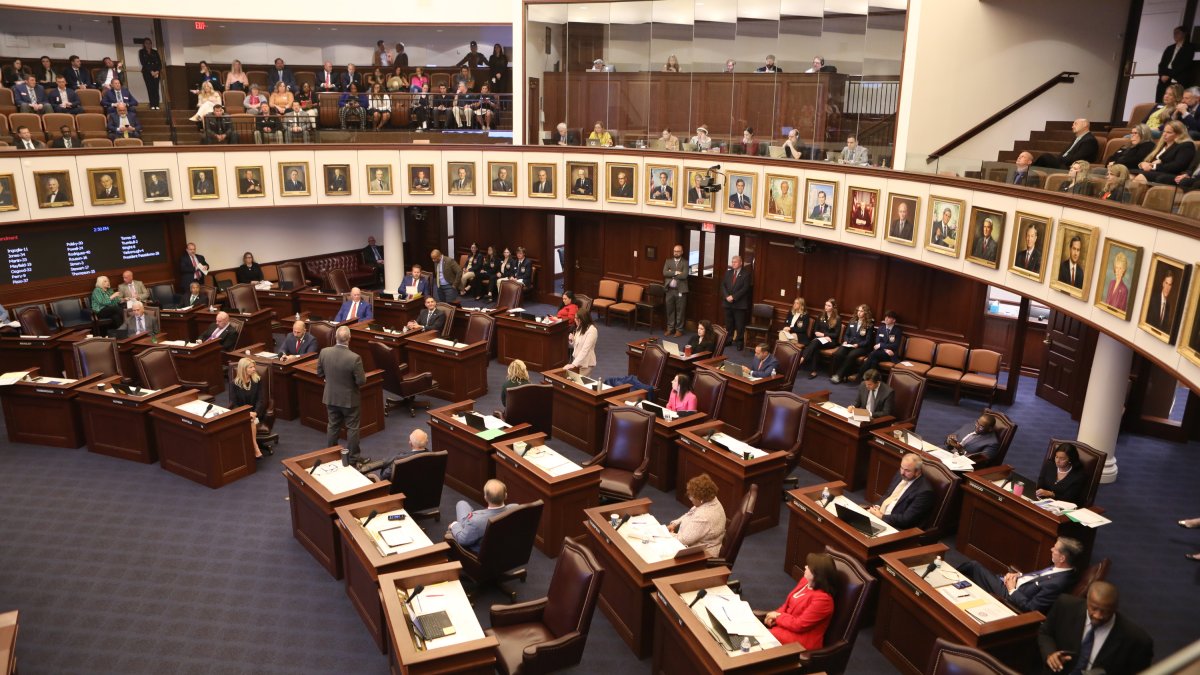
Florida debates undoing Parkland reform, lowering minimum age to buy long guns

House proposal to phase out property taxes in Florida moves forward
A House proposal that would ask Florida voters to phase out non-school homestead property taxes moved forward Thursday, as lawmakers and Gov. Ron DeSantis try to reach agreement on a November ballot measure. The Republican-controlled House State Affairs Committee voted along party lines to back a proposed constitutional amendment (HJR 203) that would annually increase the homestead exemption by $100,000 over the next decade, with a full exemption for non-school taxes in 2037. The proposal, which would require approval by 60 percent of voters, also would seek to prevent local funding cuts for law enforcement, firefighters and other first responders. While cities and counties have raised concerns about potentially reduced funding for services, Rep. Monique Miller, R-Palm Bay, said local officials need to consider sharing services and “to live within their means.” “By reducing taxes over years, we are giving local governments time to adjust to new revenue levels, and empowering them to find responsible solutions,” said Miller, the sponsor of the proposal. But cities and counties warned about the proposal, which would lead to billions of dollars a year in lost property-tax revenue. “This is truly not tax relief,” Charles Chapman, legislative consultant for the Florida League of Cities, told the committee. “It’ll end up becoming a tax shift, where costs do not disappear. The burden will shift to businesses, the renters, because fees, assessments, higher non-homestead millage rates could replace the homestead tax break.” Democrats also raised concerns about a loss of local services and costs being shifted. “Governance requires us to think through consequences, not just concepts,” said Rep. RaShon Young, D-Orlando. Gov. Ron DeSantis has made a priority of putting a proposed constitutional amendment on the ballot to slash property taxes. The House in October released eight proposals, but Speaker Daniel Perez, R-Miami, said this week he expects a single proposal to go on the ballot. “I fully expect us to have something on the ballot for our constituents to eventually vote on,” Perez told reporters. “I do expect it to be one proposal for them to vote on.” Perez added that it is “somewhat still up in the air” what final proposal will emerge. “We don’t have a position from our friends across the hall (in the Senate) or the executive branch on what details they are proposing for our constituents to eventually vote on,” he said. “We’ve taken the initiative.” A proposal (HJR 209) that is ready to go to the full House would increase the homestead exemption for residents who have property insurance. In December, the State Affairs Committee also backed measures to eliminate non-school homestead property taxes (HJR 201), eliminate non-school homestead taxes for homeowners 65 years and older (HJR 205) and to allow people to transfer the full value of accumulated “Save Our Homes” benefits to new homes (HJR 211). Miller’s proposal and those three measures would need approval from the Ways & Means Committee before reaching the House floor. Save Our Homes places a 3 percent cap on annual increases in taxable values of homesteaded property. Currently, homeowners can qualify for homestead exemptions from local-government and school-district taxes on the first $25,000 of the assessed values of their properties and from local-government taxes on the values between $50,000 and $75,000. DeSantis on Wednesday suggested a special legislative session might be needed to resolve the property-tax issue, as “I don’t know that we’re going to have something passed in the regular session.” “You have until pretty much, I think, Aug. 1, to be able to get that done,” DeSantis said during an appearance at a Florida Chamber of Commerce “fly-in” event in Tallahassee. “I think it’ll get done before then, but we’re working with folks in both chambers (the House and Senate) on that.” In his proposed fiscal year 2026-2027 budget, DeSantis earmarked $300 million to…

Panthers to visit President Trump at White House to celebrate 2025 Stanley Cup

Les Deux Occidents – Mathieu Bock-Côté