
Le Journal

Aravallis redefined to curb illegal mining, says Union environment minister
Union Environment Minister Bhupender Yadav on Monday claimed that the redefining the Aravalli Hills is only meant to prevent illegal mining in the area and added that the Narendra Modi government remains committed to protecting and restoring the mountain range, PTI reported.Yadav said that mining remains prohibited in the National Capital Region.The 700-km Aravalli mountain range stretches diagonally from southwest Gujarat, through Rajasthan to Delhi and Haryana. Its highest point is Guru Shikhar in Mount Abu, which rises to an elevation of 1,722 metres.Under the new definition that has been accepted by the Supreme Court, an Aravalli hill is any landform that rises at least 100 metres above the surrounding terrain. An Aravalli range is formed by two or more such hills located within 500 metres of each other, including the land between them.However, environmentalists have warned that defining the Aravallis solely by their height could leave many lower, scrub-covered but ecologically important hills vulnerable to mining and construction. Experts say these smaller hills are crucial for preventing desertification, recharging groundwater and supporting local livelihoods.On Monday, Yadav said that the new definition was designed to allow “sustainable mining legally”. He said that no new mining leases will be granted until a comprehensive Management Plan for Sustainable Mining is finalised.Only 0.19% of the entire Aravalli area can potentially...Read more
Aravallis redefined to curb illegal mining, says Union environment minister
The minister, Bhupender Yadav, said that the Congress was spreading misinformation and lies on the matter.

Assam orders expulsion of two more declared foreigners under 1950 law
The administration in Assam’s Biswanath district has ordered two declared foreigners to leave the state within 24 hours, The Indian Express reported on Tuesday.The orders were issued by the district administration under the 1950 Immigrants Expulsion from Assam Act.The Act grants power to district commissioners and senior superintendents of police to expel “illegal migrants” from the state by bypassing the foreigners tribunals.The order, dated December 20, named Asmul Khatun and Afuja Begum, stating that they were declared foreigners by the Foreigners Tribunal in 2005, The Indian Express reported.It added that being a declared foreigner, Khatun and Begum’s “presence in India/state of Assam” was “detrimental to the interest of general public” and “internal security of the state”, the newspaper reported.The order directed them to leave the state through the Dhubri, Sribhumi or South Salmara-Mankachar routes. This effectively requires the two to leave the country.Biswanath Superintendent of Police Ajagwran Basumatary told The Indian Express that the women are being detained at the Matia Transit Camp in Goalpara district.“Their deportation is under process and will be undertaken in due time after receiving the green signal from the Border Security Force,” Basumatary was quoted as saying.Similar orders were issued against 15 persons in Nagaon district on December 17, and against five persons in Sonitpur district on November 18.In September, the Assam Cabinet approved the framing of a standard operating procedure under...Read more
Assam orders expulsion of two more declared foreigners under 1950 law
They will be deported after approval from the Border Security Force, the police said.

Delhi BJP councillor tells African man to learn Hindi if he ‘makes a living here’
Delhi BJP councillor tells African man to learn Hindi if he ‘makes a living here’
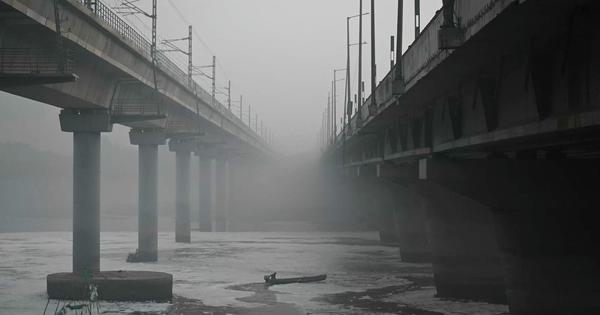
Delhi air quality in ‘severe’ category
Delhi air quality in ‘severe’ category
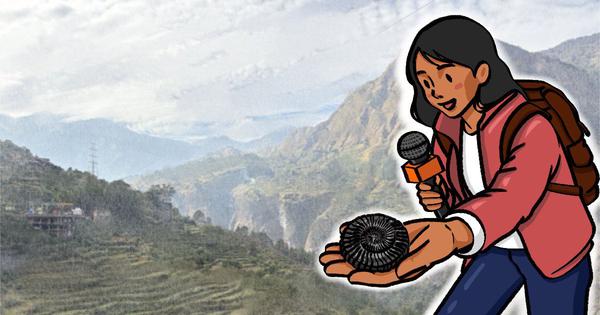
Backstory: When I found a marine fossil in the Himalayas
I could not believe that I was holding something that was probably a hundred million years old. I had in my hand an ammonite, a fossilised hard-shelled creature.I was on a reporting trip in Uttarakhand, with my colleague Kritika. We were documenting how road widening work under the Chardham project had led to an increased number of landslides in the Garwhal Himalaya.Just short of the temple of Badrinath, one of the four shrines part of the Chardham pilgrimage, among the stalls selling prashad, we spotted a vendor with a small basket full of ammonites. I gasped in excitement. Mistaking my enthusiasm for the fossil with devoutness, the vendor promptly told us, “It’s a shaligram, an avatar of Vishnu.”He started to explain the folklore behind it, but my mind had already drifted. Ammonites were marine creatures, the closest relative to them are our modern-day squids. So what were these fossils doing 11,000 feet above the sea, in the Himalayas?“I got these from Nepal’s Gandak river,” the vendor told us.That’s when facts I had gleaned over the years from lectures on fossils, YouTube videos, and Pranay Lal’s book Indica started to knit themselves together in my mind.Indeed, a sea used to exist here.Before the Himalayan range emerged, the Tethys ocean...Read more
Backstory: When I found a marine fossil in the Himalayas
