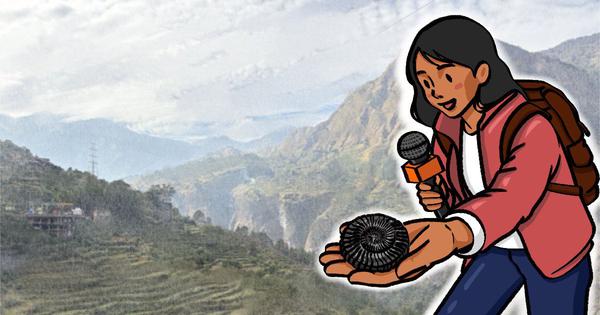
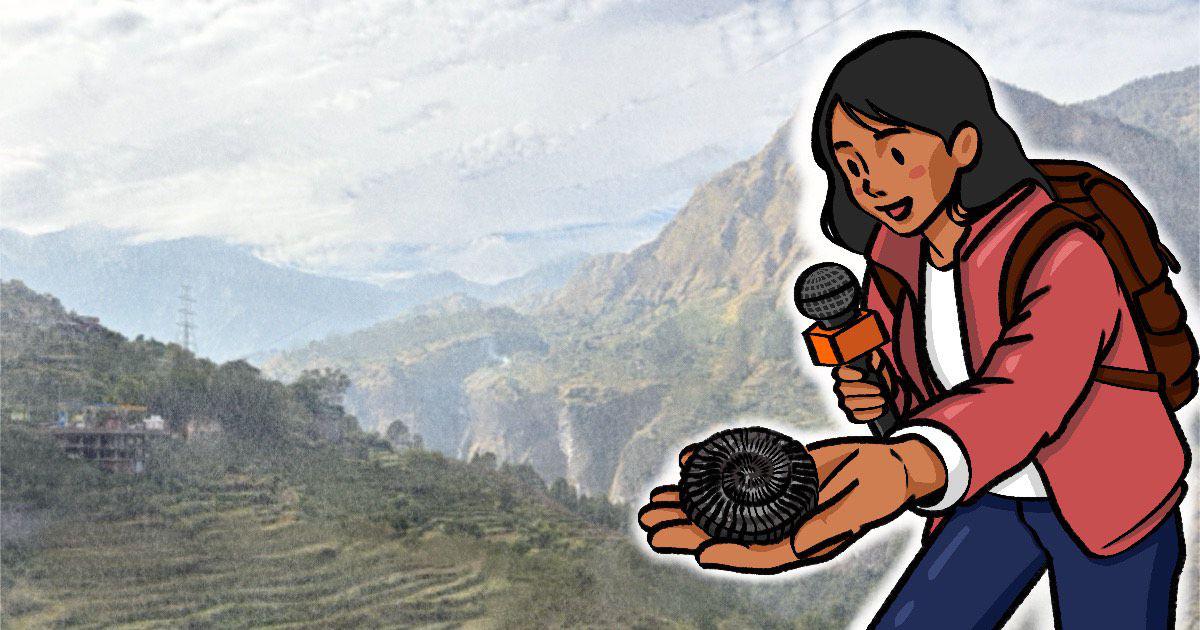
I could not believe that I was holding something that was probably a hundred million years old. I had in my hand an ammonite, a fossilised hard-shelled creature.
I was on a reporting trip in Uttarakhand, with my colleague Kritika. We were documenting how road widening work under the Chardham project had led to an increased number of landslides in the Garwhal Himalaya.
Just short of the temple of Badrinath, one of the four shrines part of the Chardham pilgrimage, among the stalls selling prashad, we spotted a vendor with a small basket full of ammonites. I gasped in excitement. Mistaking my enthusiasm for the fossil with devoutness, the vendor promptly told us, “It’s a shaligram, an avatar of Vishnu.”
He started to explain the folklore behind it, but my mind had already drifted. Ammonites were marine creatures, the closest relative to them are our modern-day squids. So what were these fossils doing 11,000 feet above the sea, in the Himalayas?
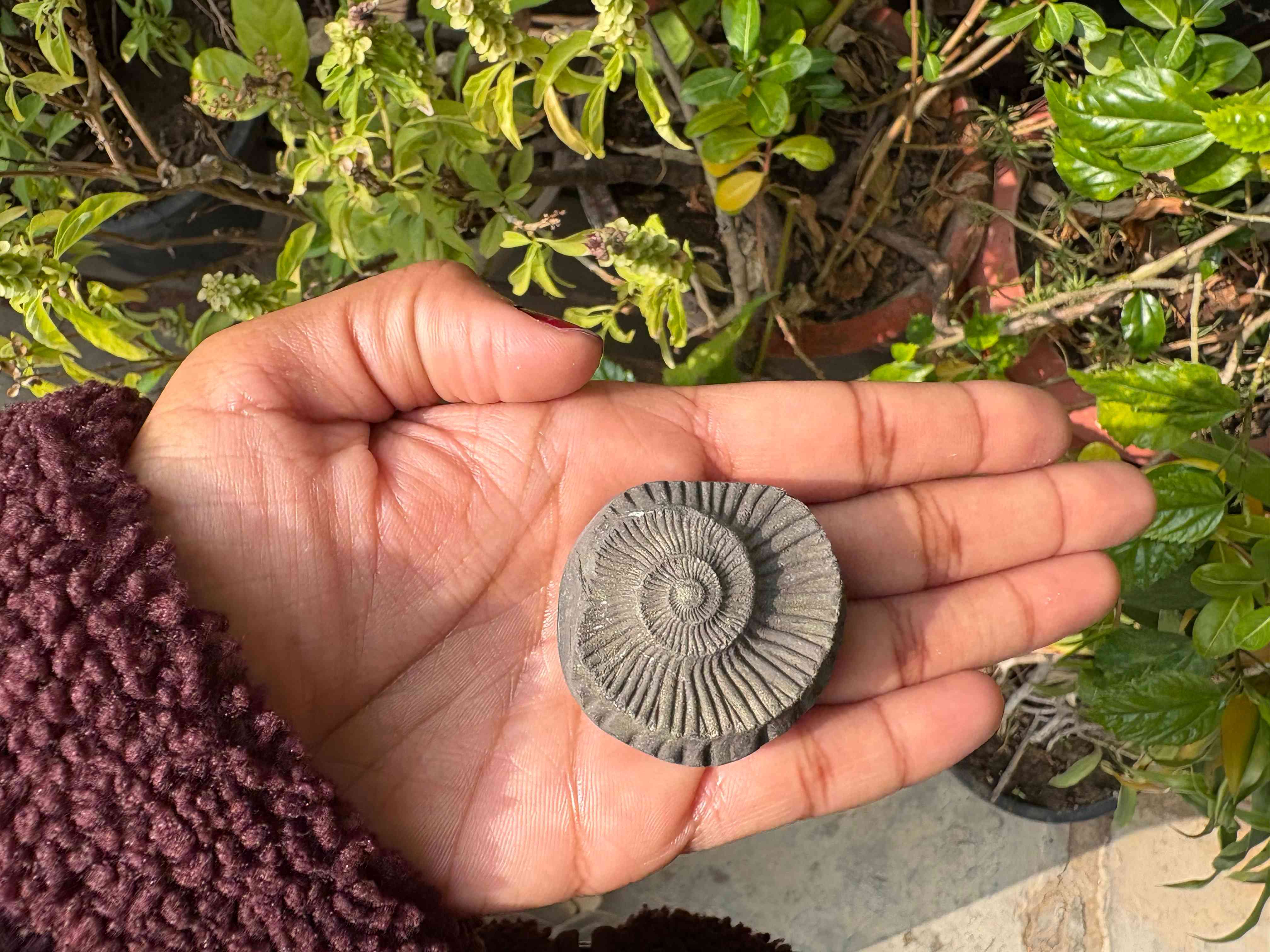
“I got these from Nepal’s Gandak river,” the vendor told us.
That’s when facts I had gleaned over the years from lectures on fossils, YouTube videos, and Pranay Lal’s book Indica started to knit themselves together in my mind.
Indeed, a sea used to exist here.
Before the Himalayan range emerged, the Tethys ocean...