Le Journal
I'm a senior software engineer at Microsoft. My AI skills have helped me climb the ladder in my career — here's my advice.
Nandita Giri.Courtesy of Nandita GiriNandita Giri shares her journey from Amazon to working as a senior software engineer at Microsoft.She has observed the rising demand for AI skills at Amazon, Meta, and Microsoft throughout her career.Giri recommends self-learning AI and suggests one hour a day for beginners in artificial intelligence.This as-told-to essay is based on a conversation with Nandita Giri, a 32-year-old software engineer at Microsoft in Redmond, Washington. It has been edited for length and clarity.My journey began with problem-solving and math long before I knew I'd end up in Big Tech.I studied at the National Institute of Technology, Kurukshetra, in India. Amazon, Microsoft, and Google often scout talent from this school.Amazon hired me straight out of college, and I moved to Seattle in 2018. To get the job, there was a logical analysis test, and only a handful of us passed. Then came multiple interviews based on problem-solving. That's how my journey in tech began.I'm now a senior software engineer at Microsoft, and my AI skills are in high demand.I've always enjoyed problem-solvingWhen applying for roles at Amazon, it's not about solving problems as quickly as possible, but solving them optimally. You must carefully consider the issue so that the solution can scale and be easily maintained. Amazon has a set of leadership principles that play a key role in hiring decisions, and understanding these principles is just as important as your coding skills.On my own time, I practiced on LeetCode, a platform for coding challenges, because I liked it, not because I was preparing for interviews. Over time, I developed a strong interest in AI.Once I arrived at Amazon, I identified tasks and patterns that could be automated and suggested AI-based solutions to management, primarily focusing on internal workflow automation and data-driven decision support systems. That experience shaped my interest in building intelligent tools for enterprise use. Leadership gave me the green light to implement them, and I successfully integrated AI into our team's workflow.After working at Amazon for about four years, a recruiter from Meta contacted me on LinkedIn. I never aimed to work at Meta, but my skills opened up new opportunities. I wanted to work more deeply in applied AI, and Meta offered an opportunity to focus on building intelligent systems with large-scale data and infrastructure. It was a natural next step to grow in the AI space.I went through the interview process, secured the job, and began working at Meta in 2022.I'm now a senior software engineer at MicrosoftI was referred internally to Microsoft based on my work at Meta. I decided to move because I wanted to work on enterprise-focused AI products, such as Copilot, which aligns more closely with my long-term interests in building impactful tools for productivity and business transformation. I've been at Microsoft since 2023.Throughout my career, I've had multiple competitive opportunities. With each role change, my scope of responsibility, impact, and overall compensation increased.Most of what I know about AI, I taught myself. I spent hours outside work watching YouTube tutorials, reading blogs, and practicing. I started small, creating AI agents for personal tasks, like sending outreach emails. Tasks that used to take me a day or two can now be completed in under an hour.Seeing those results motivated me to keep learning. What started as a personal side project has now become a central part of my career.The work culture differs across Amazon, Meta, and MicrosoftAmazon and Meta both incorporate fast-paced learning, but Meta's codebase is more straightforward. Facebook, Instagram, and WhatsApp are all built from a single repository, allowing you to understand the system more quickly.Amazon's codebase is huge, which makes the first year challenging, but the learning curve is worth it. Microsoft feels different altogether.…

C’est énorme : une Volvo électrique avec 810 kilomètres d’autonomie arrive
Le futur EX60 sera présenté le 21 janvier prochain et Volvo n’a pas pu se retenir de présenter les détails les plus importants à son sujet. Son autonomie et sa recharge semblent avoir été prioritaires dans la conception du SUV qui inaugure une nouvelle plateforme plus légère.

Fortnite : Un glitch permet de terminer le Passe de combat en quelques heures
Epic Games a commis une erreur monumentale. Depuis quelques heures, une faille permet aux joueurs de Fortnite de grimper les échelons du Passe de Combat à une vitesse vertigineuse sans même avoir besoin de jouer.

Mercato Reds : Pourquoi Liverpool doit sacrifier ses plans d’été pour une recrue immédiate.
C’est le paradoxe le plus frappant de cette Premier League : après avoir investi la somme astronomique de 450 millions de livres sterling cet été, Liverpool semble paradoxalement manquer de profondeur. Entre blessures de cadres et incertitudes contractuelles, Arne Slot se retrouve à la tête d’un effectif épuisé par un calendrier infernal. Un été de

Municipales 2026 à Chenôve : Thierry Falconnet prépare le terrain avec des ateliers participatifs
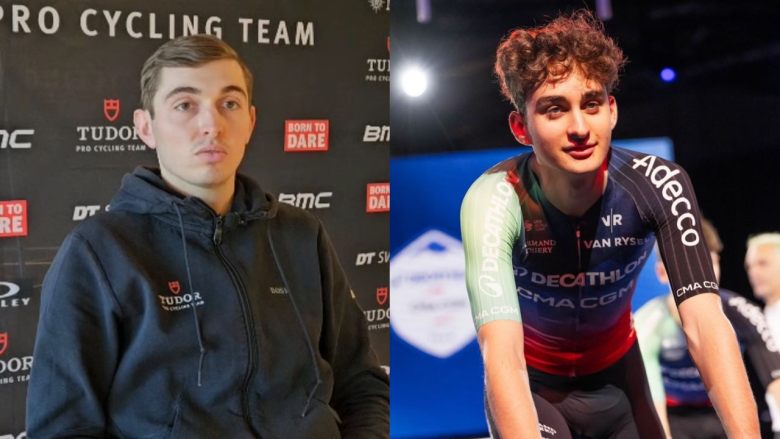
INTERVIEW - Mathys Rondel : "Paul Seixas ? Il prend aussi beaucoup de lumière" #Rondel #Tudor #Seixas #Martinez #Giro #TV #UCI

Abonnés Free, cette nouveautés va tout changer !

Neige et verglas : pourquoi les routes ne sont pas salées en avance ?

Votre salaire va-t-il augmenter cette année ?
Maud Descamps nous dévoile les résultats d'un baromètre sur les augmentations salariales, dans "Bonjour ! La Matinale TF1". La moyenne s'élève à 3,1% dans le pays. Mais cette année, seules 29% des entreprises envisagent des augmentations générales.