
Le Journal

Les cyberattaques touchent de plus en plus le secteur maritime !

Le saviez-vous : les abonnés Freebox et Free Mobile peuvent corriger leur image détériorée sur Free TV avec une action ultra simple

Abonnés Freebox : deux nouveaux services pour adultes débarquent sur Free TV, mais pas partout
Free lance deux nouveaux services X sur Free TV, uniquement accessibles via le web. Free enrichit son offre Free TV avec le lancement de deux nouveaux services destinés à un public adulte. Baptisés « X à la demande » et « X illimité », ils étaient déjà disponibles sur les Freebox via l’IPTV et viennent […] L'article Abonnés Freebox : deux nouveaux services pour adultes débarquent sur Free TV, mais pas partout a été publié sur Univers Freebox

Freebox Pop, Ultra et mini 4K : une nouvelle star débarque avec sa chaîne gratuite sur Pluto TV, et vous la connaissez forcément

Fin du cuivre : certaines communes conserveront leur connexion ADSL pour au moins un an de plus

Indian American couple charged in Dumfries motel sex trafficking, drug case
By Keerthi Ramesh Five people were formally charged this week in federal court in connection with an alleged sex trafficking and drug distribution network that authorities say operated out of a Dumfries motel. The defendants appeared Friday in Prince William County Circuit Court, following a coordinated early-morning law enforcement raid on Jan. 15 at the Red-Carpet Inn, a budget motel on Dumfries Rd., Manassas, VA. Local police and FBI agents entered the property with guns drawn shortly before 6 a.m., culminating a multi-year investigation into illegal activity at the site, authorities said. According to prosecutors, the operation cantered on the third floor of the motel, where occupants engaged in drug sales and prostitution. Court filings allege undercover officers conducted a series of controlled buys and prostitution encounters at the motel between May and December 2025. 11 of 15 controlled narcotics purchases involved fentanyl, while the remainder involved cocaine, officials said. The five charged are Kosha Sharma, 52, and Tarun Sharma, 55, a married couple who leased and operated the motel through their business, along with Margo Waldon Pierce, Joshua Roderick and Rashard Perrish Smith. All face federal charges of conspiracy to distribute controlled substances, a crime that carries a mandatory minimum sentence of 10 years in prison if convicted. READ: Shocking murder of Indian American motel manager in Dallas: Beheaded after dispute over washing machine(September 11, 2025) In a statement, Lindsey Halligan, U.S. attorney for the Eastern District of Virginia, said the alleged crimes “devastate communities by exploiting vulnerable individuals and fuelling violence and addiction.” She added that her office remains committed to dismantling such criminal enterprises. Officials did not immediately detail whether the alleged prostitution activities involved coercion, but the combination of drug distribution and the operation of a prostitution ring drew scrutiny from both local and federal authorities. The FBI’s Washington Field Office and the Prince William County Police Department, working with the Virginia State Police, led the investigative efforts. Surveillance footage obtained by local news outlets captured agents staging the early-morning raid, surrounding the motel and taking multiple people into custody without incident. Federal prosecutors say the arrests will send a clear message about law enforcement’s focus on combating violent and organized crime in Northern Virginia. Defense attorneys for the accused did not immediately return calls seeking comment Friday, and it was unclear whether any of the defendants have entered pleas. READ: Indian American physician pleads guilty to federal drug crimes(July 15, 2025) A federal judge will oversee pretrial proceedings, and prosecutors are expected to present further evidence and testimony at upcoming hearings. Authorities encouraged anyone with information about related criminal activity to contact the FBI or Prince William County authorities as the investigation continues. The post Indian American couple charged in Dumfries motel sex trafficking, drug case appeared first on The American Bazaar.

Fuite de données : les opérateurs particulièrement visés, Free affirme avoir “renforcé” son système de sécurité
Après une avalanche de cyberattaques touchant les opérateurs, Free met en avant le renforcement de son architecture de sécurité. La nouvelle cyberattaque révélée par SFR fin 2025 vient rappeler la vulnérabilité persistante des opérateurs télécoms face aux menaces informatiques. Mais au-delà de ce nouvel incident, c’est bien Free qui reste au cœur des débats, un […] L'article Fuite de données : les opérateurs particulièrement visés, Free affirme avoir “renforcé” son système de sécurité a été publié sur Univers Freebox
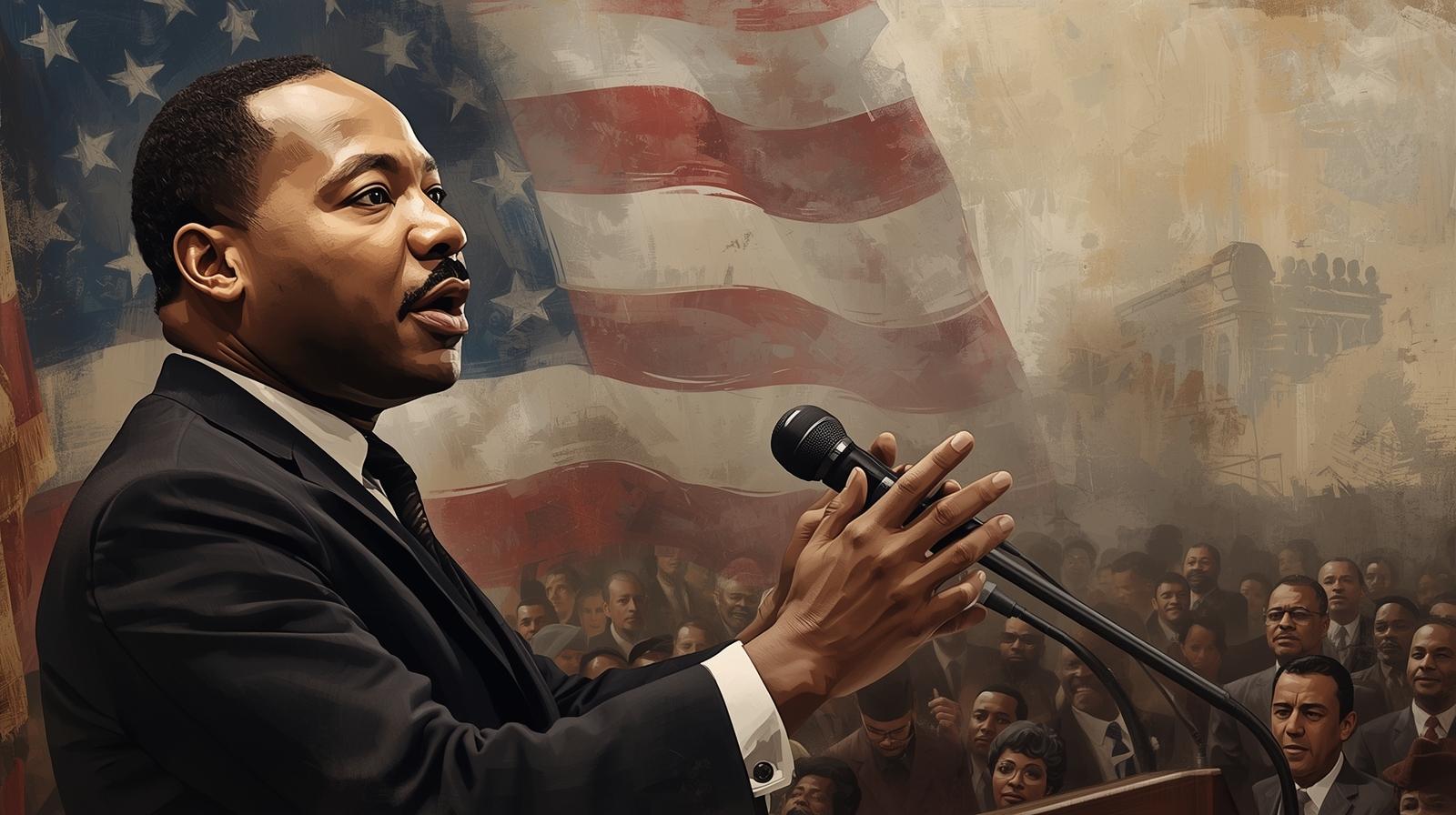
The dilemma of destiny as our own prisoners: What MLK would tell us
What MLK knew about the game Martin Luther King Jr.’s leadership through the lens of game theory, argues that his commitment to disciplined nonviolence was not only moral, but strategic—a deliberate attempt to move society out of a bad equilibrium such as the famous game theory called “The Prisoner’s Dilemma,” from Martin Luther King’s “Game Theory,” in the January edition of The Wall Street Journal. The Prisoner’s Dilemma theory has endured for more than seven decades not because it is clever, but because it is still relevant to many situations we confront in our daily lives. At its most basic level, the problem captures a paradox that plays out repeatedly in our lives — where rational individuals and institutions, acting independently and in good faith, can produce outcomes that are predictably worse for everyone involved. Here we look at how the Prisoner’s Dilemma applies to the affordability crisis for everything from homes, to health to food. King understood what The Prisoner’s Dilemma shows that when people act alone, everyone sticks with self-interest and the status quo continues; when expectations change, cooperation becomes possible. By consistently showing restraint and trust, he shifted how others weighed risk and reward. The lesson is clear today. In healthcare, food, housing and many other areas we are not stuck because cooperation is impossible, but because no one has yet changed the system to make working together safe. Whether it’s healthcare, housing or food, millions of people are struggling to survive because life has become simply too expensive. In this game, the prisoners are not abstract actors but all of us—consumers, patients, workers, employers, insurers, providers, developers, lenders, and policymakers each making rational, self-protective decisions within our own silo, yet collectively sustaining a system that makes basic necessities increasingly unaffordable. The Prisoner’s Dilemma is prison is different from theory The formal structure of this game theory was developed in 1950 by mathematicians Merrill Flood and Melvin Dresher at the RAND Corporation as part of early work in game theory, and it was later framed and named by philosopher and mathematician Albert W. Tucker. In its original version, two prisoners are interrogated separately and offered incentives to betray one another. Each person faces a choice of defection that minimizes their own punishment if the other defects, yet when both choose it, the result is worse for each than if they had cooperated. Game theorists quickly understood that the model was never really about crime. It was about coordination failure in situations where cooperation would lead to better outcomes. One is left to wonder whether the architects of The Prisoner’s Dilemma had ever set foot inside an actual prison. Because the central choice the model hinges on—cooperate or “snitch”—rarely exists in the way the theory imagines. Inside prison, there is an unwritten code: cooperation through silence is expected, and betrayal carries consequences that extend far beyond the immediate transaction. The mantra is simple “stay in your lane” and snitches get stitches. The dilemma, in prison, is not whether to cooperate, but whether one is willing to live with the long-term social cost of defection. Those that have cooperated in criminal cases never really knew the consequences of breaking the code until it was too late. Are we all captive in our cells? The real insight of the theory, then, is not about just prisoners, but about how people and institutions behave when they operate in vacuums—isolated from one another, stripped of shared context, and guided by incentives that reward self-protection over collective benefit. This distinction matters because it reveals a flaw in how we often apply economic and policy models. In some ways, we all live in our own cells. Game theory assumes people make rational choices in isolation. In real life, people make decisions inside social…

Europe pushes back as Trump threatens new tariffs over Greenland

Mamta Singh takes oath on Bhagavad Gita in Jersey City

« Les drones navals sont une première étape vers une recomposition profonde des marines. » (Olivier Dujardin et Lauraline Maniglier)
