
Le Journal

Were There Celebrities and Scandals in Ancient Greece?

Dramatic Scenes as Exhausted Vulture Lands on Dog Shelter in Crete
The vulture was seen resting on a tree above the dogs in the shelter of Ierapetra. Video screenshot/Takis Shelter A dramatic rescue unfolded at the well-known stray dog shelter run by Takis Proestakis near Ierapetra, Crete, after a large vulture, appearing exhausted or ill, landed directly among the stray dogs housed there. The majestic bird was initially spotted spending several hours perched high on a tree overlooking the shelter’s dog area. Watch the video here: https://www.facebook.com/reel/1365974524918053/ It eventually descended, settling motionless on the ground amongst the barking, curious dogs, creating a tense and perilous standstill. After a few anxious minutes, Proestakis took quick action to safely capture the raptor. Using a large net, he secured the vulnerable bird, which was then immediately transported to a local veterinarian for a thorough examination and necessary medical attention. There is currently no official update on the bird’s condition. Watch the dramatic video here: https://www.facebook.com/reel/2762911057382407 Takis Proestakis, a former Greek businessman in the town of Ierapetra, Crete, gave up his comfortable life to devote himself to caring for abandoned dogs and cats at his shelter. Vultures are common on Crete While such an encounter is unusual, the presence of vultures on Crete is highly significant. The island is one of Europe’s most important habitats for these magnificent scavengers, specifically hosting the world’s largest island population of Griffon Vultures and the last remaining breeding population of the Bearded Vulture (or Lammergeier) in the Balkans. Griffon Vulture (Gyps fulvus): This is the most common species on Crete, with a healthy population estimated to be over 1,000 individuals. These massive birds, with a wingspan of up to 2.6 meters, are frequently seen soaring above the island’s mountain ranges like the Lefka Ori and Psiloritis. They play a vital ecological role, acting as the island’s “clean-up crew” by feeding on the carcasses of livestock. Bearded Vulture (Gypaetus barbatus): This species is critically endangered and extremely rare. Crete holds the only breeding pairs left in southeastern Europe. These vultures are unique in that their diet consists primarily of bones, which they drop onto rocks from a great height to crack open. The bird rescued at the shelter was likely a Griffon Vulture due to their higher population numbers. Finding a vulture on the ground, especially in a developed area, is a strong indication of illness, injury, or severe exhaustion, which is why its immediate rescue was critical. Related: Greeks Fight to Protect Majestic Rare Vulture
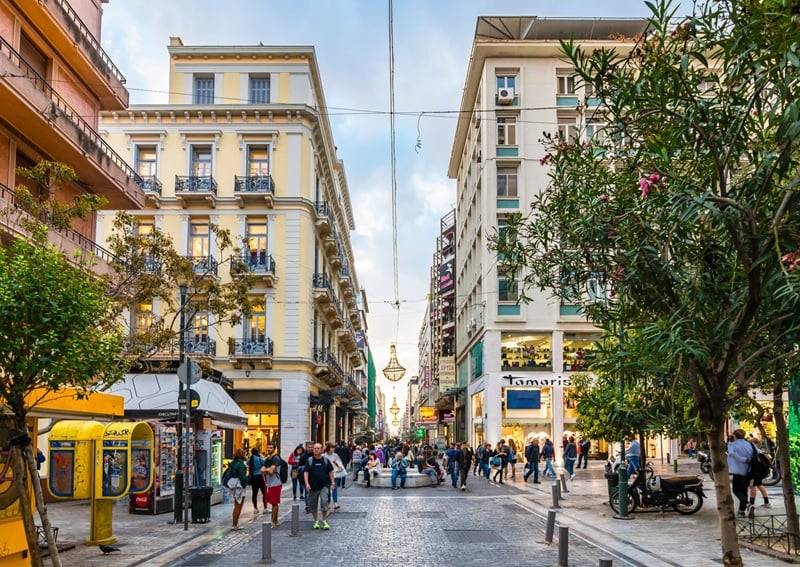
Athens’ Ermou: The12th Most Expensive Retail Street in the World

Cyprus President Calls for Relaunch of EU-Turkey Ties

The Ancient Greek Roots of Shared Appetizer Culture
The meze culture is part of the Greek culinary DNA. Credit: Greek Reporter Imagine a beautiful summer evening; Small shared appetizers known as Greek meze are abundant, and chats, laughter, and bonding are on the menu. This is the essence of Greek meze culture, a tradition that has kept communities and groups of friends together, shaping what it means to be Greek. The Greek meze is a social ritual—a living tradition of Greece’s culinary history. The Ancient roots of meze, the Greek shared appetizers To understand meze, we must delve through multiple levels of Mediterranean history. The term itself derives from the Persian “mazze,” meaning “taste” or “snack,” but its cultural DNA stretches back to antiquity. Homer’s Odyssey hints at early prototypes of meze, describing feasts of goat cheese and bread shared among Odysseus’s crew. Ancient Greek symposia—gatherings where philosophers reclined on klinai (couches) to debate over wine and small bites—were another foundational rock upon which this communal dining style was built. Symposium scene on an ancient Kylix, or drinking cup. Credit: Wikimedia Commons/ Public Domain The Byzantine Empire and Ottoman occupation of Greece further changed and enriched this tradition. Persian-influenced Turkish cuisine introduced more spiced meats and stuffed vegetables to the meze ritual. Simultaneously, Venetian traders, who dominated the Mediterranean trading routes, brought new ingredients like tomatoes and peppers to the Greek population’s culinary tables. By the 19th century, mezedopolia (meze taverns) dotted port cities across metropolitan Greece like Volos, where fishermen and merchants chatted (and very often passionately disagreed) about politics over salted sardines and tsipouro. As food historian Giorgio Pintzas Monzani noted in the past for the Greek Reporter, “Meze became the culinary embodiment of philoxenia—the Greek concept of hospitality that welcomes strangers as gods.” In Greece (as in many cultures across the eastern Mediterranean), sharing meze is less about the food itself but more about human connection. A typical scene of Greeks sharing a meze table on a summer evening looks like this: tables overflowing with small plates, glasses clink, and voices rise in passionate discussion, where banter and friendly disagreements are the norm. This tradition persists today, with most Greeks sharing meals at every opportunity. Credit: Greek Reporter The Greek meze tradition is rich with flavors, textures, and social customs that define Greek hospitality. This communal dining experience follows unspoken rules, with food served on shared plates rather than individual ones. The gradual arrival of dishes is another core element of the Greek meze experience, promoting extended socializing, while the choice of drinks influences the menu selection. A well-crafted meze spread includes dishes such as dolmadakia (stuffed vine leaves), kalamarakia (crispy squid), and tyrokafteri (spicy feta dip), with regional specialties such as Cretan staka, Macedonian soutzoukakia, and Aegean marathopites. Traditional spirits like raki, tsipouro, or ouzo, serve as social catalysts and often come with family recipes, enriching the Greek meze experience. While these strong spirits are traditional, recent years have seen increased beer and wine consumption, particularly among younger generations who prefer them over the customary ouzo or raki. Regardless of the beverage choice, the focus remains on enjoying drinks alongside good food and company. The Ottoman-era tradition of serving complimentary meze with each round of drinks still exists in some areas, such as Volos, making Volos the meze capital of the country. The meze culture is deeply connected to fundamental principles of Greek society, especially with open and passionate discussions, and hospitality.

Greece Says More Than 50% of Migrants Claiming to Be Minors Are in Fact Adults

Cape Tainaro in Greece: Where the Land Ends and Legends Begin

Magnitude 5.4 Earthquake Jolts Western Cyprus Near Paphos

China and Uruguay launch joint agri-science cooperation project
Scientific and educational institutions from China and Uruguay have signed a memorandum of understanding to establish a groundbreaking Joint Pasture Agriculture Laboratory, aiming to strengthen scientific and technological cooperation in agricultural innovation under China's Belt and Road Initiative.

Argentina and Paraguay expedite OECD membership applications
Argentina has formally initiated the technical phase of its bid to join the Organization for Economic Cooperation and Development (OECD), submitting its "initial memorandum" to the Paris-based body. The document, a preliminary self-assessment of the country's alignment with international standards, was delivered by Foreign Minister Pablo Quirno to OECD Secretary-General Mathias Cormann, who is currently visiting Buenos Aires.

Direct Air Link: India and Greece Connected for the First Time
Indian low-cost carrier IndiGo is launching two new direct routes from Mumbai and New Delhi to Athens. Credit: BriYYZ , CC BY-SA 2.0/Wikipedia Travel between India and Greece is about to become significantly easier. For the first time in history, the two nations will be connected by direct, non-stop flights beginning in January 2026. Indian low-cost carrier IndiGo is launching two new direct routes from Mumbai and New Delhi straight to the Greek capital, Athens, opening up a convenient new gateway to the Mediterranean. Bookings for January are already open. Greece’s Aegean Airlines will complement this by commencing new service to India, with five weekly flights to Delhi and three weekly flights to Mumbai, starting in March 2026. Greece-India flights: Mumbai (BOM) to Athens (ATH) The Mumbai-Athens route will be the first to launch, starting January 23, 2026.The outbound flight (6E 1903) will operate three times a week—on Thursdays, Fridays, and Sundays. It will depart Mumbai at 9:50 AM and arrive in Athens at 2:15 PM on the same afternoon. The total flight time is approximately 7 hours and 5 minutes. The return flight (6E 1904) departs Athens at 3:25 PM and lands in Mumbai at 2:00 AM the following day. Starting one-way fares are priced at Rs 21,999, which is an approximate estimated equivalent of $265 USD*. New Delhi (DEL) to Athens (ATH) The capital-to-capital service commences shortly after, starting January 24, 2026. This flight (6E 1901) will operate on alternate days, with the schedule changing weekly. It departs New Delhi at 9:10 AM and arrives in Athens at 2:25 PM on the same afternoon. The total flight time is approximately 7 hours and 40 minutes. The return flight (6E 1902) leaves Athens at 4:00 PM and arrives in New Delhi at 3:10 AM the following day. Starting one-way fares are priced at Rs 23,999, which is an approximate estimated equivalent of $290 USD*. *Currency disclaimer: Fares are stated in Indian Rupees (Rs). The USD conversion is an approximate estimate based on the current exchange rate and is subject to fluctuation and banking fees.
