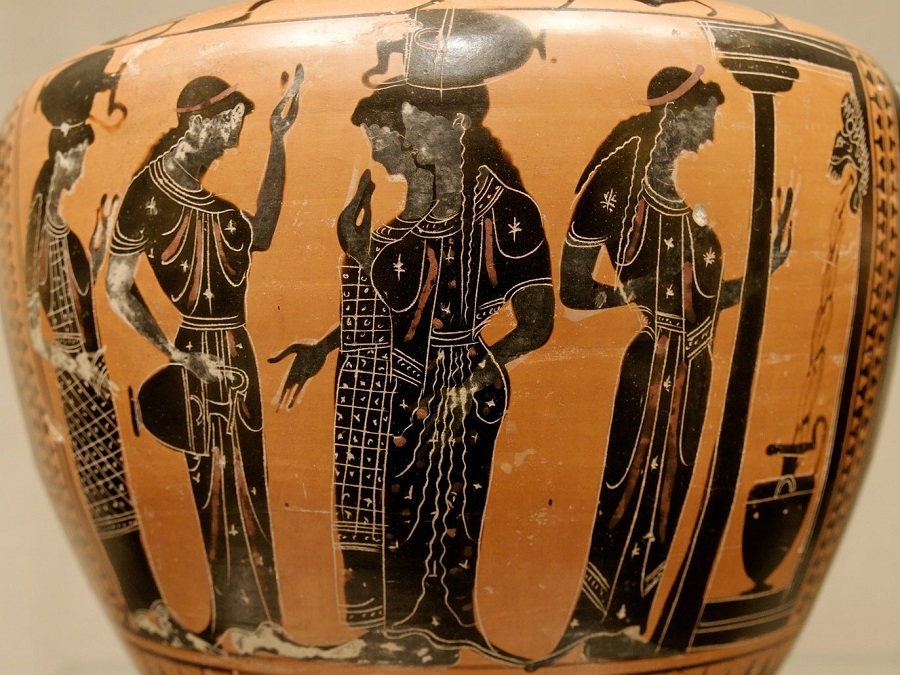
Long before TMZ and Page Six dominated our feeds with celebrity gossip, people in Ancient Greece were being captivated by the dramatic lives, as well as the scandals of their own stars.
The scandal that erupted when Phryne, one of the wealthiest and most beautiful courtesans in Athens, stood trial for impiety, created such a sensation with the public that it inspired artwork and literature for centuries afterwards. Today’s celebrity culture, with its obsession with the personal lives of singers, actors and influencers, cancel culture and scandalous revelations, finds its roots in the way Ancient Greece was treating famous people over 2,500 years ago. The ancient Greeks, who we often associate with noble causes like democracy and philosophy, were just as hungry for gossip, intrigue and scandal.
The original celebrities of Ancient Greece
In a world without social media or TV, fame was achieved differently in Ancient Greece. However, the fascination with individuals was remarkably similar to what we know today. For example, athletes who competed in the Olympic Games achieved extraordinary status, becoming household names across the Greek world.
Chariot racers in particular could become immensely wealthy and famous because of their athletic achievements. These ancient sports stars gained glory and considerable political influence. This is not uncommon in modern Greece, either, as famous Olympians like Voula Patoulidou and Pyrros Dimas have had decades long careers in politics.
Philosophers and orators were also another category of what we’d now call celebrities in ancient Greece, though their fame came with considerable risks. Socrates, perhaps the most famous philosopher of all time, became a polarizing figure in Athenian society for many reasons. His questioning methods and philosophical discussions drew large numbers of followers while simultaneously creating powerful enemies who wanted to stop him from “questioning” everything Athens had to offer.
This tension eventually led to his trial in 399 BC on charges of “impiety” and “corrupting the youth,” essentially accusations that he challenged traditional values and encouraged young people to question authority. The trial itself became a public spectacle, just as millions of people watch celebrities go on trial today.

With hundreds of male Athenian citizens serving as jurors in a process that lasted just one day, this event defined the history of Athens itself.
Courtesans, known as hetairai, could also achieve remarkable fame and wealth in ancient Greece, becoming celebrities for all the wrong reasons. Take Phryne, born Mnesarete, who rose from poverty to become one of the wealthiest women in Greece, for example. Her beauty was so well known across ancient Greece that she reportedly served as the model for Praxiteles’ sculpture of Aphrodite of Knidos.
Scandals that rocked ancient Greek society
Just as modern scandals dominate TV and newspaper headlines, people in ancient Greece loved to hear about stories of famous and strong personalities falling from grace. Olympic corruption scandals were surprisingly common during Greek antiquity.
Around 388 BC the boxer Eupolus famously bribed three of his opponents to lose their matches, creating one of the earliest documented cases of match-fixing in human history. When officials discovered what they were plotting, all four athletes were punished severely and special statues called Zanes were erected with inscriptions detailing their shame.
These monuments stood outside the Olympic stadium as warnings to others, creating what historians describe as a literal “Hall of Shame” for those who wanted to play without respecting and following the rules.
Perhaps no ancient scandal combined perfectly the elements of intrigue as much as the trial of Phryne. According to legend (though historians doubt its accuracy), when facing execution for impiety, her defender Hypereides dramatically bared Phryne’s breasts to the jury, who were so moved by her beauty that they acquitted her. While likely fictional, this story shows us that the ancient Greeks perceived celebrity, sexuality and scandal in ways that would feel familiar to any modern tabloid reader.
The next time you find yourself captivated by a celebrity scandal, remember that you’re participating in a tradition as old as Western civilization itself!
The characters and technologies change, but human fascination with fame, scandal and the dramatic lives of public figures remains unchanged.