Le Journal
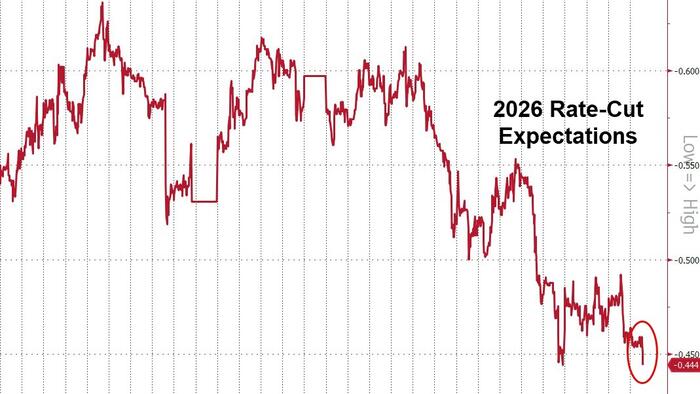
Rate-Cut Odds Tumble As Jobless Claims Hover Near 56-Year-Lows

US Futures, Global Markets Rally After Trump Greenland Pivot
Das: Trump's Spat With The Fed Is Not About Central Bank Independence
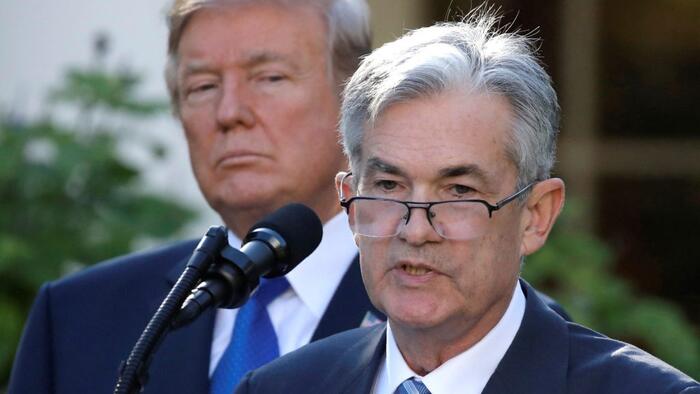
Das: Trump's Spat With The Fed Is Not About Central Bank Independence Authored by Satyajit Das via New India Express, The spat between the White House and Fed Reserve Chairperson Jerome Powell, a President Trump appointment, is hardly unusual. Lyndon Johnson and Richard Nixon bullied the central bank to lower interest rates. Central banks function as the government’s banker, issue currency, maintain the payment system and manage the nation’s currency reserves. They safeguard financial stability acting as a lender of last resort to banks although separate bodies sometimes regulate the financial system. The contentious part of their mandate is controlling money supply and setting interest rates. Central bank independence is recent. In 1990, New Zealand legislated inflation targeting which was adopted by other nations. The concept was that an independent institution would determine monetary policy and maintain price stability minimising opportunities for politicians to use interest rates to boost economic activity especially around elections. The context was the high inflation era of the 1970s and 1980s. It was convenient to transfer painful choices to central bankers allowing governments to blame others or claim credit depending on outcomes. The case for independence is unclear. The objectives, such as relative price stability, growth, and employment, are frequently contradictory. It is unclear which of multiple measures of price levels is to be prioritised. The 2 to 3 percent inflation objective is arbitrary. Empirical studies suggest that fear of deflation may be unwarranted. There are differences on what constitutes full employment. Data, rarely timely, has methodological problems. The representativeness of items used to measure inflation is contested. Unpaid work, zero-hour agreements and contracting complicates labour statistics. Resource scarcity or sustainability are ignored. Central banks have limited tools – interest rates, regulating money supply through open market operations, quantitative easing (buying government debt) and forward guidance (open mouth operations or jawboning). Budgets, the currency, international capital flows, and geo-politics (sanctions, trade restrictions) are outside its control. The underlying economic models focus on NAIRU (non-accelerating inflation rate of unemployment) or the Phillips Curve, a simplistic trade-off between unemployment and inflation. In practice, these relationships are unreliable. Cause and effect are difficult to differentiate. There is no agreement on a neutral (not contractionary or expansionary) interest rate. Central bankers constantly validate Laurence J. Peter’s judgement: “an economist is an expert who will know tomorrow why the things he predicted yesterday didn’t happen today.” The problems are compounded by training and backgrounds which lend themselves to groupthink. Central bankers are economists, usually trained at the same universities, who spend their working life around the institution, government or academe and limited commercial experience. Central banks are run by economists providing employment for their tribe. Independent members rarely second guess staff recommendations, even if they have the expertise and information. Originally reticent, central banks, following the lead of former Fed Chairperson Alan ‘Maestro’ Greenspan, have embraced celebrity. Inscrutable invisibility has given way to volubility, X handles, and Delphic oratory. They play to financial markets with an excessive focus on asset prices which do not uniformly benefit all citizens. Politicians, never happy to share the limelight, increasingly resent the power and public profile of these unelected technocrats. They begrudge having to seek approbation for their policies. US Presidents found themselves forced to kowtow to the all-powerful Greenspan. They increasingly are wary of the threat to their position and re-election that central banks may pose. Central banks’ records are…

Ubisoft Crashes Most On Record After Tom Clancy's Rainbow Six Maker Unveils Reorganization, Cancels Games

$6,000 Gold Ahead As Trump-Treasury & Fed Will 'Run It Hot' In 2026
Trump Will "Wipe Iran Off The Face Of The Earth" If It Ever Tries To Assassinate Him
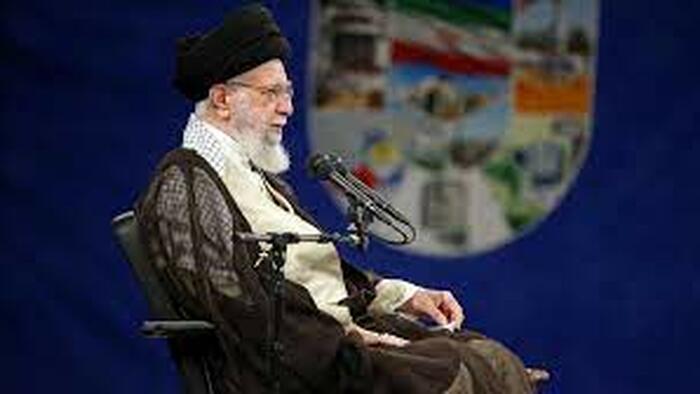
Trump Will "Wipe Iran Off The Face Of The Earth" If It Ever Tries To Assassinate Him There's no evidence that agents from Iran have ever tried to assassinate President Trump - though there have been lots of rumors and even a federal court case suggesting some kind of past plot in a "murder-for-hire" scheme. But the topic was raised as Trump spoke to NewsNation’s Katie Pavlich Tonight, which marked the second anniversary of Trump’s inauguration. He said in the Tuesday interview that if Iran were to attempt to assassinate him, he would issue the "order to wipe it off the face of this Earth." "Anything ever happens, the whole country is going to get blown up," Trump said, adding, "I would absolutely hit them so hard. But I have very firm instructions." Alongside the threat based on the imagined scenario, he lashed out at former President Joe Biden, arguing that the prior administration failed to respond forcefully enough to threats made by Iran against him. "A president has to defend a president," Trump continued, emphasizing that he would act decisively even if threats were aimed at "somebody, not even a president." Not only is there scant evidence of the existence of some kind of Iranian state plot past or present against the sitting president, but one would be hard-pressed to present as an example any Iranian or Shia-driven terror attack on American soil, in all of history. Instead, almost all Islamic terror in the history of the US has been Sunni-linked. For example, the majority of the 9/11 hijackers were of course Saudis. And yet Washington has long been best friends with the hardline Sunni kingdom, where Sharia law reigns. Still, the NeoCons have long obsessed over Iran and its Shia Islamic revolution of 1979. Shia Hezbollah has also long been top in the crosshairs of both Washington and Israel. Currently, a US carrier group and additional military assets are headed to the Middle East region. A carrier is en route from Asian waters. The Wall Street Journal has noted that 'options' are still being weighed by the administration: After pulling back from strikes on Iran last week, President Trump is still pressing aides for what he terms “decisive” military options, U.S. officials said, as Iran appears to have tightened its control of the country and targets protesters through a crackdown that has killed thousands. This comes after a couple weeks of large-scale protests in Iran left hundreds dead. Estimates are in the thousands killed. Iran’s Supreme Leader Ayatollah Ali Khamenei has accused President Donald Trump and the US of being behind the deaths of ‘several thousand’ people during weeks of anti-government protests, alleging direct foreign involvement in the violence. pic.twitter.com/kdGRBHBZuC — Al Jazeera English (@AJEnglish) January 18, 2026 But amid international condemnation, Tehran has said that casualties among police and security personnel were in the hundreds. Iranian leaders have accused violent and well-armed foreign-sponsored entities of hijacking what started out as economic-driven protests. And they say the West is using this as a justification to potentially mount a regime change war. Tyler Durden Thu, 01/22/2026 - 06:55
Trump Unveils His Board Of Peace In Davos: A Replacement To The UN Or A US-Led Coalition Of The Willing?
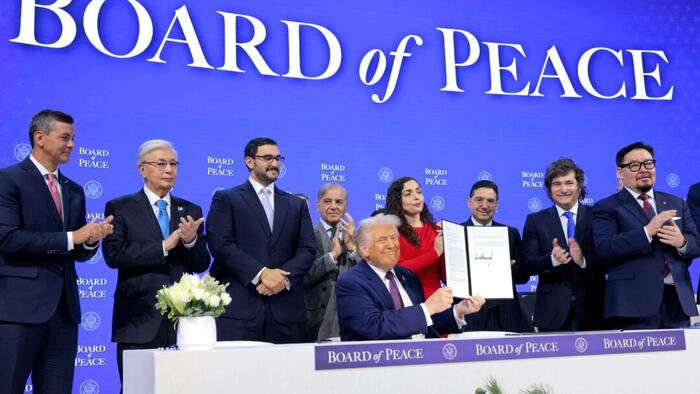
Trump Unveils His Board Of Peace In Davos: A Replacement To The UN Or A US-Led Coalition Of The Willing? On the second and final day of his visit on Jan. 22, U.S. President Donald Trump released the Board of Peace charter, which is part of the peace process between Israel and Hamas to end the war in Gaza. The White House on Jan. 16 named several members of the Trump administration, as well as international leaders, to positions within the Board of Peace, which aims to provide strategic insight, mobilize international resources, and ensure accountability during Gaza’s transition and reconstruction. Trump will chair the board, which will be tasked with overseeing the next phase in Gaza. Dozens of countries have been invited to join. As Emel Akan reports for The Epoch Times, members will be tasked with managing the Gaza Strip’s “governance capacity-building, regional relations, reconstruction, investment attraction, large-scale funding, and capital mobilization,” according to the White House. During a Jan. 20 White House press conference, Trump said the Board of Peace might end up replacing the United Nations. “I wish the United Nations could do more. I wish we didn’t need a Board of Peace,” Trump told reporters. “The U.N. just hasn’t been very helpful. I’m a big fan of the U.N. potential, but it has never lived up to its potential.” Despite criticizing the U.N., Trump didn’t call for the dissolution of the international body. U.S. Secretary of State Marco Rubio, special presidential envoy Steve Witkoff, Trump’s son-in-law Jared Kushner, and former British Prime Minister Tony Blair are among those tapped to serve on an executive board for the Board of Peace. Others on the executive board are private equity executive Marc Rowan, World Bank Group President Ajay Banga, and U.S. deputy national security adviser Robert Gabriel. The Board of Peace will include a National Committee for the Administration of Gaza, led by Palestinian Authority official Ali Abdel Hamid Shaath. President Donald Trump speaks during a reception for business leaders at the World Economic Forum (WEF) Annual Meeting in Davos, Switzerland, on Jan. 21, 2026. Chip Somodevilla/Getty Images Nikolay Mladenov, a Bulgarian diplomat and former U.N. envoy to the Middle East, has also been named to serve as the high representative for Gaza. This role entails acting as a link between the Board of Peace and the National Committee for the Administration of Gaza. As part of the peace process, Hamas has agreed to disarm. During his remarks to the World Economic Forum in Davos, Trump said failure to comply would result in severe consequences, saying Hamas will “be blown away.” “We have 59 countries that are part of that whole peace deal,” Trump said during his speech. “And they want to come in and take out Hamas. They want to come in. They want to do whatever they can. There’s a problem with Hezbollah in Lebanon. And we'll see what happens there.” Additionally, as Andrew Korybko details below, Putin might accept Trump’s invitation to participate in order to avoid offending him and not lose a seat at the table where members provide input on US policy towards settling various conflicts. Kremlin spokesmen Dmitry Peskov confirmed that the US invited Putin to join the Board of Peace, which refers to the UNSC-endorsed Trump-chaired group for implementing his Gaza peace plan. Interestingly, Gaza isn’t mentioned anywhere in its charter, thus lending credence to some observers’ assessments that Trump envisages it de facto replacing the UN upon broadening its scope with time. That same charter also grants enormous power to the group’s Chairman, the first of which will be Trump. He’s the only one who can invite countries to join, terminate their membership, select the Executive Board, approve decisions (without which they won’t enter into force), veto decisions at any time even after they’re already being implemented, and has full power over subsidiary entities, et al. Just as…

Cocoa Prices Set For Worst Monthly Drop On Record As Demand Craters
Cocoa Prices Set For Worst Monthly Drop On Record As Demand Craters Cocoa futures in New York tumbled to two-year lows as fresh grinding data confirmed that consumers are balking at high chocolate prices. Contracts are now down more than 28.5% on the month, and if the decline holds through the end of next week, January would register the largest monthly percentage drop on record, with Bloomberg data going back to 1970. The great cocoa panic of 2023-24, which sent prices from $2,190 a ton to as high as $13,000 a ton by December 2024, has now retraced nearly the entire bull move to the 76.4% Fibonacci level. This latest downward pressure comes as new grinding data in Europe, cited by Bloomberg, shows clear demand deterioration: Demand is deteriorating: European cocoa grindings fell to the lowest quarterly level since 2013, Asia also declined, while North America was roughly flat. Reduced grindings have hit processors hard: Barry Callebaut AG reported a 22% drop in cocoa division volumes and nearly 10% lower overall sales volumes. Goldman analyst Natasha de la Grense provided clients with more color on Barry Callebaut's earnings, which showed negative market demand for chocolate: Barry Callebaut – Q1 volumes in line (-9.9%) with a better outcome in Gourmet (-3.6% vs -5.5%) and Food Manufacturers (-7.4% vs -8.0%) offset by worse volumes in Cocoa Products (-22% vs -16.5%). The miss at the latter was impacted by negative market demand notably in AMEA and the prioritisation of volume towards higher return segments. Pricing was +19% YoY (vs +40% last quarter) so sequentially improving and now passed its peak. They say that global chocolate volumes were -6.8%. No change to FY26 outlook but they note lower bean prices are encouraging for chocolate market stabilisation. With this release, a new CEO has been announced which is a bit of a surprise (and Mr Feld is leaving almost immediately). However, the newly appointed Mr Schumacher is former CEO of Unilever and well-liked by investors. On the call, the Chairman suggested there will be no major change in strategy or need for reinvestment under new management. Note that BC also said it is committed to its integrated business model which should pour cold water on speculation around a split. Barry Callebaut CFO Peter Vanneste told investors on an earnings call, "We believe consumers will adapt and adjust to these new price levels and ultimately continue to buy chocolate given the high engagement of the category." We told readers in December that sliding cocoa prices would produce "Tailwinds" for the badly beaten-down Hershey stock ... Read the note here. Tyler Durden Thu, 01/22/2026 - 05:45

UK Data Center Planning Hits Record High Amid Scramble For AI Infrastructure
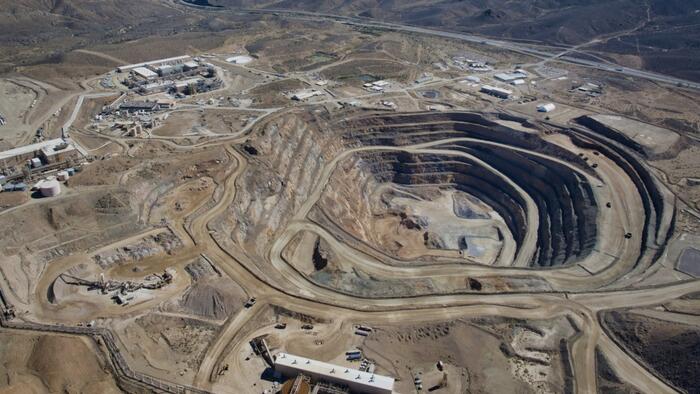
US Lawmakers Push $2.5B Plan To Break China’s Grip On Critical Minerals

Despite Rapes And Violence, Netherlands To Keep Migrant-Student Integration Project Alive