Congress is debating whether to impose new age restrictions on social media as concerns grow over teenage screen time and its impact on mental health.
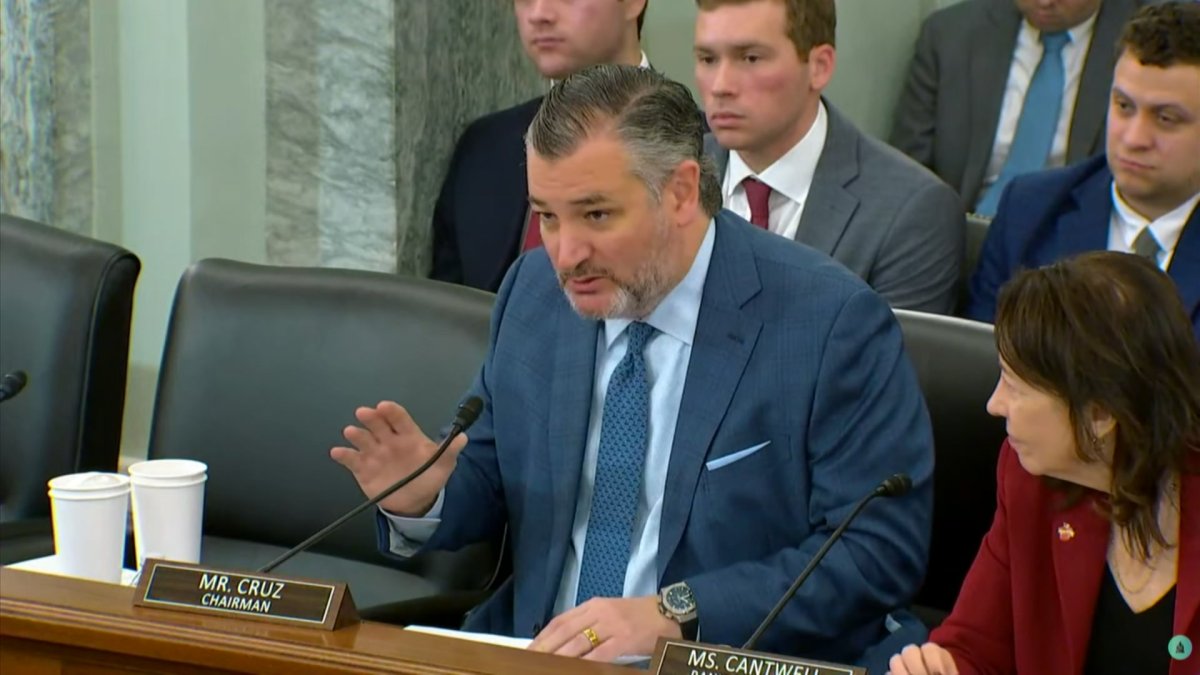
U.S. Sen. Ted Cruz, R-TX, drew attention to the issue during a Senate Commerce, Science, and Transportation Committee hearing focused on how social media affects young users.
Major platforms, including Meta, Google’s YouTube, TikTok, and X, argue they can protect users themselves and warn that government intervention could infringe on freedom of speech. That argument did not persuade the panel of experts who testified before the committee.
“This is all happening within the context of a child mental health crisis and a loneliness epidemic,” said Dr. Jenny Radesky, with the University of Michigan.
“I will tell you that parenting in the digital age is the hardest thing I’ve ever done, and I taught seventh grade for 12 years,” said Emily Cherkin, author of “Screentime Consultant.”
Research cited during the hearing shows that the more time teenagers spend on screens, the greater their risk for depression, anxiety, and self-harm.
Experts also warned lawmakers that artificial intelligence could worsen the problem, especially as new technology becomes more accessible to young users.
“I’m even more concerned about the AI companion apps than I am about social media. It is terrifying to think our children are having their first relationships with these sycophantic chatbots,” said Dr. Jean Twenge of San Diego State University.
Some lawmakers said tech companies have resisted regulation despite growing evidence of harm.
“Big Tech has fought us every step of the way. There are laws in the physical world that prohibit you from endangering children in any way, shape, or form. But in the virtual space it’s the Wild West,” said U.S. Sen. Marsha Blackburn, R-Tennessee.
International and state-level efforts are also shaping the debate. Australia recently banned social media for children 16 and under. In Texas, State Rep. Jared Patterson, R-Denton, who filed a similar bill last year, said he plans to try again during the next legislative session.
The renewed focus on regulation follows weeks of outrage over Elon Musk’s Grok, which allowed users to use artificial intelligence to create sexual images of women and children. The company initially placed the tool behind a paywall before ending the program.
Cruz’s proposal would ban social media for anyone under the age of 13 and prohibit the use of algorithms — the formulas that promote certain videos and images — for users under 17.
The companies involved said they plan to fight the proposed changes in Congress and, if necessary, in court.