
Download the PDF version of this article here.
Abstract
Lithium-ion battery incidents—ranging from fires and explosions to toxic emissions—pose growing threats to public safety and environmental health. This article examines the operational, technological, and policy challenges faced by local emergency management agencies in responding to such events. Using a mixed-methods approach that includes case studies, expert interviews, and policy reviews, the study identifies critical gaps in fire suppression systems, responder training, battery tracking technologies, and regulatory frameworks. Recommendations emphasize cohesive strategies to strengthen preparedness, improve response protocols, and enhance community resilience in the face of evolving battery-related hazards.
Overview
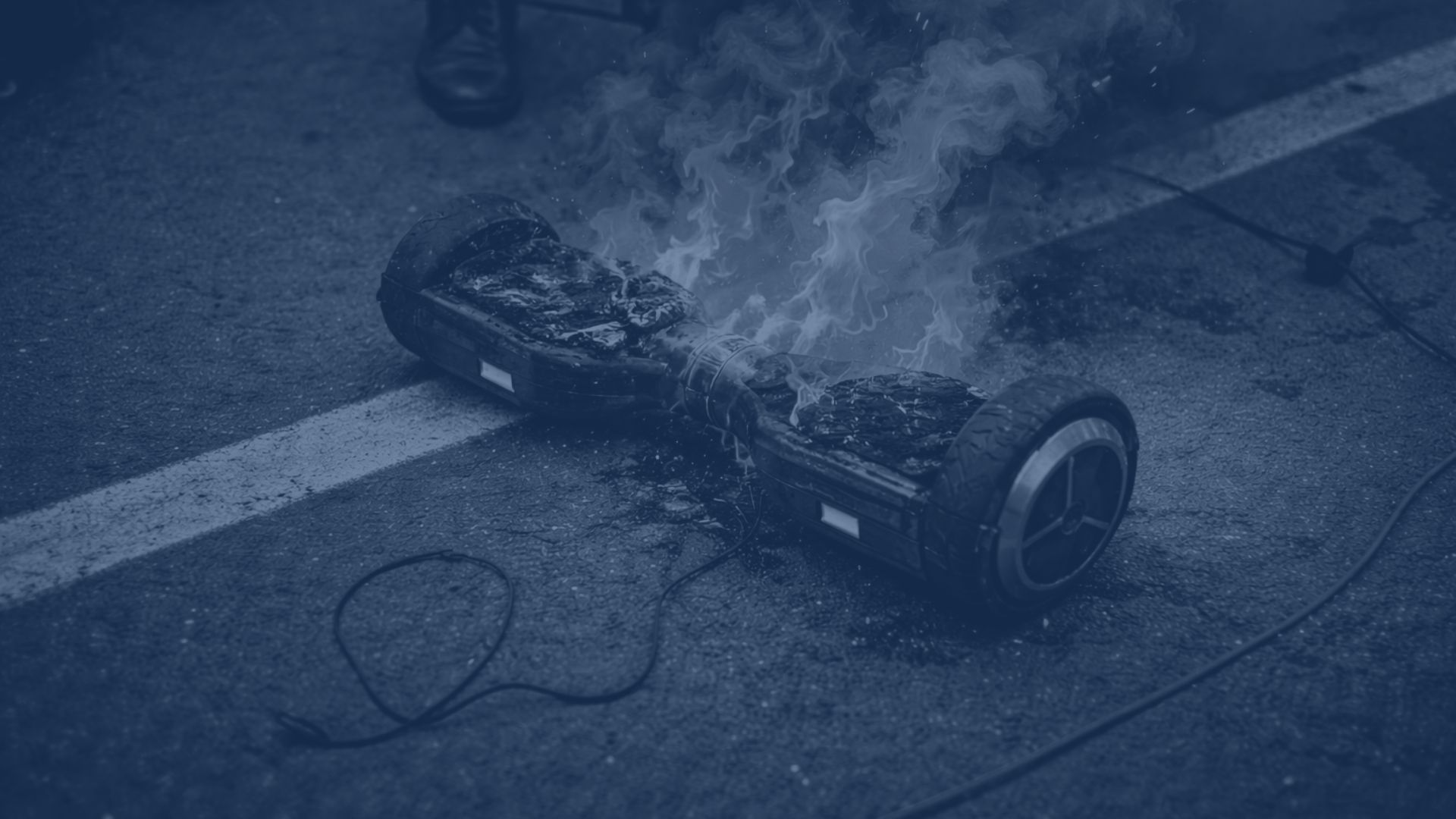
Lithium-ion batteries power everything from smartphones and laptops to electric vehicles and grid-scale storage, but their high-energy density and complex chemistries introduce unique hazards, fires, explosions, and toxic emissions that local emergency management agencies are often ill-prepared to address. A 2021 hoverboard fire in Harrisburg, Pennsylvania, tragically claimed a firefighter’s life as he was on the way to the accident scene (Butler, 2024). In 2023 alone, New York City recorded 268 fires linked to micromobility batteries (Moore-Merrell, 2024), Houston reported over 60 battery-related fires (Butler, 2024), and Fairfax County, Va., experienced 17 such incidents (Butler, 2024). and contributed to 26 nationwide fatalities and extensive property damage (Moore-Merrell, 2024). These trends underscore the pressing need for specialized knowledge, targeted training, and clear response and recovery protocols.
This article explores the operational, technological, and policy challenges local agencies face when responding to lithium-ion battery incidents. Drawing on case studies, expert interviews, and a comprehensive policy review, it identifies critical gaps in responder capabilities, suppression technologies, battery-tracking systems, and regulatory frameworks. The analysis concludes with actionable recommendations, spanning advanced fire-suppression methods, standardized training programs, cohesive interagency protocols, and adaptive policy measures, to bolster preparedness and resilience against emerging battery-related threats.
Methodology
This study employed a mixed-methods approach to investigate the challenges and technological gaps encountered by local emergency management agencies in addressing lithium-ion battery incidents. To achieve a comprehensive and multidimensional analysis, three core methodologies were employed: case study analysis, expert interviews, and policy reviews. Each method contributes distinct insights into immediate response and long-term strategy. By integrating qualitative and quantitative insights from these three methodologies, this study provides a holistic understanding of the identified challenges and proposes actionable solutions to bridge critical gaps in emergency management practices.
Case Study Analysis
To explore real-world implications and derive actionable insights, this study examines two pivotal lithium-ion battery incidents chosen for their impact scale, unique challenges, and data availability: the 2025 Moss Landing Energy Storage Facility fire, which highlights operational shortcomings and safety‐protocol failures in high-density battery suppression, and the 2023 Maui wildfires, which expose the complexities of post-disaster battery collection and disposal. By comparing these contrasted scenarios, the research identifies critical gaps in current emergency management practices and proposes targeted recommendations to strengthen both immediate response and long-term recovery efforts.
Expert Interviews
The study incorporated insights from two expert interviews, which provided in-depth perspectives on the challenges and technological gaps faced by first responders and emergency management professionals. The experts, selected for their extensive experience in emergency management, battery technology, and fire safety, participated in virtual semi-structured interviews lasting approximately one hour each. The semi-structured format balanced guided questions with open-ended discussions, enabling deeper insights and the exploration of practical solutions. The qualitative data collected from these interviews were systematically analyzed to identify recurring themes and critical insights, which were integrated with findings from the case studies and policy reviews.
Policy Reviews
This study conducted a comprehensive review of local, state, and federal policies governing lithium-ion battery safety and incident management, focusing on Westchester County’s Lithium-Ion Battery Safety Program; the Washington State Fire Marshal’s Policy; and the Environmental Protection Agency’s (EPA’s) Battery Collection Best Practices Guidelines under the Bipartisan Infrastructure Law, to assess their recency, scope, and alignment with the unique hazards presented by these batteries. The analysis revealed inconsistent adoption across jurisdictions, gaps in disaster-recovery protocols for high-capacity storage systems, and uneven disposal guidelines, underscoring fragmented regulatory coverage. Integrated with insights from case studies and expert interviews, these findings inform targeted recommendations to strengthen safety protocols, streamline response strategies, and promote cohesive frameworks for local emergency management agencies.
Challenges and Mitigation Strategies
Several challenges emerged, including limited access to comprehensive data for recent incidents, scheduling conflicts with busy industry experts, and the rapidly evolving policy landscape. To overcome these, the study triangulated information from diverse sources, agency reports, industry publications, and technical briefings and adopted flexible, persistent outreach for virtual interviews despite repeated delays. Concurrently, regular policy scans and updates ensured the analysis reflected the latest regulatory changes. These adaptive strategies not only resolved logistical hurdles but also bolstered the study’s rigor and relevance, underpinning its robust, actionable recommendations.
Results and Findings
The study found that local emergency management agencies face numerous challenges in handling lithium-ion battery incidents, primarily due to the unique hazards these batteries present and the inadequacies in existing response protocols (Moore-Merrell, 2024). Through comprehensive analysis of real-world case studies, expert interviews, and policy reviews, several key findings emerged from the study. The results include operational challenges, gaps in training and resources, absence of, or deficiencies in, current policies and procedures and technological gaps. These findings highlight the critical need for integrated and comprehensive strategies to address the identified challenges and improve emergency management practices.
Case Study 1: 2025 Moss Landing Energy Storage Facility Fire, California
A thermal runaway event at the Moss Landing Energy Storage Facility rendered traditional water‐based suppression systems ineffective, triggering an uncontrollable blaze that damaged critical infrastructure and disrupted the regional grid (Colthorpe, 2025). Key response gaps included: insufficient first-responder training on lithium-ion battery hazards; communication breakdowns between facility operators and emergency teams; and limited access to specialized firefighting agents and equipment. This incident underscored the need for advanced suppression technologies, mandatory battery‐hazard training for all emergency response personnel, and preapproved interagency response protocols to accelerate decision making and resource deployment.
Case Study 2: 2023 Maui Wildfires, Hawaii
In the aftermath of the Maui wildfires, lithium-ion batteries from e-bikes, electronics, and vehicles were found dispersed across the area and posed ongoing fire and environmental risks (Greene & Jenkins, 2024). Challenges identified: Difficulty locating and segregating batteries among widespread debris; inadequate large-scale disposal protocols, leading to soil and water contamination; and resource constraints that relegated hazardous-materials management below infrastructure recovery. These findings point to the necessity of emergency-specific disposal guidelines, dedicated hazardous-materials recovery teams, investment in rapid battery-tracking systems, and public outreach campaigns to ensure safe post-disaster handling of lithium-ion cells.
Expert Interviews
The expert interviews provided valuable insights into the multifaceted challenges emergency management agencies face when responding to lithium-ion battery incidents. The semi-structured interviews (March 14, 2025) with emergency management and fire-safety specialists revealed four recurring challenges: the absence of standardized protocols for lithium-ion battery fires, leading to prolonged response times and resource misallocation; significant training gaps, with responders lacking familiarity with battery chemistries, thermal-runaway behavior, and specialized suppression techniques; fragmented interagency coordination that creates unclear roles across local, state, and federal levels; and technological shortcomings in large-scale suppression systems and battery-tracking/disposal tools for post-incident recovery. Experts also emphasized the value of consumer-awareness campaigns to promote safe handling, storage, and disposal practices. These insights underscore the need for integrated strategies that combine standardized response plans, specialized training programs, coordinated planning, technological innovation, and public education to bolster emergency response effectiveness and community resilience.
Policy Reviews
The policy reviews revealed significant discrepancies in the scope and effectiveness of regulations addressing lithium-ion battery incidents: programs like Westchester County’s Lithium-Ion Battery Safety Program emphasize localized safety measures (Westchester County Department of Emergency Services, n.d.) and the Washington State Fire Marshal’s Policy advances fire-prevention protocols and community awareness (Washington State Fire Marshal’s Office, 2024), yet uneven adoption, especially of the EPA Battery Collection Best Practices Guidelines, limits nationwide consistency (U.S. Environmental Protection Agency, 2022). Moreover, policy development has not kept pace with rapid advancements in high-capacity storage technology or the complexities of post-disaster environmental remediation (Moore-Merrell, 2024; Greene & Jenkins, 2024), and fragmented coordination across local, state, and federal levels perpetuates overlapping jurisdictions and unclear responsibilities, undermining efficient emergency response.
These findings underscore the urgent need for cohesive, adaptive regulatory frameworks that evolve alongside lithium-ion battery technologies. Policies should mandate specialized responder training in battery chemistry, thermal-runaway behavior, and advanced suppression techniques; direct funding toward next-generation fire-suppression and battery-tracking systems; and codify clear, standardized post-incident recovery protocols. Equally critical is fostering robust interagency collaboration and ensuring consistent implementation of these measures across all jurisdictions to close existing gaps, reduce variability, and strengthen community and first-responder safety.
Lessons Learned
This study highlights several critical lessons for emergency management professionals addressing lithium-ion battery incidents. First, interdisciplinary collaboration across agencies and sectors is essential for an effective response. Second, specialized training and technological investment must be prioritized to address the unique hazards posed by these batteries. Third, policy gaps at local and federal levels continue to hinder uniform response capabilities, underscoring the need for cohesive regulatory frameworks.
These findings suggest that emergency management agencies should implement proactive planning, strengthen interagency coordination, and promote public education to mitigate risks. By addressing these systemic challenges, the profession can evolve to meet emerging technological threats with resilience and precision.
Summary
This article investigates the operational, technological, and policy challenges faced by local emergency management agencies in responding to lithium-ion battery incidents. Through a mixed-methods approach that incorporates case studies, expert interviews, and policy reviews, it identifies critical gaps in training, fire suppression capabilities, battery tracking systems, and regulatory frameworks.
Findings emphasize the need for specialized responder training, investment in advanced suppression technologies, and cohesive federal and state policies to support local operations. Addressing these interconnected challenges requires a unified strategy to enhance preparedness, streamline response efforts, and safeguard communities against the growing risks posed by lithium-ion battery technologies.
References
Butler, J. S. (2024, February 15). Examining fire hazards: Lithium-ion batteries and other threats to fire safety [Testimony submitted to U.S. House Committee on Homeland Security, Subcommittee on Emergency Management and Technology]. https://homeland.house.gov/hearing/examining-fire-hazards-lithium-ion-batteries-and-other-threats-to-fire-safety/
Colthorpe, A. (2025, January 24). Fire at Moss Landing Energy Storage Facility: What we know so far. Energy Storage News. Retrieved January 7, 2025, from https://www.energy-storage.news/
Greene, C. G., & Jenkins, G. E. (2024, August). Maui 2.0: Energy lessons learned from the field. Fire Engineering, 177(8), 22-26. Retrieved December 10, 2024, from https://www.usfa.fema.gov/library/
Moore-Merrell, L. (2024, February 15). Examining fire hazards: Lithium-ion batteries and other threats to fire safety [Testimony submitted to U.S. House Committee on Homeland Security, Subcommittee on Emergency Management and Technology]. https://homeland.house.gov/hearing/examining-fire-hazards-lithium-ion-batteries-and-other-threats-to-fire-safety/
U.S. Environmental Protection Agency. (2022). Battery collection best practices and battery labeling guidelines. Retrieved January 7, 2025, from https://www.epa.gov/infrastructure/battery-collection-best-practices-and-battery-labeling-guidelines
Washington State Fire Marshal’s Office. (2024, February 17). Lithium-ion battery safety. Washington State Patrol. Retrieved January 7, 2025, from https://www.wsp.wa.gov/
Westchester County Department of Emergency Services. (n.d.). Lithium-ion battery safety. Retrieved January 7, 2025, from https://emergencyservices.westchestergov.com/