

For decades, the concept of “Tomorrow” has been the most difficult challenge for Disney’s “Imagineers.” How do you build a permanent tribute to the future when the future arrives faster every year? For fans of Walt Disney’s original vision of a “great big beautiful tomorrow,” the state of the park’s most iconic futuristic land has been a point of contention for nearly twenty years.

Recent revelations have dealt a significant blow to those hoping for a complete 2026 transformation. Despite a decade of rumors and desperate pleas from the theme park community, a massive project to revitalize the aging infrastructure of Tomorrowland was reportedly discarded by Disney leadership years ago—leaving the land stuck in a state of “yesterday’s future.”
The Imagineering Dream: A “Blue-Sky” Overhaul
According to a recent report in the Wall Street Journal, Walt Disney Imagineering presented a comprehensive, ground-up reimagining of Tomorrowland. This wasn’t just a fresh coat of paint or a few new digital screens; it was a structural overhaul designed to fix the aesthetic incoherence that has plagued the area since the late 1990s.

The proposal reportedly addressed the most significant “eyesores” of the land, including the stagnant PeopleMover tracks that have sat dormant for nearly 30 years and the aging, cramped walkways that struggle to handle modern crowds. The vision was to create a unified “Space-Age” aesthetic—one that returned to the sleek, optimistic curves of the 1960s while integrating 21st-century technology. However, the plan hit a brick wall when it reached the desk of then-CEO Bob Chapek.
The Chapek “No”: Costs vs. Attendance Growth
The primary reason this revitalization was shelved stems from a fundamental clash between creative ambition and corporate “ROI” (Return on Investment). During his tenure, Bob Chapek was known for his rigorous focus on the bottom line, and the Tomorrowland project simply didn’t pass his “bean-counter” test.

The “New Attendance” Argument
Chapek reportedly turned down the project for two specific reasons:
- The Massive Price Tag: A total land revitalization is estimated to cost upwards of $1 billion. For an executive focused on quarterly earnings, spending a billion dollars on an area that is already built was a difficult pill to swallow.
- The Attendance Ceiling: Chapek’s most controversial stance was that a land-wide renovation wouldn’t necessarily attract more people to the park. His logic was that Tomorrowland already draws massive crowds due to “anchor” attractions like Space Mountain. In his view, a “better looking” land makes existing guests happier, but it doesn’t “move the needle” for first-time ticket sales in the same way a brand-new “E-Ticket” attraction would.
The Financial Pivot: Cruises Over Coasters?
To understand why Disney would reject a fix for one of its most popular areas, we have to look at the broader corporate strategy. A deep dive by the Wall Street Journal (WSJ) highlights a significant shift in how Disney is spending its massive $60 billion capital investment fund.

While Disney is technically spending more than ever on its “Experiences” division, the WSJ report notes that the distribution of that wealth has changed. Disney is currently pouring billions into its Cruise Line expansion, a segment of the business that offers a much higher and more predictable ROI than land-locked theme park renovations.
When Imagineers propose a massive land overhaul, they are competing for funds against a fleet of new mega-ships that can be moved to different markets and offer high-margin, all-inclusive vacation packages. In the eyes of the Chapek-era leadership—a mindset that has largely persisted—a ship that generates 100% new revenue is a “safer” bet than a structural renovation of a 70-year-old park land.
The “IP” Requirement: The Death of Original Themes
Another factor in the cancellation of the Tomorrowland reboot is Disney’s increasing reliance on Intellectual Property (IP). As the WSJ points out, modern Disney expansions are almost exclusively driven by specific movie franchises. We see this in the creation of Avengers Campus, Star Wars: Galaxy’s Edge, and the upcoming Frozen lands, all of which are being developed globally.

Tomorrowland, by its nature, was initially designed to be an optimistic view of science and progress—not a movie set. Today’s Disney leadership struggles to greenlight projects that don’t have a specific cinematic tie-in. Because the discarded proposal focused on the land’s original, non-IP aesthetic, it likely lacked the corporate “hook” needed to secure funding. Under Chapek, the directive was clear: if it doesn’t have a movie character attached to it, it isn’t worth a billion dollars.
The PeopleMover Problem: A Permanent Blight?
For the average guest, the most frustrating part of the discarded revitalization is the continued abandonment of the PeopleMover tracks. These tracks serve as a constant reminder of what the land once was, a place of kinetic motion and efficiency.
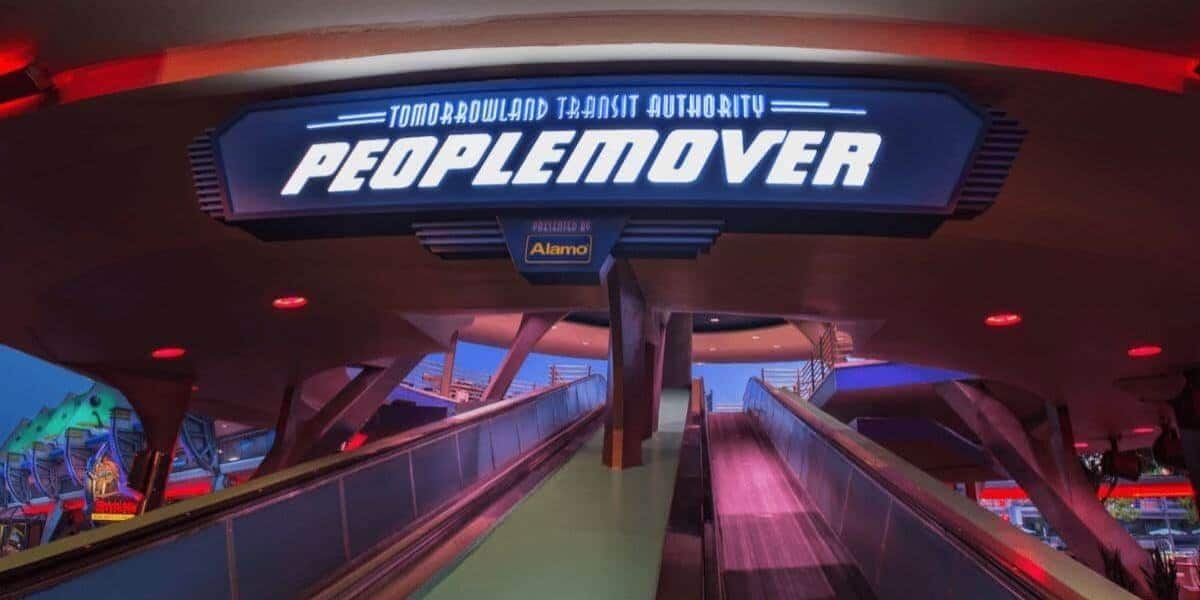
The discarded plans reportedly included a structural fix for these tracks, potentially involving a new ride system or the complete removal of the tracks to open up the land’s walkways. By rejecting the revitalization, Disney effectively decided to let the “dead tracks” remain, prioritizing budget preservation over the removal of a significant visual and operational blight.
Conclusion: A Discarded Future for Disney Vacations
The news that the Tomorrowland revitalization was shelved during the Chapek era is a sobering reminder of the current state of theme park economics. In an era where the Disney Cruise Line is the company’s new favorite child and “New Attendance” is the only metric that matters, the “Original Tomorrow” is being left behind.

For now, the future remains a relic of the past. Imagineers have the blueprints, and the fans have the desire, but until Disney leadership believes that “guest satisfaction” is as valuable as “new attendance,” the PeopleMover tracks will remain empty. Tomorrowland will continue to wait for its great, big, beautiful tomorrow.
Do you think Disney is making a mistake by prioritizing new attractions and cruise ships over fixing the “broken” parts of its legacy parks? Let us know your thoughts in the comments below.
The post The Discarded Future: Why Disney Scrapped a Billion-Dollar Tomorrowland Revitalization Plan appeared first on Inside the Magic.