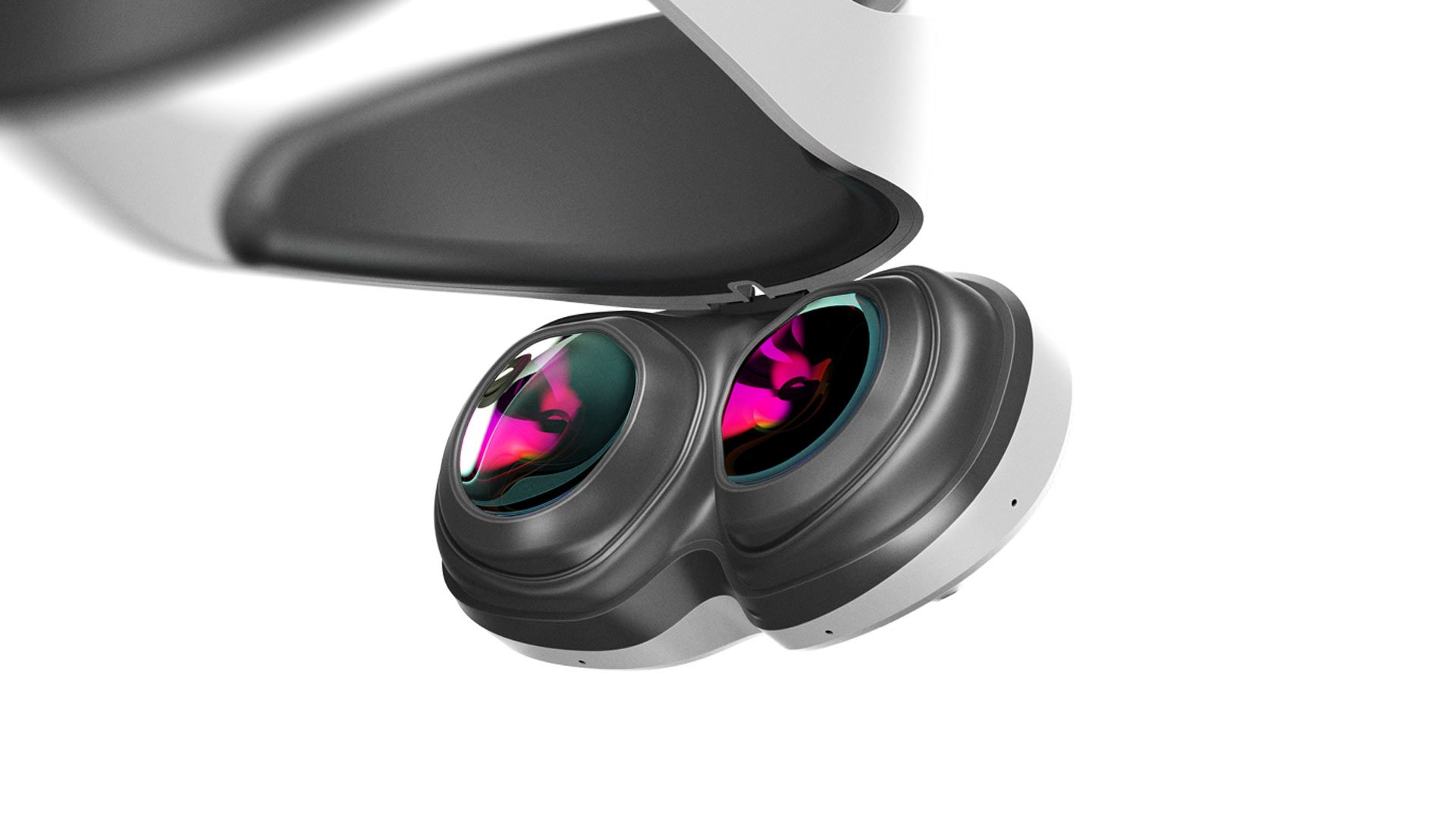
The issue on Magic Leap is not the firmware itself, the problem happens before that. The HMD has a bootloader that is sort of like a TPM module on PC mainboards, a dedicated crypto processor with a random number generator and a unique private key burned into it during production. On Magic Leap this also seems to be able to do a simple online authentication, with the access data also burned in during production.
There are different ways to implement TPM, and on PCs you can disable it to boot unsigned operating systems, it is up to each OS to use the key in the TPM to encrypt data, so nobody can access it unless the system was booted with TPM. But on Magic Leap One that crypto module cannot be disabled and basically refuses to boot the firmware in the first place. So even replacing the firmware manually with a USB EEPROM/Flash BIOS programmer like you can do if you borked up a BIOS updated on your PC won't help. You'd basically have to replace the TPM-like module and reimplement the boot loader that then calls the firmware plus all the functions. And to keep using an existing HMD, you'd need to extract the burned in private key to allow decrypting existing OS/data storage.
TPM exists as dedicated chips or functions as part of CPUs, and the latter can be sort of updated. This doesn't work for the chip solution, which also means that any bugs in the TPM implementation cannot be fixed. And of course, both implementation and design flaws have been found. That is also the best chance to get Magic Leap One to run again, and some time ago someone managed to get the TX2 bootloader of the Nvidia Jetson used on Magic Leap one to execute arbitrary code by exploiting a known vulnerability. So there might be a chance to get the HMD working again without replacing chips on the hardware itself, but it may be still a long way for the above mentioned reasons.
I mostly hope for legislation to force manufacturers to open their unsupported devices, as we have seen more and more devices requiring cloud access just die once services are stopped, leaving consumers in the dust. It would be nice if the consumer's themselves would avoid these devices, but this often means accepting higher costs and reduced convenience compared to the solutions large companies offer. You can make your home "smart" using only open software, but you have to invest a lot more time. Or you can just use Google Home devices, and then had to replace your Nest thermostats after they dropped support.
Having Valve as an alternative is great, but they are a tiny company with an estimated value of USD 16B, compared to Meta (> USD 1.5T), Google (> USD 3.5T), Microsoft (> USD 3.5T) or Apple (> USD 4). Meta spent USD 17.7B on MRL just in 2024, based on USD 165B in revenue mostly from Facebook and Instagram ads, resulting in earnings > USD 80B. And the Steam Deck brought the Linux use on Steam a record 3%, but Windows still holds 95%.
And while Steam generated USD ~16B revenue/USD ~4B earnings in 2025, Microsoft's much younger Game Pass also hit a new height with USD 5B revenue, so even a falling/failing Xbox business won't stop them. Which is why I really hope for government bodies to start raining into the currently very uncontrolled behavior of a few trillion dollar companies positioning themselves in central positions of our daily lives, and trying to keep others out by using proprietary solutions and licenses instead of making things interoperable or user fixable.
Espace publicitaire · 300×250