Legislation proposing to return air traffic around Reagan National Airport to how it was handled before the devastating midair collision angered the National Transportation Safety Board Wednesday.
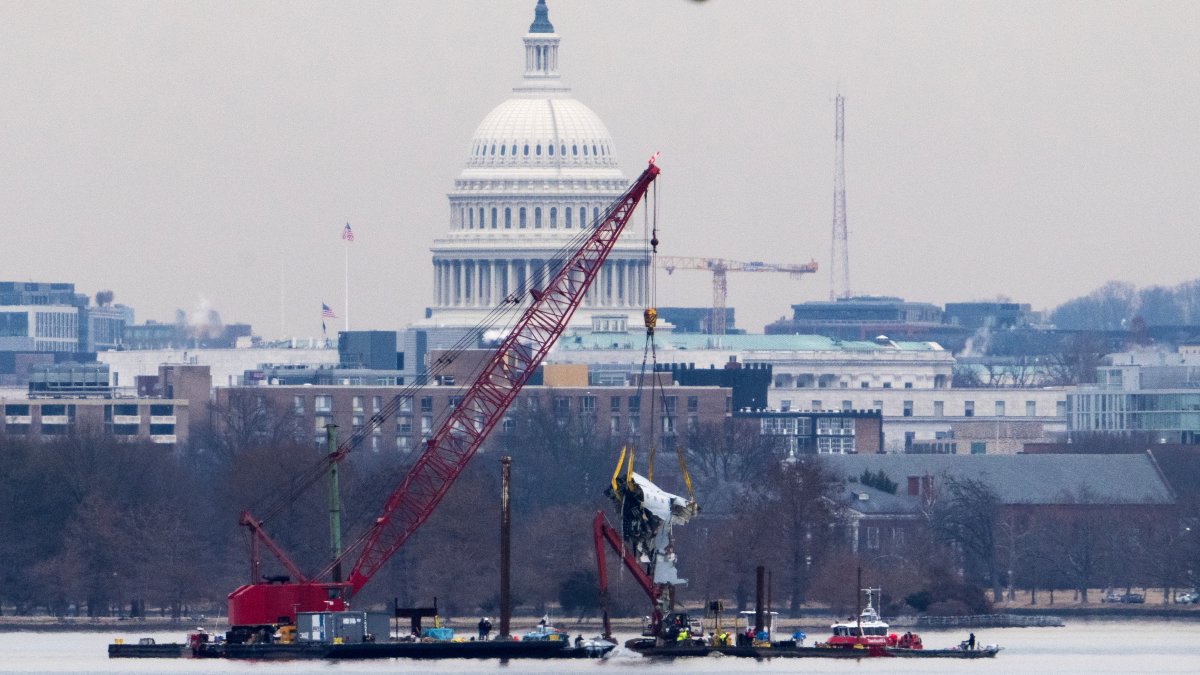
The government restricted air traffic around DCA following the collision of a Black Hawk military helicopter with an American Airlines flight in the air above the Potomac River in January. Sixty-seven people died.
The National Defense Authorization Act passed by the U.S. House of Representatives Wednesday is a 3,000-page bill that includes language relaxing those restrictions and returning planes and helicopters to mixing closely around the airport as they did before the crash.
NTSB Chair Jennifer Homendy fumed as she reacted to the proposed legislation Wednesday afternoon.
“I want to be very clear that it does not in any way enhance safety,” she said. “In fact, it reverses safety changes made after the midair collision.”
“This is a significant, significant safety setback,” Homendy said. “It represents an unacceptable risk to the flying public, to commercial and military aircraft crews, and to the residents in the region.
“It’s also an unthinkable dismissal of our investigation and of 67 families – 67 families – who lost loved ones in a tragedy that was entirely preventable. This is shameful.”
“If it sounds like I’m mad, I am mad,” Homendy said. “This is shameful!”
The legislation would have to pass the Senate and be signed by the president. It could be altered along the way.
D.C. Mayor Muriel Bowser released a statement opposing the bill.
“I am deeply concerned about the provision included in the NDAA which would allow military departments to authorize training missions in DC’s already crowded and complex airspace,” she said in the statement. “Following the tragic crash over the Potomac River in January, federal agencies including the National Transportation Safety Board (NTSB) and the U.S. Department of Transportation issued urgent safety recommendations and implemented measures to protect everyone flying to and from our nation’s capital. This provision disregards those efforts and reverses the progress we’ve made.
“It is now clear that this provision was included without consultation from the NTSB, the agency leading the investigation into the crash, and without regard for the safety of DC residents, visitors, and our military personnel,” Bowser said.
How the fatal midair collision happened
American Airlines Flight 5342 from Wichita, Kansas, was carrying 60 passengers and four crew members as it approached to land on a clear night at Ronald Reagan National Airport. Nearby, the Army Black Hawk, with three soldiers on board, was practicing emergency evacuation routes that would be used to ferry out key government officials in an emergency.
Investigators have said the helicopter crew was wearing night-vision goggles that would have limited their peripheral vision.
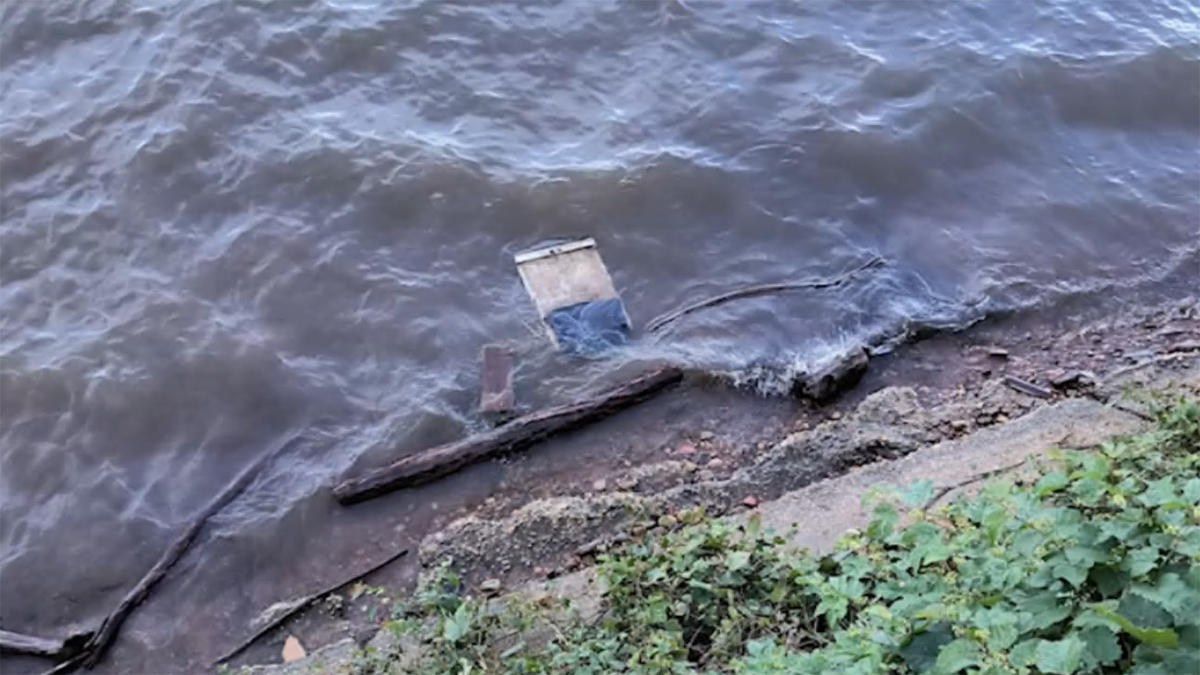
A few minutes before the twin-engine jet was to land, air traffic controllers asked if it could use a shorter runway. The pilots agreed, and flight-tracking sites show the plane turned to adjust its approach. The FAA has since permanently banned that particular helicopter route when planes are using that runway.
Shortly before the collision, a controller got an alert saying the plane and Black Hawk were converging and asked the helicopter if it had the jet in sight. The military pilot said yes and asked for “visual separation” with the jet for a second time, allowing it to fly closer than if the pilots couldn’t see the plane.
Controllers approved the request roughly 20 seconds before the collision.
The NTSB has said there were 85 dangerous close calls between planes and helicopters near Reagan National in the three years before the crash, and collision alarms had been ordering pilots to take evasive action at least once a month since 2011.