Chicago-born Pope Leo XIV, a registered voter in Illinois, has voted by mail ahead of midterm elections on Nov. 3, the Chicago Sun-Times reported. The Vatican on Friday confirmed he has submitted his mail ballot in Illinois. The Vatican also confirmed that the pope “exercised his right to vote whenever he was eligible to do so,” including when he lived in Peru.
Is voting by mail legal? How does it work?
Yes, it’s legal.
Any Illinois registered voter can vote by mail, said the Illinois State Board of Elections. And U.S. citizens who are overseas have the right to vote by mail with a law called UOCAVA, The Uniformed and Overseas Citizens Absentee Voting Act. The law is mostly for the military, but it’s also for U.S. citizens who are overseas.
Until 2010, Illinois voters had to have an excuse to get what was then called an “absentee ballot.”
Now, “any Illinois registered voter can vote by mail,” said Matt Dietrich, spokesperson for the Illinois State Board of Elections.
Is it too late to vote by mail in Illinois’ midterm election?
Not if you applied by Oct. 29 to do so. Mail ballots postmarked by Election Day will be counted by Illinois election authorities as long as they're received within two weeks (by Nov. 17). But the deadline to apply for a mail ballot has passed; that window was open from Aug. 5 until Oct. 29. Otherwise, you'll either have to head to an early voting site or to your local precinct Nov. 3.
Pope Leo, registered as Robert Francis Prevost in New Lenox, made his request Oct. 3, the Will County clerk’s office said.
Has President Donald Trump tried to restrict voting by mail?
Yes. But in Illinois, it’s “business as usual,” for voting by mail, Cook County Clerk Monica Gordon said in August.
Nothing has changed with the state’s mail ballot plan, even though legal challenges abound, the Illinois State Board of Elections said in August.
Through an executive order, legal challenges and efforts in Congress, Trump has tried to cast doubt on and restrict mail ballots, which he has falsely blamed for his 2020 election loss.
Despite his fight against mail-in voting Trump voted by mail again in Florida’s Republican primary. He also voted by mail in a special election in Palm Beach County this year.
In September, the U.S. Supreme Court blocked Trump’s attempt to use the U.S. Postal Service to restrict mail voting, said the Voting Rights Lab.
The decision means that all 50 states can continue to use their existing processes for mail voting, according to the ACLU.
When do mail-in ballots need to be returned?
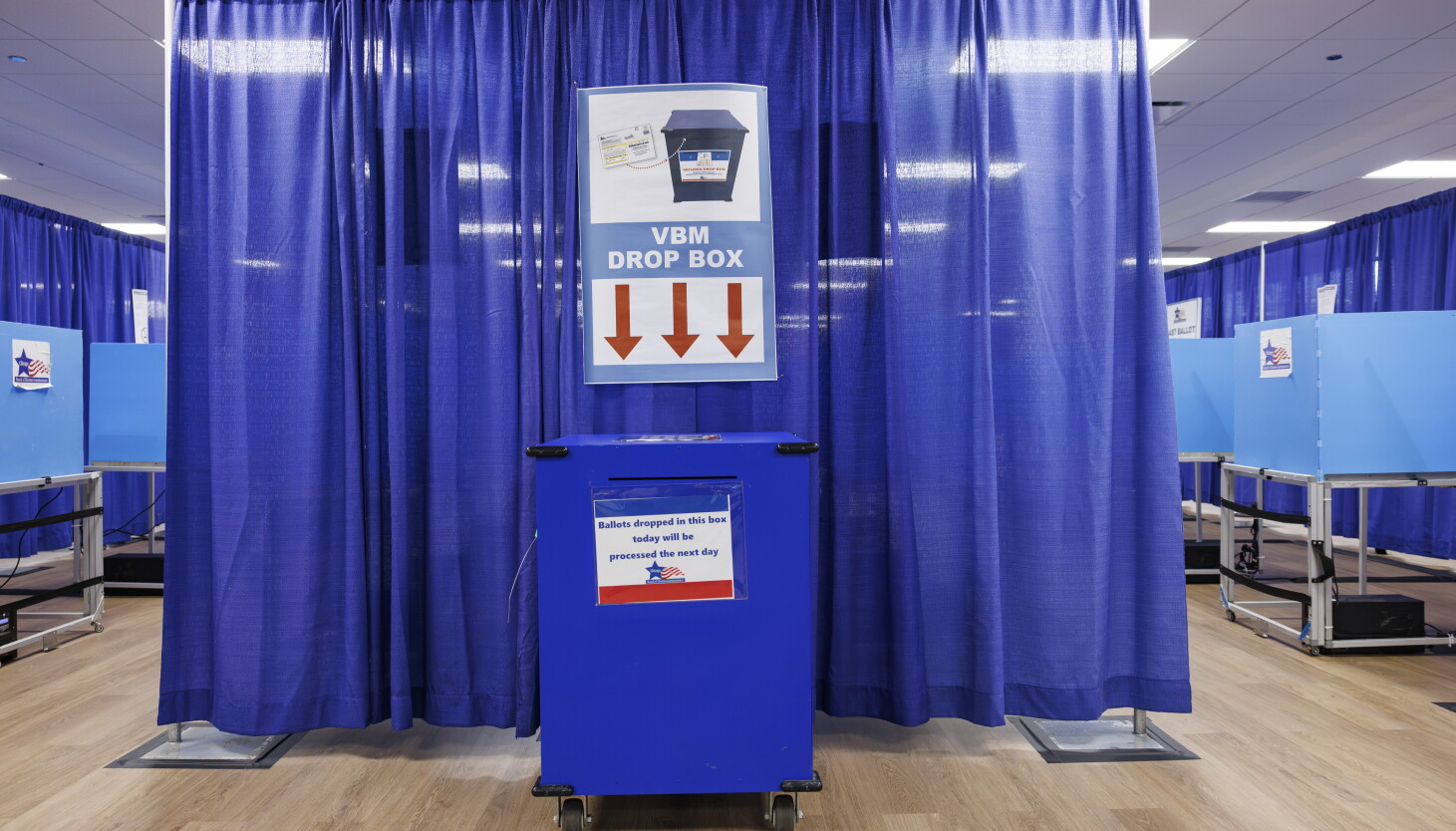
Mailed ballots must be postmarked no later than Election Day and received within 14 days of Election Day. Voters mailing their ballots close to Election Day can request a manual postmark at the post office. Voters may also submit their ballots at drop boxes before polls close on Election Day.
A voter may authorize any person to return their ballot if they signed an affidavit on the envelope affirming they gave permission to deliver the ballot, said the Illinois State Board of Elections.
For future reference, how do you apply to vote by mail?
You can find applications online at the Illinois State Board of Elections website and in person from election authorities.
What if I got a mail-in ballot but want to vote in person instead?
You must bring your mail-in ballot to your polling place and turn it over to cast an in-person ballot instead, Sun-Times said in its how-to-vote explainer.
Has voting by mail increased in the U.S.?
Yes. Nationwide, the trend has grown over the past decade, especially during the COVID-19 pandemic.
In November 2016, 23.7% of the votes in that election were cast by mail, according to the Election Administration and Voting Survey.
By the November 2020 election, 43% of voters participated by absentee/mail ballot, according to EAVS estimates. In the 2024 election, mail voting accounted for 30.3% of turnout.
More states are allowing no-excuse absentee voting. Idaho was the first state to allow it in 1970, said the National Conference of State Legislatures. The practice lets voters vote by absentee ballot even if they can vote in person on Election Day.
In 2016, 30 states had no-excuse absentee voting or all-mail elections. That increased to 37 states this year.