It wasn’t the best year for Mets minor league hitters, but there were still a handful of standouts. Let’s take a look at which ones improved their standing the most over the course of the season.
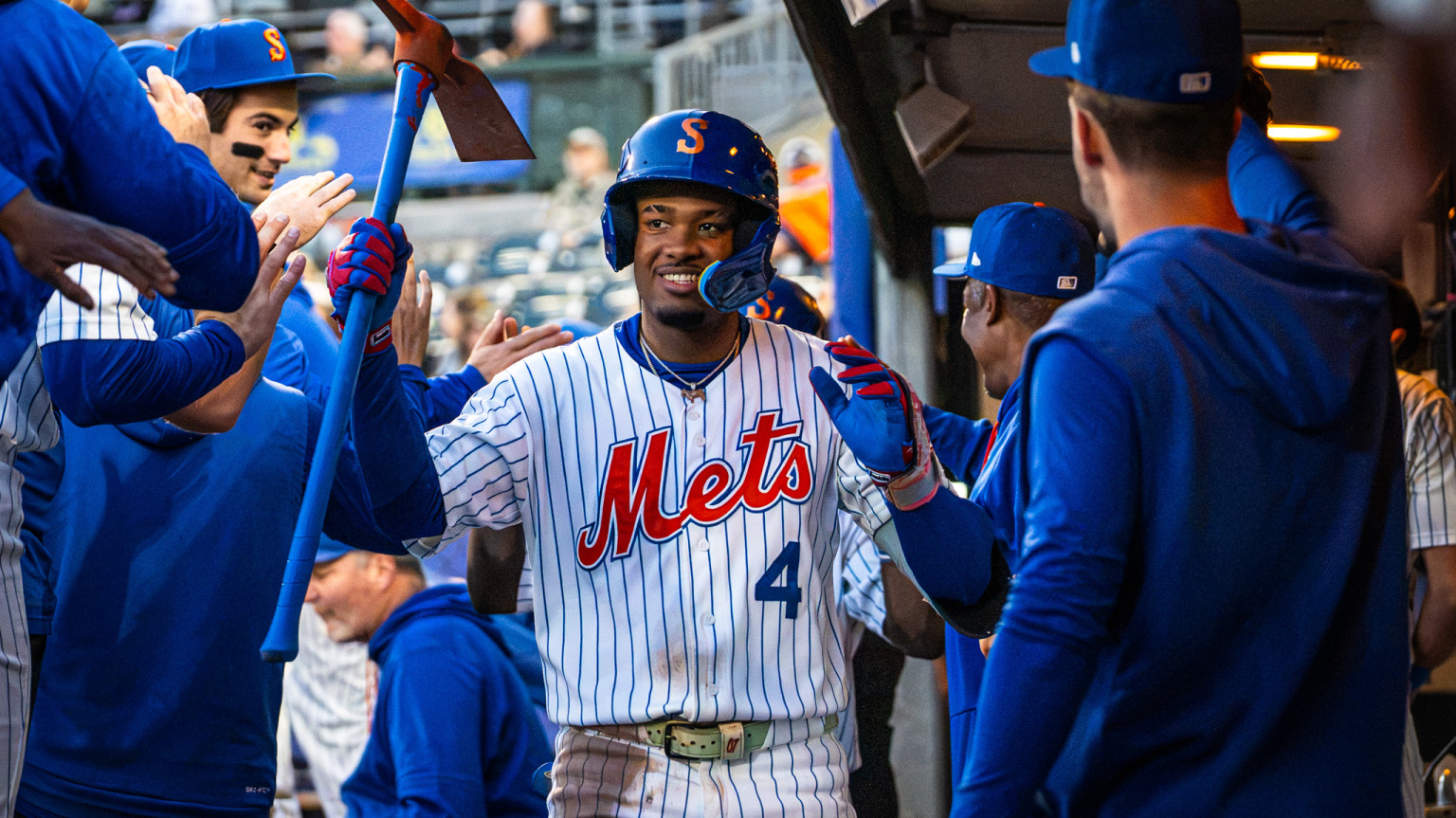
Jefferson Rojas. Photo Credit: Syracuse Mets
Jefferson Rojas
Jefferson Rojas‘ stock was already high. When he was acquired by the Mets at the trade deadline, he instantly became the organization’s No. 1 prospect. He was a Top 100 guy before, and he remained one after the trade. But his stock still rose because of two main reasons: Play and opportunity.
The first one is very simple: he played great. He was good with the Knoxville Smokies but took it to another level in Binghamton, putting up a .929 OPS in 29 games. He got a last-week promotion to Triple-A and hit three homers in six games to finish out the year. Recently, he had a two-homer game in the Arizona Fall League. He’s done nothing but hit since he joined the Mets.
The other one is more situational, and it’s not related to anything he specifically did. With the Cubs, Rojas had no path to playing time. Second base was blocked by Nico Hoerner, who begins a 6-year, $141 million extension in 2027. Third base was blocked by Alex Bregman, who has four years remaining on a 5-year, $175 million contract. Shortstop was blocked by Dansby Swanson, who has three years remaining on a 7-year, $177 million contract.
Rojas should make his MLB debut next year, and he’s a good enough prospect to warrant everyday playing time when he does come up. He would not have that opportunity in Chicago. While Bo Bichette‘s future is still up in the air and the Mets have Marcus Semien under contract for two more seasons, there is a much easier path to playing time. Bichette, worst case, won’t be there past 2028, and the Mets might just cut their losses with Semien and eat the money starting as early as next season. Semien being the placeholder until the organization feels Rojas is ready is a real possibility.
Émilien Pitre
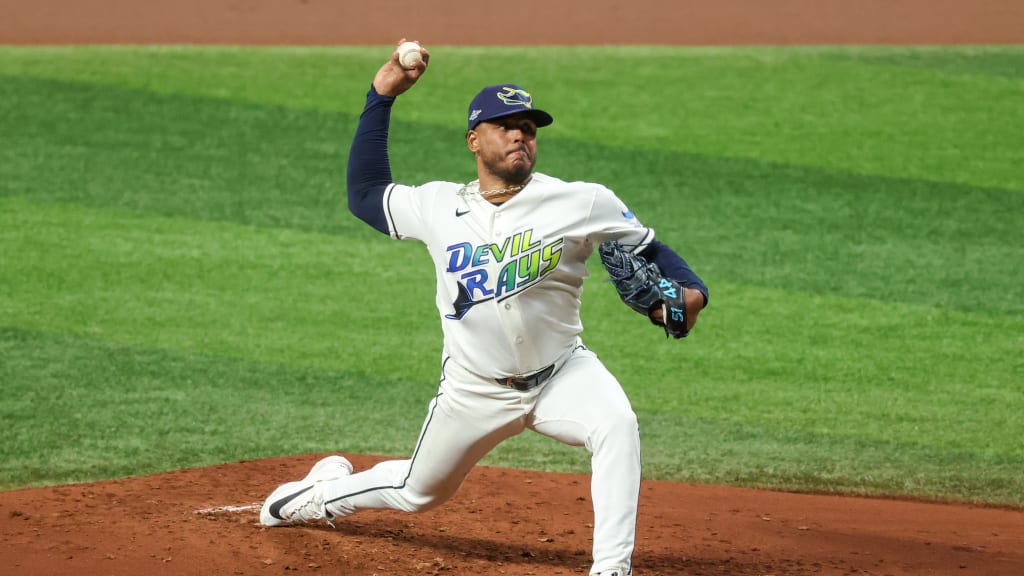
For Émilien Pitre, most of his stock boosting came before he joined the Mets at the trade deadline. Pitre had a big year with the Rays, posting a 128 wRC+ in 51 games in High-A and a 155 wRC+ in 37 games in Double-A before being shipped off in the Freddy Peralta deal. He did a lot of things well, but what stood out the most was his strikeout-to-walk ratio. Pitre struck out just 40 times and walked 70 times in 384 plate appearances. The ratio slipped a bit with the Mets, but it was a very limited sample size and he still produced anyway.
Pitre entered the year as a borderline top 30 prospect in the Rays system. It’s a good system, but he still struggled to stand out from the pack nonetheless. That changed in 2026. Now, he’s positioned himself to make a big league impact as soon as 2027. He finished his 2026 season with a few weeks at Triple-A and will likely return there to begin next season, where he will be infield depth for the MLB squad. An option at second, third and probably short right now, I’m curious if the Mets expose him to other positions like first base or the corner outfield with an eye on him being the team’s future utility man. There’s a path here for Pitre to a real role with the Mets in the not-so-distant future.
Corey Collins
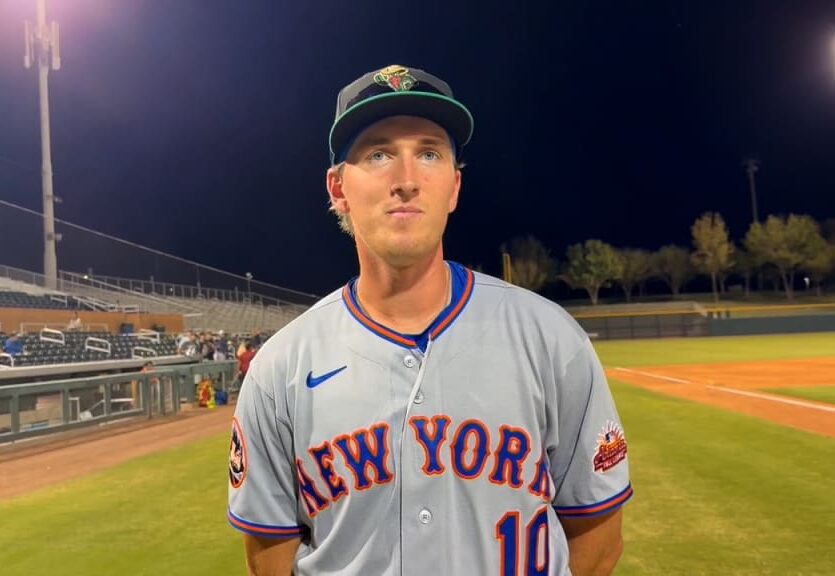
Corey Collins had a rough 2025 season. He was solid as a 23-year-old in Single-A, and he struggled mightily once he got to High-A Brooklyn. Many left-handed hitters struggle in the Coney Island environment, and Collins was no exception. He returned there to start 2026, and while there were some early struggles, he figured it out as the weather heated up. He earned a mid-season promotion to Double-A and really took off, finishing with a 139 wRC+in 43 games at the level.
He’s not a perfect player. His strikeout rate, while improved, is still too high. He also didn’t hit for as much power as you’d want for a first baseman, though some of that can be attributed to playing in Brooklyn. But he gets on base, and with Ryan Clifford‘s struggles, Collins has a case for the top first base prospect in the Mets’ system. Is he the answer at the big league level? Who knows. But he took a huge step forward in 2026 and now at least has a case.
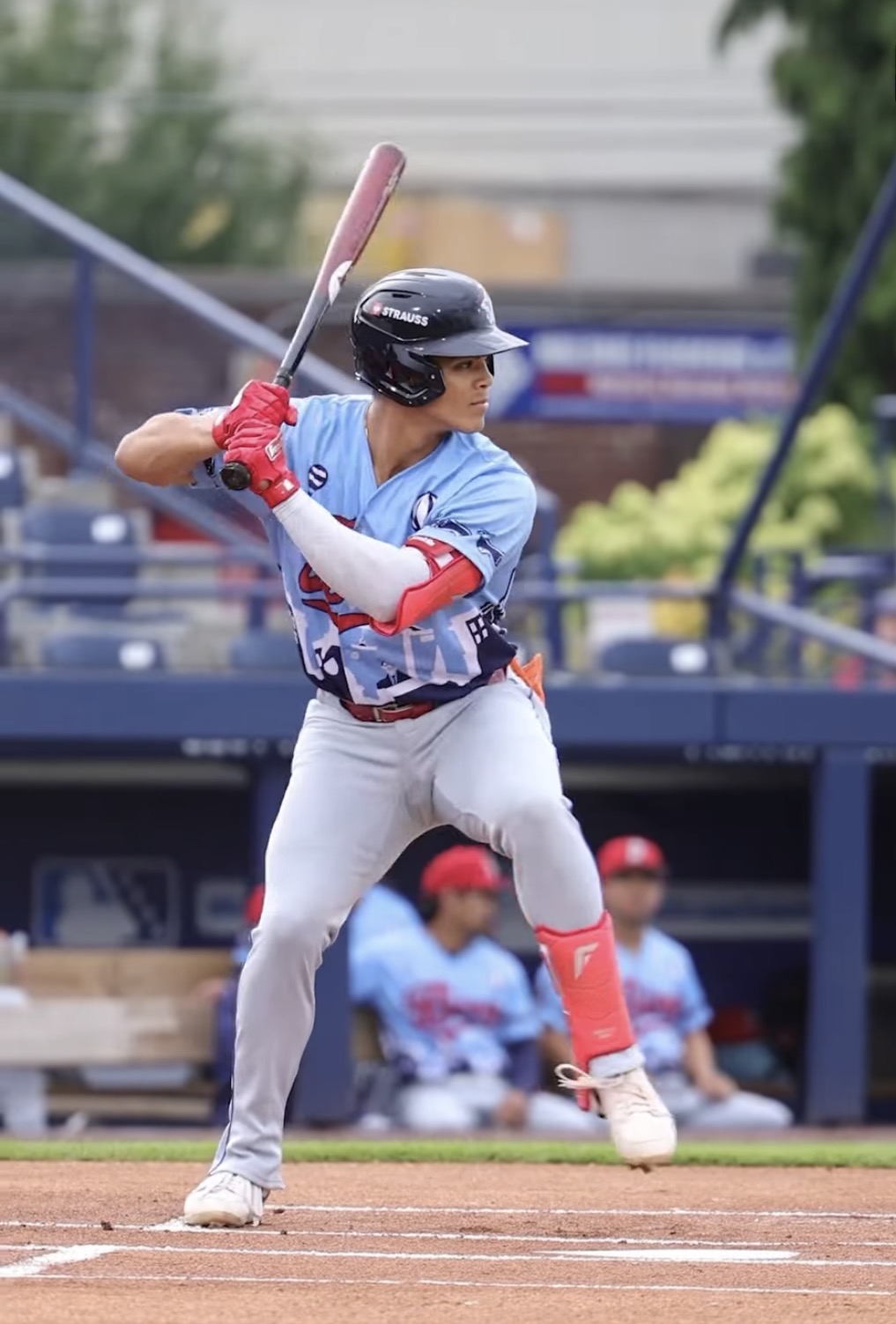
Mitch Voit – Rumbleponies IG video
Mitch Voit
The Mets’ first-round pick in 2025, Mitch Voit had a nice first full season in the big leagues. Similar to Collins, he was so-so in Brooklyn where he spent most of his season, but he exploded when he got to Double-A. In 29 games for the Rumble Ponies, Voit hit .347/.430/.517/.947 with two homers, one triple and 12 doubles. It was a really impressive showing in the stretch run for the young infielder, and a good look at the type of contributor he can be when at his best.
Voit can hit the ball hard, and might grow into 20-homer power at the big league level one day, but that’s not his best trait. He’s an athlete. He plays great defense up the middle, is a fast and good baserunner, and gets on base so he can put his speed to use. He was drafted as a second baseman, but played there in his final year at college mainly because it was a shorter throw for him in his first year back from elbow surgery. He played almost three times as many games at shortstop this year as he did at second base, and he looked like he could more than handle the position. A future of Voit at second base and Rojas at third base is very easy to see, with one of them potentially succeeding Fransico Lindor at shortstop eventually.
Marco Vargas
Acquired at the 2023 trade deadline as part of the return for David Robertson, Marco Vargas had a difficult first two full seasons in the orange and blue. He spent all of 2024 with Single-A St. Lucie—much of it injured—and didn’t hit much. He figured out the level quickly in 2025 and was promoted to High-A Brooklyn, but struggled mightily for the 95 games he spent there. He spent most of 2026 at Double-A, and while he only played 53 games due to injury, he had an OPS of .770 when he was in the lineup.
His strikeout rate was entirely too high, especially for a player who hits for as little power as he does. Still, it was a big overall improvement for Vargas offensively, and he’s such a good defender up the middle that he doesn’t even need to be a great hitter to be a big leaguer. He just needs to be good enough to get by, and then his glove will do the rest. He’s also still just 21 years old, so he has time to continue developing.

The post 5 Mets Hitting Prospects Whose Stock Rose Most in 2026 appeared first on Metsmerized.