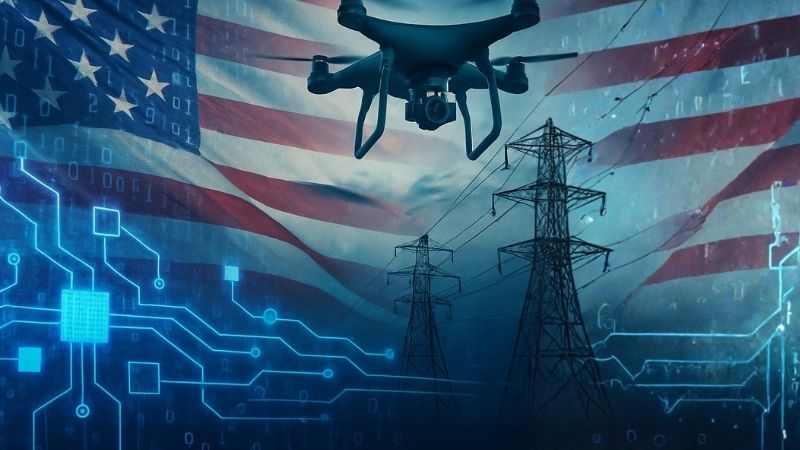

Every day, Americans rely on critical infrastructure to power our daily lives whether we realize it or not. From the energy that heats our homes and keeps the lights on, to the water that we drink, our schools and our hospitals, critical infrastructure is the foundation on which America has built generations of greatness. Criminal gangs, rogue nation states, malicious cyber activity and natural disasters are impacting our critical infrastructure and the people and communities who rely on them because of the ability to disrupt, disable, and destroy at large scale. The protection of our critical infrastructure is a vital mission, and a shared responsibility, which is why the Cybersecurity and Infrastructure Security Agency (CISA) was created seven years ago this month.
At CISA, our goal is to make our nation’s most critical infrastructure secure, resilient, and able to respond quickly and build back stronger when disruptions occur. Protecting critical infrastructure is, fundamentally, about protecting the American people and our way of life. It’s about ensuring the daily functions of our country remain safe, reliable, and resilient, no matter what challenges emerge. It’s about recognizing that attacks will happen, and while preparation and defense will always be a priority, it’s our resilience that will
protect lives and jobs, keep communities connected, reduce economic disruptions to supply chains, and encourage innovative solutions to reduce harm to our national security.
Taking Action to Secure America
November is National Critical Infrastructure Security and Resilience (CISR) Month and a reminder that securing these systems is a job that requires all of us, from federal, state and local governments and private sector partners to critical infrastructure owners and operators, to come together in a shared mission. In the grand tradition of the invincible spirit that has defined us as a nation for the past 250 years, we must take action, together, for a more secure America.
America’s greatest strengths can double as points of vulnerability. Power grids, ports, pipelines, airports, financial networks and communications systems are increasingly connected, digitally driven and globally exposed. This interdependence allows us to live, work, and travel in ways that were unimaginable a generation ago, but it also means disruption in one system can cascade across the many that intertwine with our daily lives. A single ransomware attack can delay medical appointments nationwide; a GPS signal disruption can affect trains, trucks and cargo ships thousands of miles apart; and a small drone hovering above a stadium can threaten tens of thousands of fans.
During major national sporting events, from the World Series in Los Angeles to the FIFA Club Cup soccer matches this past summer, CISA coordinated with the FBI, Secret Service and local authorities to secure venues, protect networks, and detect threats before they became attacks. Behind the scenes, analysts and operators have helped strengthen critical communications networks and safeguarded emergency response systems, ensuring that fans could focus on the game safely and securely.
During wildfires and storms, CISA’s collaboration with utilities to strengthen resilience and to rapidly restore services has kept families connected when they need it most. These are just a few of the examples that highlight how the federal government, when aligned with private sector partners and local operators, is delivering tangible protection for the American people.
New Domains for Critical Infrastructure:
As the threat landscape evolves, two new domains have come to define the next era of infrastructure security: orbital space and low-altitude airspace.
New Airspace Challenges: Countering Drones and unmanned aircraft systems (UAS), or drones, have transformed industries from agriculture to logistics. But they have also become tools for surveillance, contraband delivery, and potential attacks. Stadiums, airports, energy facilities and even mass gatherings have seen unauthorized drone incursions, sometimes by well-meaning hobbyists and sometimes by suspected threat-actors with malicious intent.
Recognizing this emerging risk, CISA is working with its partners to build playbooks – essentially repeatable frameworks – that help integrate counter-UAS detection technologies and joint response protocols, connecting local law enforcement, first responders, stadium operators and federal agencies for maximum security and resilience.
America has a lot to look forward to in 2026, from the FIFA World Cup matches to events celebrating America’s 250th anniversary, and CISA is acting with a singular goal in mind: to keep people safe, whether they’re an athlete on the field, a fan sitting in a stadium seat or an expert working behind the scenes to make the event possible.
Space Imperative: Protecting the Systems Above Us
Space systems and the networks they support underpin nearly every aspect of our daily life. Financial transactions rely on precises timing signals from satellites. Emergency responders depend on satellite communications during disasters. Farmers, truckers, and pilots navigate using global positioning signals every second of every day.
This growing dependence means that space is no longer a distant frontier, it is part of our vast network of critical infrastructure, impacting telecommunications, information technology and many other sectors. At CISA, the security of space systems is a major priority, and efforts are underway to strengthen the resilience of ground stations, diversity sources of positioning and timing data, and protect commercial satellite operations from interference and cyber-attacks.
National Events and National Responsibility:
Major events like the Super Bowl, the 2026 FIFA World Cup and America’s 250th birthday celebrations are more than cultural and sporting milestones. They are operational tests of the nation’s preparedness, high-visibility moments where the safety of the public and credibility of our systems are on display for the world to see.
CISA’s experience supporting Super Bowls, Presidential inaugurations and large-scale disasters recovery operations gives the Agency a unique view on what “security at scale” really means. It’s not about locking everything down, it’s about preparation, response, and recovery. Ahead of these major events, CISA is:
- Conducting joint security assessments with local law enforcement, stadium operators and international partners.
- Deploying mobile detection and communications teams to help host cities test counter-UAS systems and emergency communications before play begins.
- Training operators and planners on how to integrate federal support and intelligence feeds into real-time decision-making.
- Conducting national level exercises that simulate multi-domain disruptions, to include cyber incidents, airspace incursions and GPS interference.
Each of these actions builds our resilience and hones our ability to respond together, faster and with more precise coordination at all levels of government.
Critical Infrastructure Protection Moving Forward:
The same systems that protect major events protect Americans and their daily lives. When a parent texts a schoolteacher, a network must stay online to deliver that message. When a hospital orders medication or a surgical procedure, logistics chains must move uninterrupted. When a family turns on the heat during a cold snap, the grid must hold steady and respond with warmth.
CISA’s partnerships extend beyond high-profile operations to the thousands of small utilities, rural water systems and local governments that keep these systems running. As we make our way through National Critical Infrastructure Security Awareness Month, we must coordinate effectively and build our capabilities. To protect the American people, CISA calls on its partners to:
- Know Your Infrastructure and Dependencies. Organizations should identify their most critical systems and assets for their operations and understand potential dependencies on other infrastructure systems and assets that enable the continuity of their own operations.
- Assess Your Risks. Consider the full range of threats and hazards that could disrupt your organization’s infrastructure operations and evaluate specific vulnerabilities and consequences the threats and hazards could pose.
- Make Actionable Plans. Organizations should develop both a strategic risk management plan to reduce the risks and vulnerabilities identified and an actionable incident response and recovery plan to help withstand and rapidly restore operations within minimal downtime.
- Measure Progress to Continuously Improve. Exercise incident response and recovery plans under realistic conditions and periodically evaluate and update strategic plans. An organization’s ability to proactively prepare for and adapt to changing risk conditions starts with fostering a culture of continuous improvement, based on lessons learned from exercises and real-world incidents.
As we prepare for these momentous events in 2026, we have a rare opportunity to demonstrate to the world that security and celebration can coexist. That a free society can host global events safely without sacrificing openness or participation.
By the time we light fireworks for America’s 250th birthday, our goal should go well beyond simply securing these events. Our lasting commemoration of 250 years of the greatest nation on earth should be a stronger, more connected and more resilient nation. One that highlights trust in the partnership between government at all levels and the private sector who are working together every day to keep all Americans safe.
National Critical Infrastructure Security Resilience Month reminds us that behind every system we rely on stands a collective effort to protect it and protect the people it serves.
Steve Casapulla is the Executive Assistant Director for Infrastructure Security at CISA. He and his team are focused on protecting the nation’s critical infrastructure and ensuring resilience across sectors that underpin America’s economic and national security.