A highly contagious and potentially deadly horse virus is forcing event cancellations and quarantines across the region. The Texas Department of Agriculture is warning horse riders, owners and trainers of an aggressive strain of equine herpesvirus type 1 (EHV-1) after an outbreak was traced to a large event in Waco earlier this month.
When you visit the Fort Worth Stockyards, there are usually longhorns — and horses. But for the next week or so, the iconic animals will be missing, and the twice-daily cattle drives that they help herd, are paused.
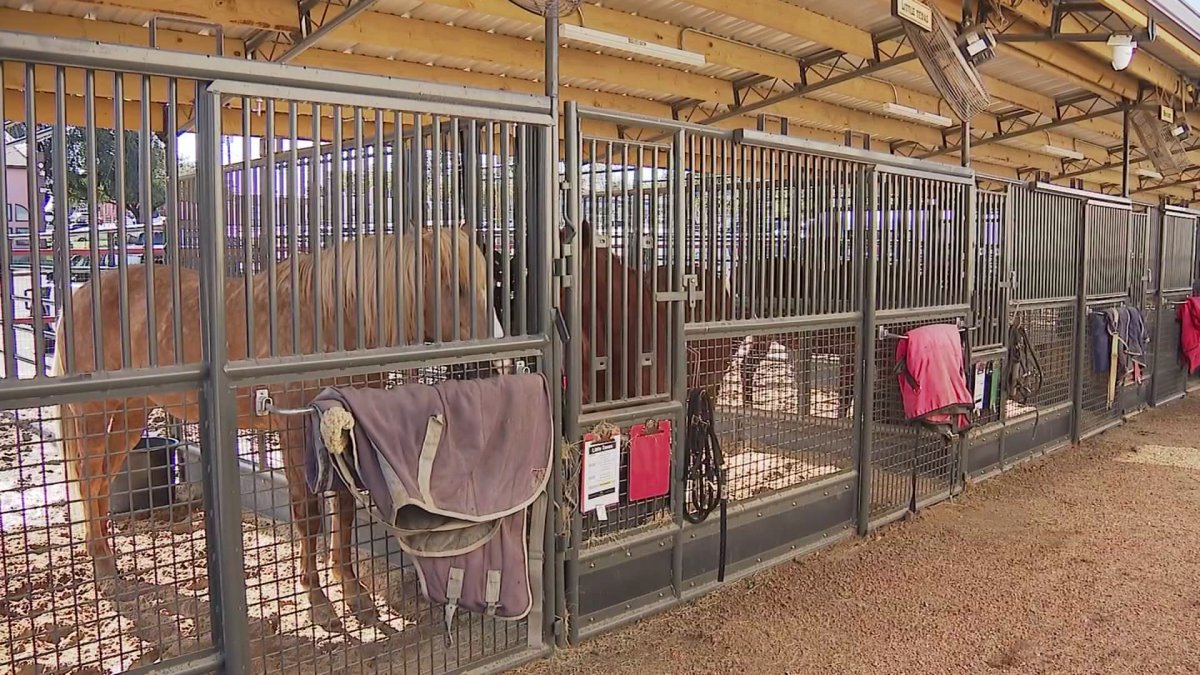
Fort Worth Herd Trail Boss Georgia Cartwright said her team is keeping horses in their stables to prevent the spread of EHV-1.
“It is not dangerous for humans, it is not dangerous for my cattle,” Cartwright said.
Still, Cartwright said the virus can be transferred by humans who come into contact with horses — and that’s a daily occurrence during the Stockyards cattle drives.
“It was a hard decision. It was a difficult decision, but I feel that we’ve made the best decision for the health of our horses,” Cartwright said.
“This virus can spread fast, it can be deadly, and the earliest signs are often so subtle they’re easy to miss,” TDA Commissioner Sid Miller said. “That’s why monitoring your horses right now is critical. The quicker we identify a potential case, the better chance we have to protect not only our animals, but the entire Texas equine community.”
The virus can cause respiratory issues, neurological damage and abortions in pregnant mares. The Equine Disease Communication Center said most cases are not fatal, and the majority of affected horses recover with treatment.
Visitors who expected to see the signature western spectacle in the Stockyards shared their disappointment.
“More of a reason to come back, just to see the cattle drive down Exchange Avenue,” said Tasheena Galmore, who was visiting Fort Worth from Mississippi.
At the Cowtown Coliseum, officials are also adjusting their lineup to ride out the outbreak safely.
“We made the decision here to pivot … and go to events that don’t require horses,” said Tim Long, general manager of Cowtown Coliseum.
Long said the 10 scheduled shows over the next two weeks will go on, just without the 100 to 300 horses that usually participate.
“Which is very difficult in the rodeo world,” Long said. “The horse is the backbone of the Western culture.”
But Long said it was necessary for the business– not just for fans but for the 100-140 people who work there.
“If we chose to cancel the events that would put all of them out of work because this is their livelihood,” he said.
He said they are filling shows with bull-riding and other events, and will reconsider in about two weeks.
Long explained that bull-riding still needs two safety horses, but they have a partner who has a small group of healthy horses that have not been outside of their farm.
Long said the owner of those horses has agreed to keep them off the road, and only use them for Coliseum events.
It’s a lot of dancing to make the often sold-out Coliseum shows go on, but it’s all to protect their herd, and their heritage.
“We know that without the horse, you don’t have rodeo, you don’t have the western lifestyle. The horses are everything to us,” Long said.
This story uses functionality that may not work in our app. Click here to open the story in your web browser.