On Wednesday, Dallas County leaders will consider taking extraordinary action.
Commissioners will review a 70-year-old murder case to right a wrong from Dallas’ segregated past.
The special meeting will focus on a resolution regarding the conviction and execution of Tommy Lee Walker, a Black man accused of raping and killing a white woman during the 1950s.
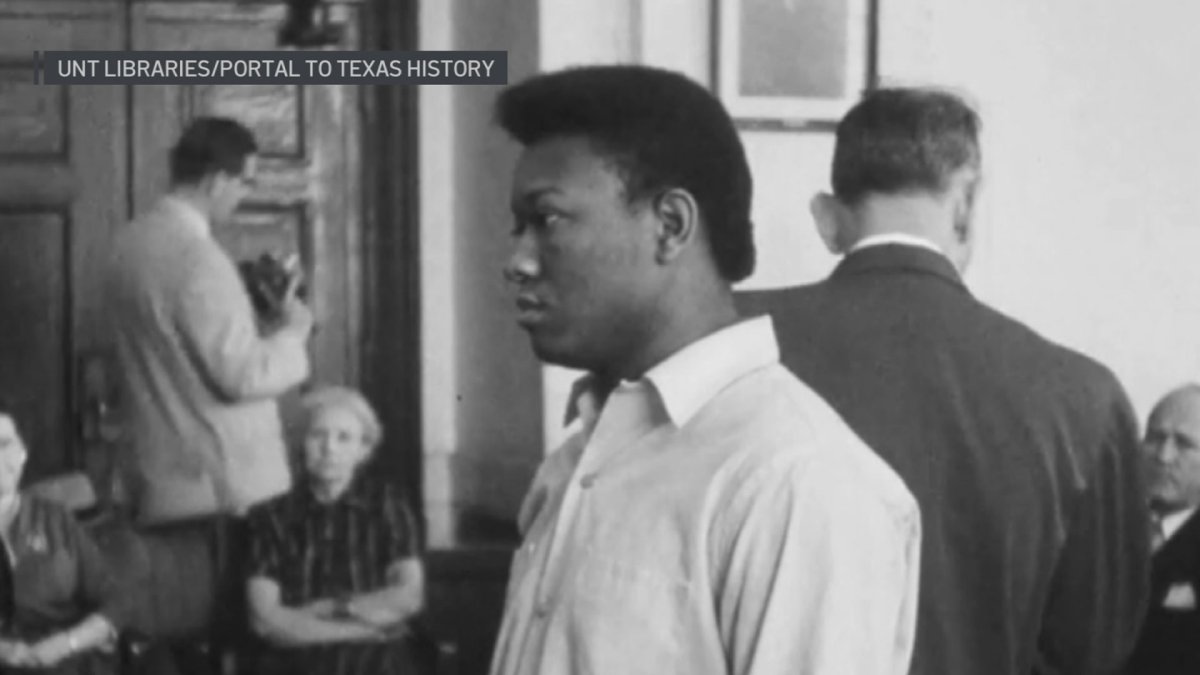
NBC 5’s archives detail how 19-year-old Tommy Lee Walker was tried and convicted in the death of Venice Parker.
The mother and store clerk were found fatally stabbed near Love Field in September 1953.
With no leads in the case, Dallas police began rounding up groups of Black men for questioning.
Walker was one.
Using what investigators would now consider a coerced confession, police charged Walker with the crime.
During the trial, multiple witnesses, including Walker’s girlfriend, testified that he was innocent. She and others said he’d been with her that night as she went into labor with their son.
Despite no ties to the crime scene and living miles away with no vehicle, Dallas County District Attorney Henry Wade convinced the all-white jury that Walker was guilty.
He was sentenced to death by electric chair.
Walker addressed the judge at his sentencing.
“I feel that I have been tricked out of my life. There’s a lot of other people that have been convicted for crime that committed and was turned loose. I haven’t did anything, and I’m not being turned loose,” Walker said.
After journalist Mary Mapes, writing for D Magazine, first investigated Walker’s case, local leaders took a look.
According to the proposed resolution, it was reviewed by the Dallas County DA’s Criminal Integrity Unit in collaboration with the Innocence Project and the Northeastern University School of Law’s Civil Rights and Restorative Justice Project.
Those findings will be presented at Wednesday’s meeting.
Then, commissioners will vote to consider a resolution declaring Tommy Lee Walker innocent and recognizing the harm caused by his conviction and execution.
For more on the Walker case you can search KXAS archives through the UNT Libraries Portal to Texas History.