Authored by Emel Akan and Andrew Moran via The Epoch Times,
Trump’s policies have influenced everything from economic growth and stock market performance to gas prices and mortgage rates.
Stock Market Performance
Since President Trump took office in January 2025, stock indexes have reached new highs.
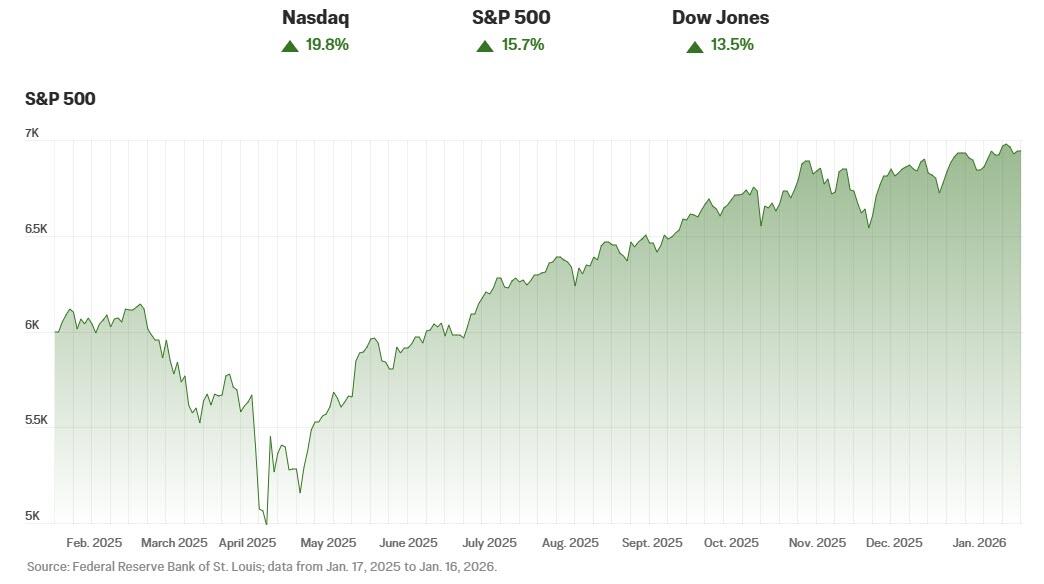
The S&P 500 Index rose nearly 16 percent through Jan. 14, compared to a 24 percent increase over the same period in Trump’s first term. In the past 12 months, the Dow Jones Industrial Average increased 13 percent and the Nasdaq gained 20 percent.
Economic Growth
After a 0.6 percent contraction in the first quarter, U.S. economic growth accelerated and exceeded economists’ expectations in 2025, avoiding a feared recession. GDP grew by 3.8 percent in Q2 and 4.3 percent in Q3—the strongest performance in two years.
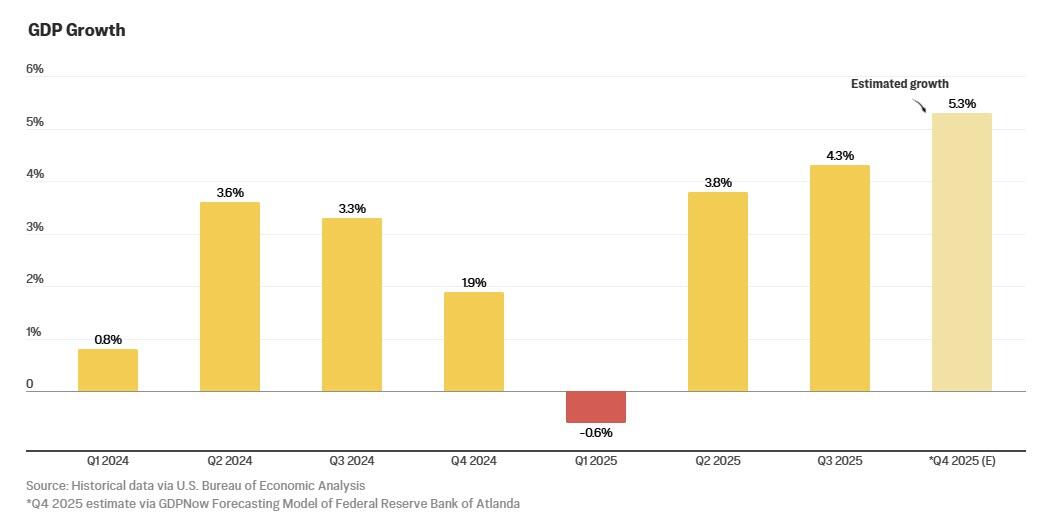
Although official data for October 2025 through December 2025 are pending, the Atlanta Federal Reserve estimates growth at around 5 percent. Treasury Secretary Scott Bessent expects 2026 to be a “gangbuster year,” with continued strong economic growth.
Inflation
Inflation reached 9.1 percent in 2022, the highest level in decades. Although consumer prices remained elevated through 2025, inflation rates were lower than those recorded during the Biden administration.
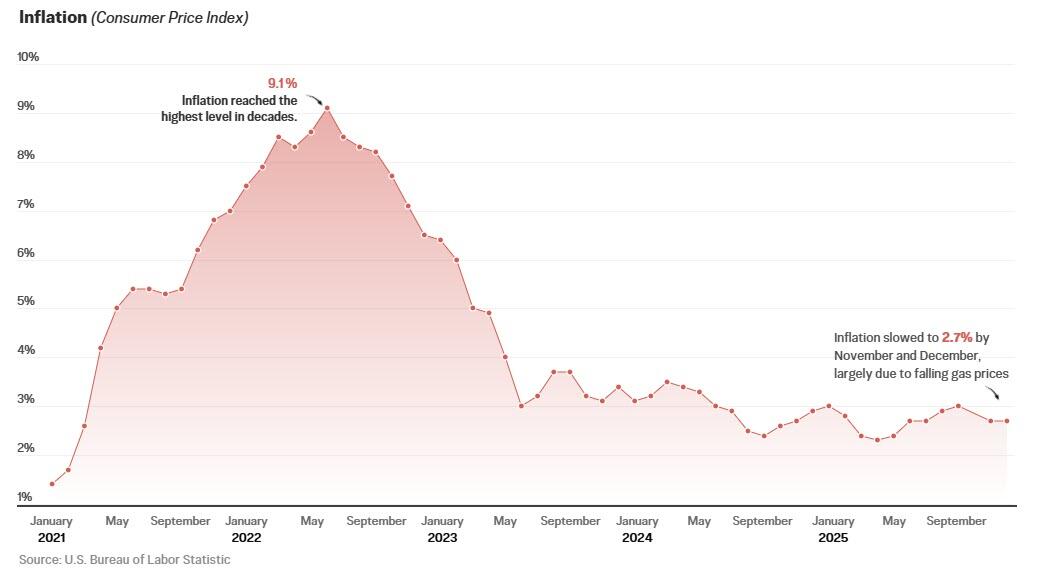
The annual rate began 2025 at 3 percent, fell to 2.3 percent in April, and rose back to 3 percent five months later. In November and December, price pressures eased, with the 12-month rate slowing sharply to 2.7 percent thanks mainly to falling gas prices.
Trade
Despite the trade deficit widening in the first three months of 2025 as businesses rushed to front-run President Donald Trump’s global tariffs, America’s monthly trade balance has improved substantially.
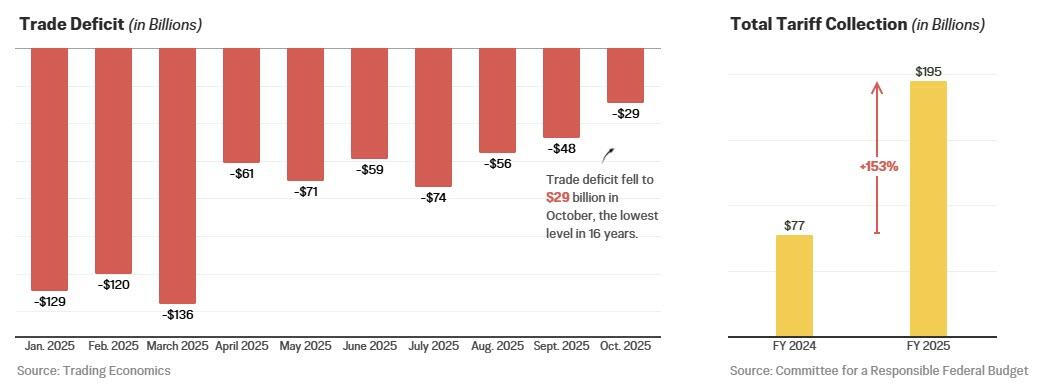
Since peaking at $136 billion, the U.S. goods and trade deficit fell to $29 billion in October—the lowest level in 16 years.
Employment
Since last summer, the U.S. labor market has been characterized by what some economists call “low fire, low hire,” with companies neither reducing nor expanding their workforce.
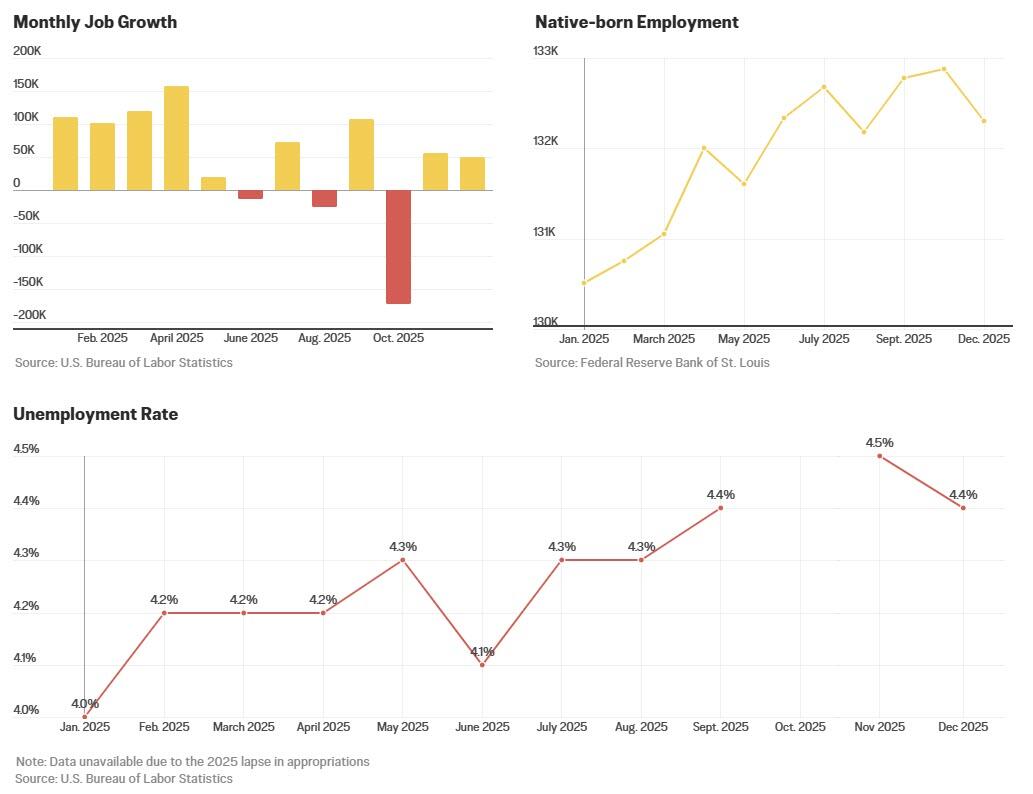
In 2025, employers added 584,000 jobs in total, averaging 49,000 per month.
However, job growth slowed as government payrolls fell by 277,000, reflecting the administration’s efforts to shrink the federal government bureaucracy and support private sector jobs.
Gas Prices
One of the major achievements of the Trump administration has been the substantial decline in gas prices. From record production to loosening regulations, businesses and consumers have seen lower energy costs.
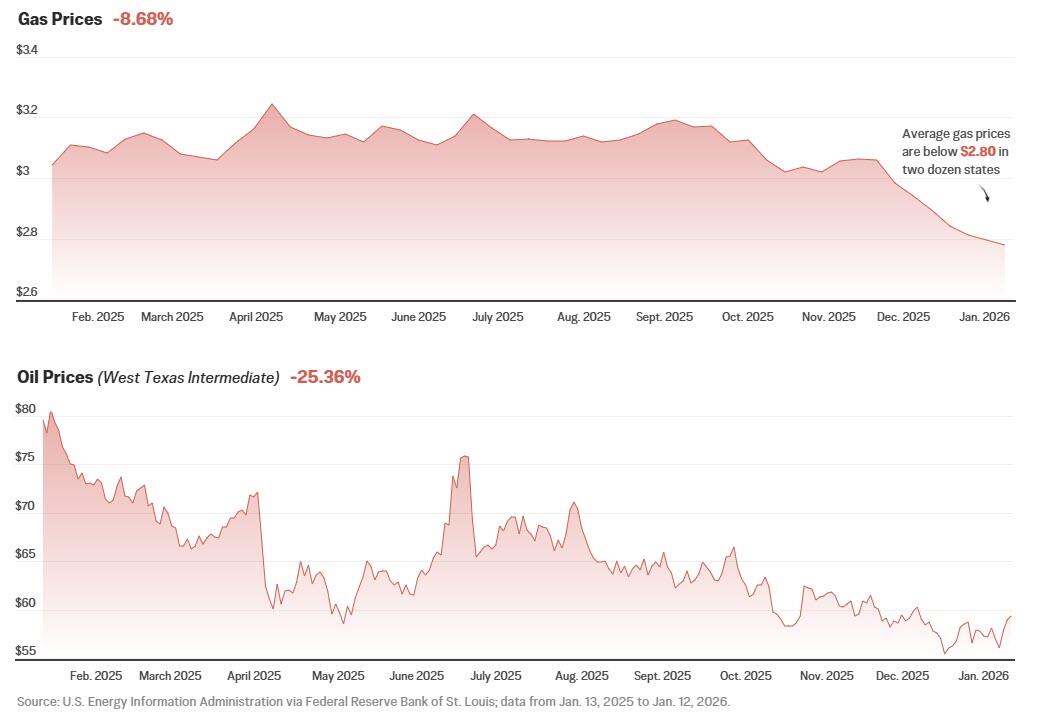
Crude oil prices are trading below $60, while two dozen states are enjoying average gasoline prices below $2.80 a gallon. Market watchers expect the same trends in the year ahead.
Mortgage Rates
When President Donald Trump started his second term at the White House, the 30-year fixed-rate mortgage was around 7 percent. Since then, it has fallen significantly, even temporarily sliding below 6 percent for the first time in more than three years.
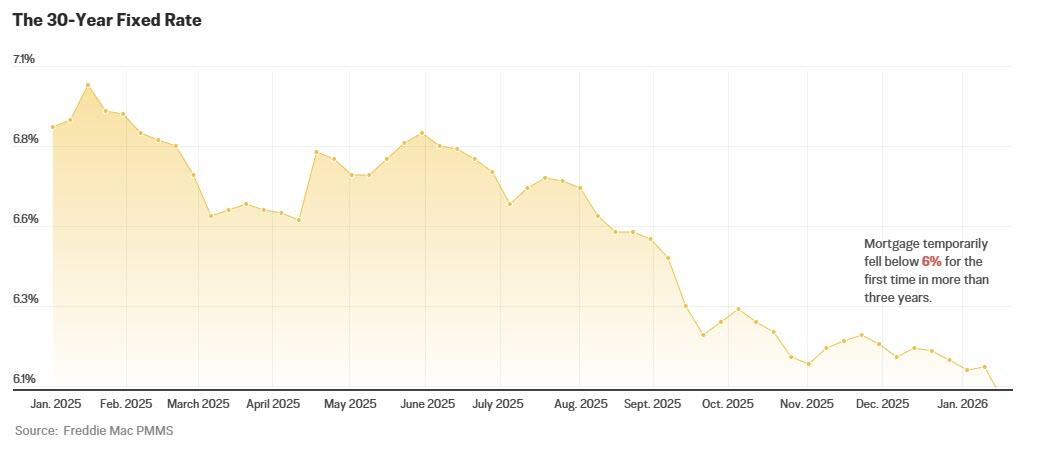
This has been driven by a blend of falling Treasury yields and federal housing strategies to bring down costs.
Border Security
President Donald Trump has emphasized border security as a central policy priority. By securing the border, the United States has experienced a 93 percent reduction in border crossings, 622,000 deportations, and 1.9 million self-deportations.
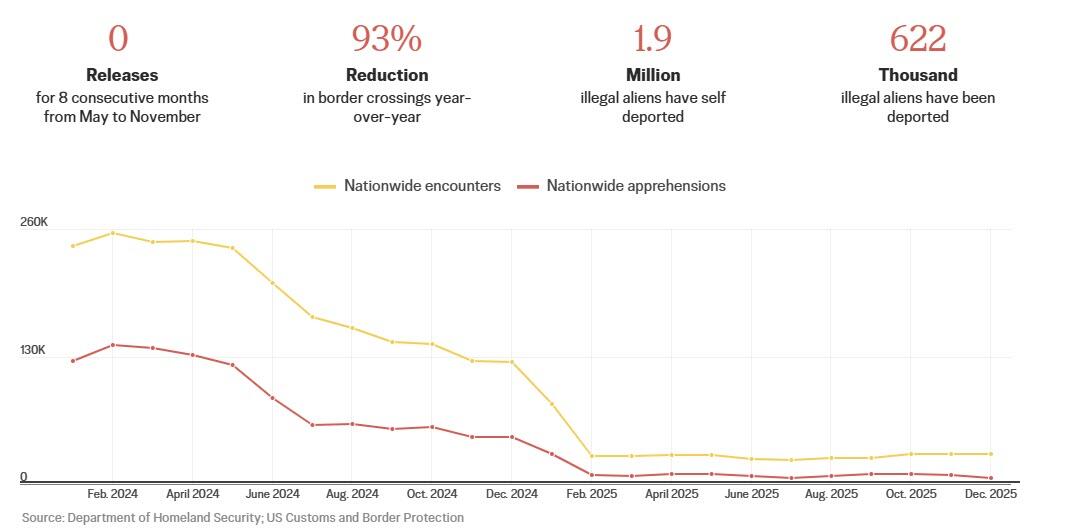
This has been accomplished by bolstering enforcement personnel and tightening procedures.
Executive Actions
While the administration secured a major legislative victory with the One Big Beautiful Bill Act, President Donald Trump has used the power of the executive branch to advance many of his policy objectives, including tariffs and regulations.
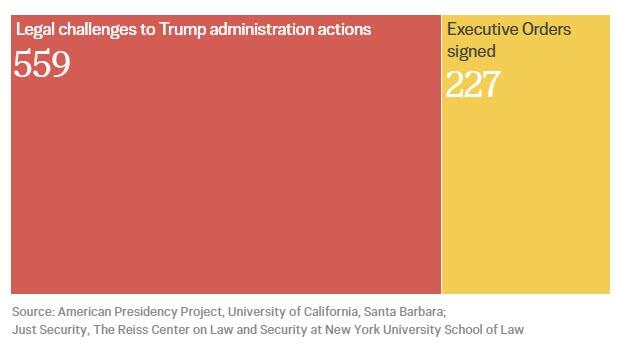
Some of the more than 220 signed executive orders have also drawn legal scrutiny from advocacy organizations, companies, and states, leading to battles that have reached the Supreme Court.